
Stremț: Holiday Apartments, Diodului Fortress and Drumul Icoanei
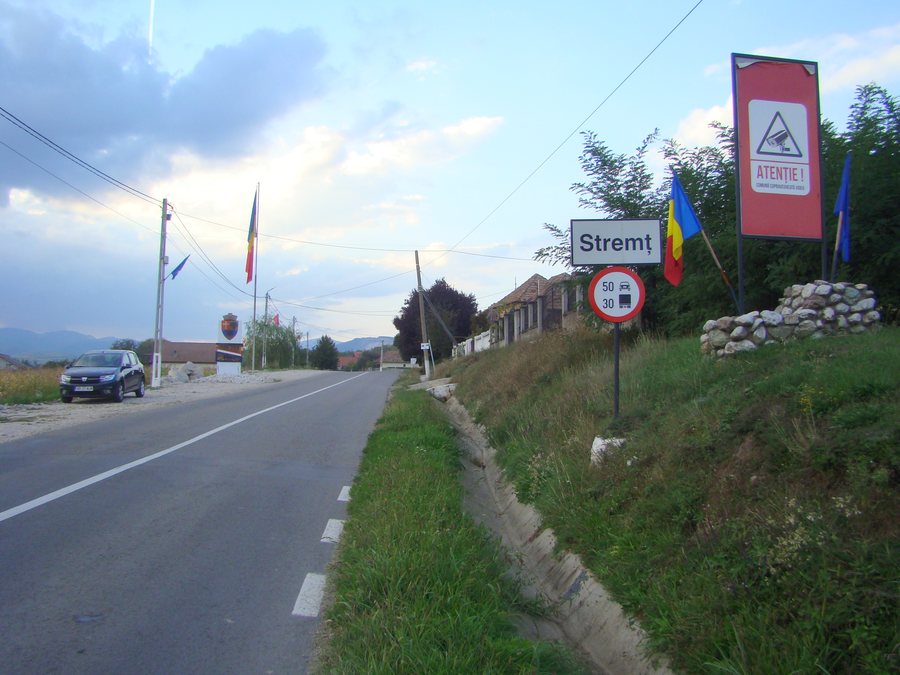
Stremț combines the ruins of Diodului Fortress with archaeological traces, a cultural tourism route, Lake Stremț, and recurring festivals in the villages of the commune. Diodului Fortress dates from the 13th to the 16th century. The complex includes a castle and a chapel; its other components include towers and a curtain wall.
Culture and History
The medieval Diodului Fortress has a rectangular shape. This shape is considered unusual in the military architecture of Transylvania. The archaeological site of Stremț also includes a Roman-era settlement. Thus, one location contains both medieval structural elements and traces of an earlier Roman settlement.
Archaeological finds in the area around Stremț attest to successive cultures dating back to the Neolithic. These include the Starčevo-Criș culture, the Coțofeni culture, and the Wietenberg culture. The history of the finds therefore spans several clearly identified cultural phases and complements the medieval history of Diodului Fortress with a significantly older chronological layer.
The archaeological evidence thus represents several successive periods: the Neolithic cultures were followed by the Roman settlement and, later, the medieval complex. The named finds and structures consequently belong to different historical periods that have been preserved together in the area around Stremț.
Drumul Icoanei
“Drumul Icoanei” is a route certified as a regionally developed cultural tourism route. It passes through Alba Iulia, Teiuș, Stremț, Geoagiu de Sus, and Valea Mănăstirii. Stremț is therefore an explicitly named location along a route that connects several communes and towns.
The route’s tourist attractions include the ethnographic exhibition in Stremț. It forms part of the cultural tourism offering of “Drumul Icoanei” and complements the commune’s archaeological evidence with an insight into ethnographic themes.
The route therefore passes not only through several named places, but also encompasses different forms of cultural heritage in Stremț. The ethnographic exhibition is explicitly one of the route’s attractions and stands alongside the commune’s archaeological evidence.
Nature at Lake Stremț
Lake Stremț lies within the territory of the commune of Stremț, next to the ruins of Diodului Fortress. The combination of the lake and the ruins thus defines a place where the landscape of the commune directly meets its history. In the past, locals used the lake for recreation. Tourists also previously used it for recreation and fishing.
Festivals in the Commune
The Festivalul Cânepii takes place annually in August in the commune of Stremț. The festival promotes customs associated with hemp cultivation. Handicrafts are also part of the areas promoted, provided they are connected with hemp cultivation.
The Sărbătoarea Fii satului is a cultural and artistic gathering. It takes place annually in every village of the commune of Stremț. Its event framework therefore encompasses all the villages of the commune and regularly returns there as a cultural and artistic occasion.
To the general travel overview: Stremt.
Check prices, availability, and amenities for your travel dates directly on Booking.com.
View accommodations and offersAdvertisement · Partner link to Booking.com
.jpg)