
Maradki: The fortified settlement of the Early Iron Age
Accommodation in Maradki
Maradki offers a tangible way to explore its history: a fortified settlement from the Early Iron Age and a Protestant cemetery from the 19th century. The settlement lies in the southern part of Maradki, on a moraine hill, and is clearly visible in the village thanks to its elevated position. Its form can be described precisely: an irregular ring fort, 56 × 25 metres in size and elongated along an east-west axis, with an earthen rampart and an inner stone facing. For travellers interested in archaeology and cultural history, it is a tangible starting point for considering its form, construction and historical context together.
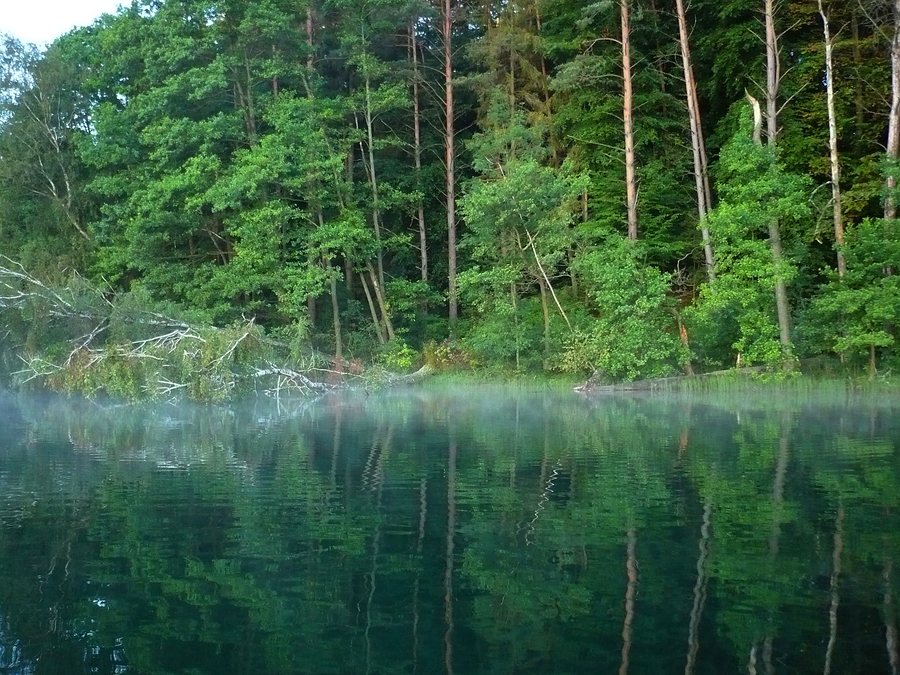
A ring fort on the moraine hill
The moraine hill is called “Zamek” or “Wiatraczna Góra”. The fortified settlement stands on it; its ground plan is irregular and extends along an east-west axis. At 56 × 25 metres, its size is easy to grasp; at the same time, its shape shows that a ring fort does not have to be a regular circle. An earthen rampart and the inner stone facing add specific construction features to the ground plan. This makes it possible to consider the site not only in terms of its age, but also its orientation, form and structure. It existed in the Early Iron Age and is associated with settlement by people of the West Baltic Barrow culture.
The site is fenced and clearly visible in the village thanks to its elevated position. When finding your way around on site, both aspects matter: its prominent location and the boundary formed by the fence.
Two historical periods
The 19th-century Protestant cemetery offers a second perspective on Maradki’s history; it is listed in the register of monuments. Together, these two historical points of reference span the period from the Early Iron Age to the 19th century, while representing different kinds of places: one is a fortified settlement, the other a cemetery. For travellers interested in culture, this contrast offers a tangible way to get to know Maradki from more than one historical perspective. The settlement draws attention to an early form of fortification and its cultural attribution, while the cemetery marks a Protestant site from the 19th century.
Understanding history through form
With children, you can explore the ring fort through engaging questions: How does an elongated ground plan look different from a regular circle? What do the dimensions of 56 × 25 metres tell you about its proportions? And which structural elements are referred to by the terms earthen rampart and inner stone facing? These questions connect a specific form with proportions and technical terms. This lets you approach the archaeological site through more than its age and focus on its shape and construction.
Choose Maradki as a holiday destination
Maradki is especially appealing as a holiday destination if you would like to experience cultural history as part of your trip. The two historical periods offer a simple way to guide your decision: are you more interested in early settlement and archaeological forms, or in a Protestant cemetery from the 19th century? If you are looking for a holiday apartment, you can assess Maradki as a potential destination by considering whether this kind of local history suits your stay. This way, your search begins with the question of which historical themes you would like to discover at your holiday destination.
Compare hotels and holiday rentals in Maradki by price and availability for your travel dates.
Advertisement · We may receive a commission if you book.Discover more destinations
Discover more destinations: Czerwonki, Bagienice Małe, Nibork, Kosewo, Nowy Zyzdrój, Popowo Saleckie, Krutyński Piecek, Krutyń.
To the main travel overview: Mrągowski.

