
Krutyński Piecek: The Krutynia and milling history
Accommodation in Krutyński Piecek
Krutyński Piecek brings together the Krutynia, a specific kayaking route and a milling history rooted in the use of the river. The Krutynia flows through the village, and kayaking trips are organised on the river. Nearby, at Zielony Lasek, stands the historic mill. These features give your trip planning a clear focus: the kayaking route, the nature trail and the technical history of the mill site. When looking for a holiday apartment, you can consider which of these aspects you would like to explore more closely during your holiday.
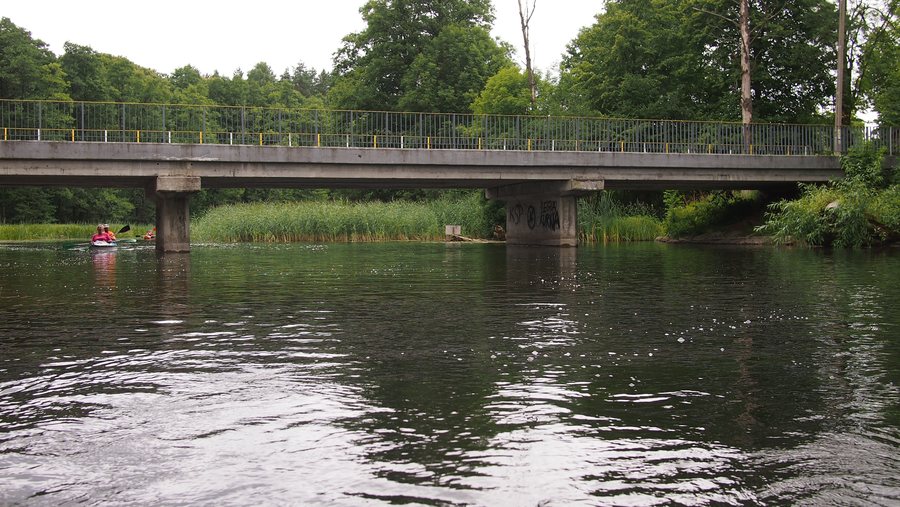 File:Gmina Piecki, Poland - panoramio (222).jpg
Photo: t.przechlewski via Wikimedia Commons, CC BY 3.0
File:Gmina Piecki, Poland - panoramio (222).jpg
Photo: t.przechlewski via Wikimedia Commons, CC BY 3.0
The Krutynia and its different sections
Below the mill at Zielony Lasek, the Krutynia flows quickly and shallowly over a stony bed because of the water being held back. Further downstream, it reaches a depth of about one metre and has more underwater vegetation. The sections described therefore differ both in current and depth, and in the growth beneath the water. If you are interested in a kayaking trip, this gives you a concrete idea of how the river changes along its course. These details describe the river’s characteristics, not the water conditions on the day of your trip. Check local conditions before kayaking.
A mill with layers of history
The 19th-century mill at Zielony Lasek is listed in Poland’s register of historic monuments and in its inventory of monuments. Before it was built, a paper mill that used water from the Krutynia stood at the same site. It was closed in the early 19th century after industrial papermaking methods were introduced. The site thus tells a story of changing uses: the river’s water was first used for papermaking and later to operate the mill.
In 1824, a watermill with a water-powered sawmill was built on the site of the disused paper mill. Around 1890, a three-storey production mill was constructed in Zielony Lasek. It had two millstone grinding units and a vertical conveyor for grain and milled grain. The grinding units processed grain using millstones; the vertical conveyor moved grain and milled grain. Together, these technical details make the facility’s production function easier to understand and give the mill’s history more than just a date.
Distinguishing the kayaking route from the nature trail
The kayaking route on the Krutynia passes through Krutyński Piecek. At the historic mill at Zielony Lasek, kayakers have to carry their kayak for about 70 metres along the right-hand side to continue towards Rosocha. This is a specific change in the course of the trip: paddling stops while the kayak is carried over land. The approximate distance and the right-hand side provide practical guidance for planning.
The “Krutyń - Rosocha” nature trail, which also passes through Krutyński Piecek, is separate from the kayaking route. The two routes appeal to different interests: for the kayaking route, the river’s course and the portage are part of the planning; for the nature trail, the fact that it passes through the village is the specific point of interest. If you are travelling with companions who want to spend their day differently, this comparison can help you consider the routes as distinct options, rather than combining them into a single trip.
When looking for a holiday apartment in Krutyński Piecek, these local features can make your choice of destination more tangible. Consider whether you want your plans to focus more on the kayaking route, the nature trail or the history of the mill site. This way, your choice of location reflects the interests you want to pursue during your stay. The combination of a river route, a nature trail and milling history offers specific points of connection.
Discover more destinations
Discover more destinations: Burszewo, Jakubowo, Nibork, Czerwonki, Bobrówko, Stare Sady, Nowe Kiełbonki, Górkło
Go to the main travel overview: Mrągowski.

.jpg)