
Wyry: Manor House History and Places of Remembrance
Accommodation in Wyry
Wyry can be explored from different historical perspectives: a manor house complex, stone memorials and a themed trail on Poland’s defence in September 1939 each offer a different focus. When planning your trip, a simple question can help: would you like to focus mainly on architecture, remembrance or the history of the defence?
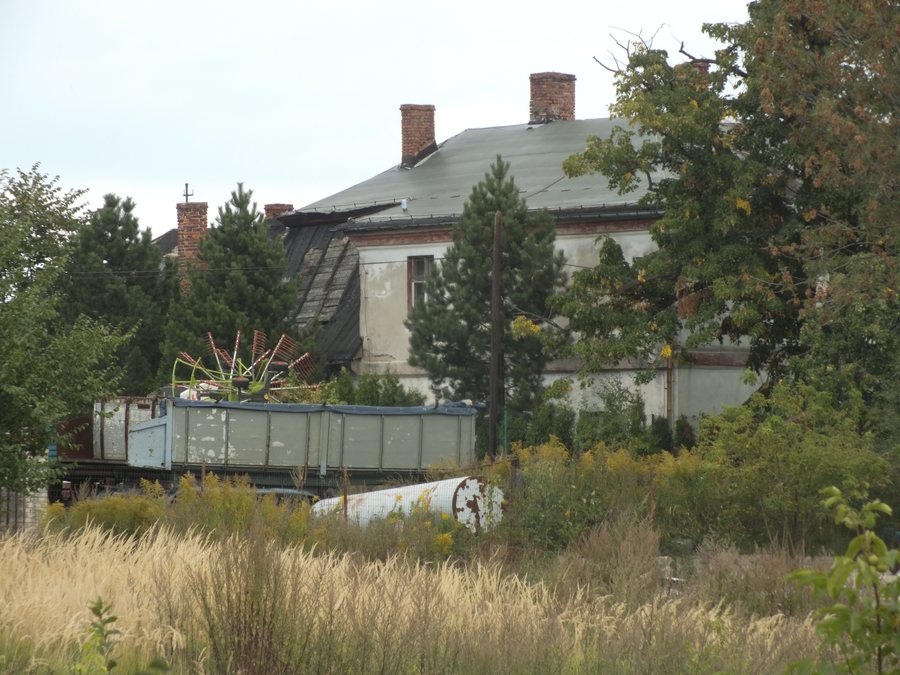 File:Dwór XVIII XIX wiek Wyry ulica Dąbrowszczaków 1.JPG
Photo: Wojciech Domagała via Wikimedia Commons, CC BY-SA 4.0
What makes the manor house complex distinctive
Wyry is home to a manor house complex dating from the turn of the 18th and 19th centuries. It comprises residential buildings, farm buildings and a fragment of a wall. The term “complex” draws attention to a group of different architectural elements rather than just one building. The residential and farm buildings represent different building categories; the fragment of a wall adds another element. Those interested in historic architecture can view the site through its composition. Its date places the complex at the transition into the 19th century.
Stone memorials in Wyry
An obelisk in Wyry commemorates those murdered during the Second World War. Główna Street is also home to a stone wayside cross dating from 1860, donated by the municipality of Wyry, and a stone figure of Saint John of Nepomuk from the 19th century. The obelisk serves as an explicitly named memorial, while the wayside cross and the saint’s figure add religious forms of remembrance. The memorials thus differ both in form and in what they commemorate.
The themed trail on the 1939 defence
The historical themed trail covers Poland’s defence in September 1939 and runs through the main part of Wyry, including along Wagonowa and Leszczynowa streets. A local report stated that the trail was available in August 2026. The app developed for it was described as offering location-based additional content and challenges in Polish, English and German. The trail thus combines a specific route with digital additions. If the trail or app is important to your trip planning, check their current availability in advance.
History in the surrounding area
Nearby Gostyń is home to a historic church dating from 1922, now used as a cemetery chapel. The “Sowiniec” bunker is also in the surrounding area. It did not take part in the fighting in the first days of September 1939 and is regarded as a silent witness to the history that unfolded there. The two sites have different focuses: for the church, the emphasis is on its current use as a chapel; for the bunker, on how its role in the fighting of the time is understood.
A natural monument in the municipality
In the municipality of Wyry, near Stary Staw, stands the municipality’s only designated natural monument: a pedunculate oak. Its trunk circumference is 550 cm, measured at breast height. This measurement refers to the circumference of the trunk, not the height of the tree. This adds a specific natural point of interest in the municipality to the historical topics.
Which focus suits your trip?
If you are looking for a holiday apartment in Wyry, the kind of trip you want can guide your planning: the themed trail will appeal to travellers interested in the 1939 defence, while the manor house and stone memorials focus on architectural and commemorative history. The oak adds a nature theme to this choice. Consider which of these perspectives you would like to shape your stay before choosing accommodation.
Discover more destinations: Mikołów, Ornontowice, Stara Huta, Orzesze, Łaziska Górne
Go to the main travel overview: Mikołów.

