
Wejherowo: Cultural heritage and the Cedron Promenade
Accommodation in Wejherowo
Wejherowo combines activity in the urban landscape with distinctive cultural themes: a paved promenade runs along the Cedron stream, granite slabs mark a Kashubian-themed trail in the city centre, and the town hall, church, and museum each add their own historical and literary touches. This gives you a practical choice for planning your holiday between activity, architecture, and literary culture. When looking for a holiday apartment, you can start by considering which experiences you would most like to make the focus of your stay.
Activity along the Cedron
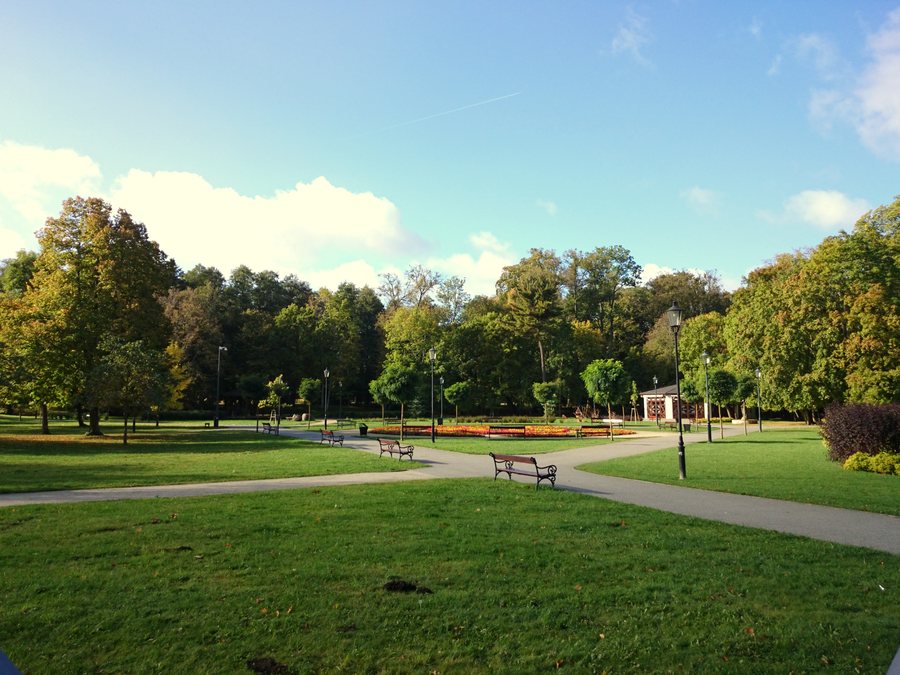
A 600-metre paved pedestrian and cycle promenade runs along the Cedron stream in Wejherowo, between Rzeźnicka Street and Partyzantów Street. The two street names mark the ends of the stretch, and its length makes it easy to think of as a short route. If you want to get around on foot or by bike, you can include the promenade as a compact part of your plans for the town. The stream provides the setting, while the paved surface defines the character of the route.
Culture in interiors and the streetscape
Wejherowo Town Hall houses the multimedia historical room “Wejherowo okresu międzywojennego”. Recreated interiors include the mayor’s office, a carpenter’s workshop, a hair salon, and a café. The examples range from a municipal workplace and crafts to services and hospitality. This brings the interwar period to life through a variety of room types: the recreated settings give the historical presentation concrete details.
The parish church of the Holy Trinity in Wejherowo was built between 1754 and 1755. It is a Baroque brick church with Rococo furnishings. The material, architectural style, and furnishings describe different aspects of the building: brick identifies the construction material, Baroque the church’s style, and Rococo its furnishings. For architecture enthusiasts, this combination offers a clear focus, bringing together the history of the building and its interior.
Literature takes centre stage at the Museum of Kashubian-Pomeranian Literature and Music. It holds original works of Kashubian literature from the 19th and 20th centuries, including both first editions and later editions. This collection offers a different cultural focus from the church’s architecture or the recreated interiors in the town hall. The presence of both first editions and later editions also highlights different forms of publication, with works of Kashubian literature at the heart of the collection.
The Szlak Alfabetu Kaszubskiego “kaszubskich nutek” (Kashubian Alphabet Trail) brings another theme into the urban landscape: granite slabs mark the route through the streets of the city centre. This presents Kashubian literary culture in a different form from the works in the museum. While literature is collected there, the granite slabs serve as waymarkers in the streetscape. These different forms offer you various starting points if you are interested in the region’s language and culture.
Choose the focus of your stay
For your travel plans, there is a clear contrast: the Cedron Promenade is a short, paved route for getting around, while the other highlights represent architecture, recreated interiors, literature, and marked literary symbols in the urban landscape. When looking for a holiday apartment in Wejherowo, consider which of these interests is most likely to shape your stay. This way, you can make your choice based on the kind of trip you are planning, rather than giving every day the same focus.
Discover more destinations: Szemud, Barłomino, Gościcino, Salino, Strzebielino Morskie, Zbychowo, Łężyce, Rumia
For the main travel overview: Neustadt.

