
Ujest: Castle, Church and Cycling Route
Accommodation in Ujest
Ujest: Waterways, Architectural History and Cycling Route
Ujest is situated on the Kłodnica River and the Gliwice Canal. Its history can be traced through buildings from different centuries: the medieval castle of the Bishops of Wrocław, the parish church of Saint Andrew the Apostle, and an 18th-century granary. A cycling route also passes through the town. Ujest offers a range of points of interest for visitors interested in history, architecture or cycling.
Waterways and Cycling
The Kłodnica River and the Gliwice Canal provide two distinct geographical points of reference for Ujest. For cycling, the yellow-marked Route No. 16 passes through the town, with historic sights located along its route in the town centre. A cycling route passes through Ujest, leading from the Silesian Voivodeship into the Opole region. Check the current conditions on the yellow-marked Route No. 16 before setting out. This allows you to include the cycling route in your plans while also treating the historic buildings as a focus in their own right.
Castle and Church: Different Periods
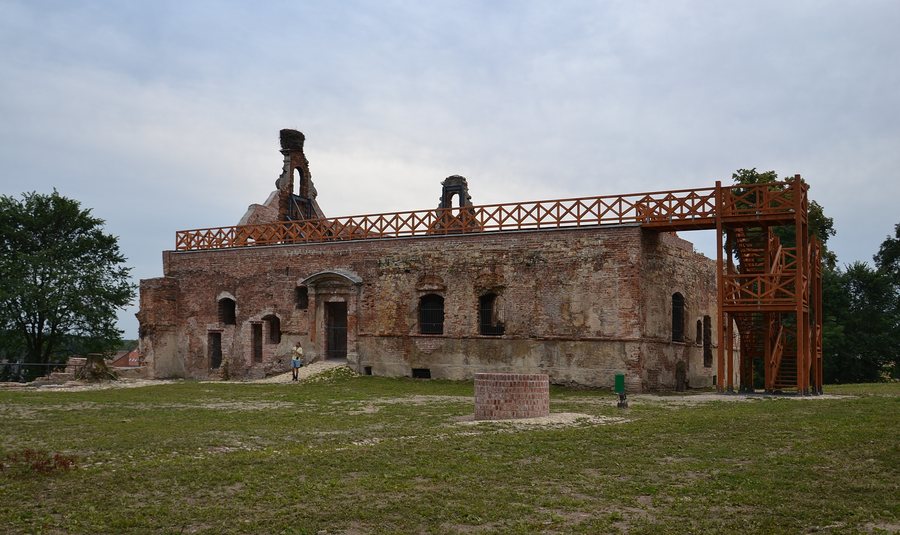
The medieval castle of the Bishops of Wrocław was built at the beginning of the 13th century. The ruins offer panoramic views of the surrounding area. They were secured and opened to visitors several years ago; check whether visits are currently possible before you go. The castle thus links early architectural history with views of the surrounding area. It dates from considerably earlier than the other buildings described here.
The Baroque parish church of Saint Andrew the Apostle was built in 1613 and acquired Neo-Gothic towers in the 19th century. Its architectural history therefore encompasses different periods and styles: the Neo-Gothic towers were added to the Baroque church. This development can be compared with that of the medieval castle without suggesting that the two buildings belong to the same period.
The Granary and Community Architecture
Near the market square stands the granary, a three-storey, masonry and plastered agricultural building dating from the 18th century. It is currently used for storage. Unlike the castle and church, it is a functional agricultural building; its three storeys, masonry and plaster give it a distinctive architectural character. Comparing the town’s architectural history therefore involves not only different centuries, but also different functions and forms of construction.
In the municipality, the village of Studzionka is home to a Neo-Gothic pilgrimage church with a tower on its west side. There is also a chapel dedicated to the Virgin Mary above the Marian spring. These add two further distinct architectural forms: the church with its west-facing tower and the chapel, whose position above the spring reflects its particular connection with devotion to Mary.
If you are looking for holiday accommodation in Ujest, you can plan your stay around your main interest: cycling, architectural history or a combination of the two.
Discover more destinations: Zimna Wódka, Kroschnitz, Sucha, Olszowa, Sankt Annaberg, Żędowice, Zawadzkie, Grodzisko.
View the wider travel guide: Strzelecki.

