
Zellin: Local History and Chapel
Accommodation in Zellin
Zellin’s local history can be traced through the development of the settlement and a chapel with distinctive architectural features. There is also a Baroque sculpture of Saint Gregory, which gives the building a particular connection to art and religious history. If you enjoy learning about a place’s historical background while on holiday and paying attention to architectural details, Zellin offers a distinct cultural focus.
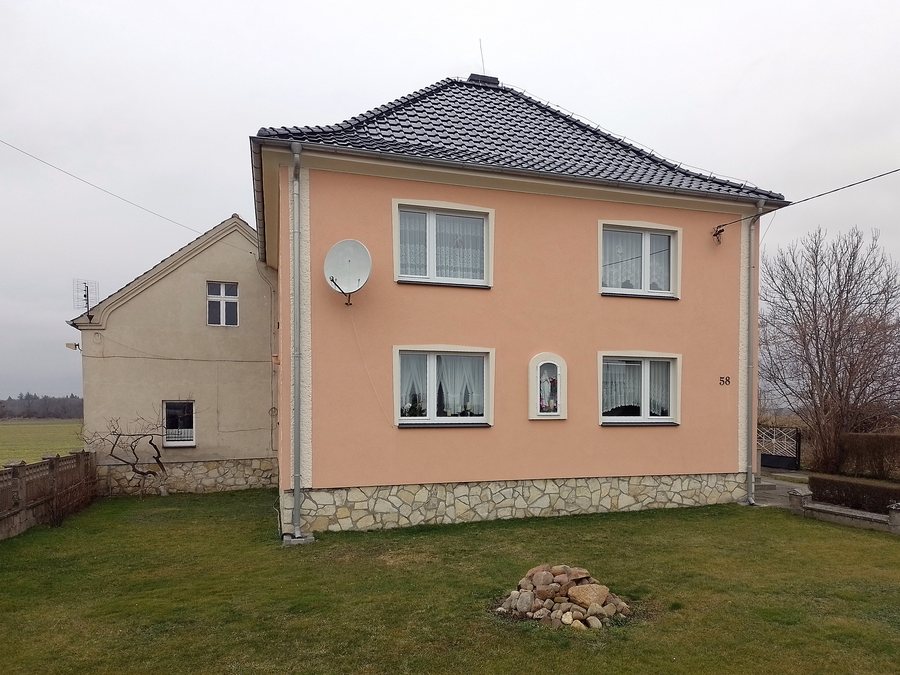 File:Zielina - Zellin, dom z kapliczką.jpg
Photo: Kamil Czaiński via Wikimedia Commons, CC BY-SA 4.0
File:Zielina - Zellin, dom z kapliczką.jpg
Photo: Kamil Czaiński via Wikimedia Commons, CC BY-SA 4.0
The Name and the History of the Settlement
The first written documents, dating from 1743, refer to Zielina as Zellin. The year belongs to this recorded name and provides a point of reference for the town’s history. The early form of settlement has also been recorded: Zielina initially developed as a hamlet of Kujawy. A hamlet is a smaller form of settlement; this classification connects the town’s early development with Kujawy. The form of settlement and later ownership arrangements are different aspects of its history.
In the 1780s, Count Schaffgotsch owned the village of Zielina. A further record of ownership exists for the 1930s and 1940s: estates in Zielina, Moszna and Racławiczki belonged to Claus von Thiele-Winckler. These records cover different historical periods. The ownership history of these later decades explicitly includes Moszna and Racławiczki as well as Zielina.
The Chapel and Its Architecture
In Zielina stands a rectangular, plastered brick chapel from the 19th century with a cross vault. The description brings together the floor plan, material and ceiling: the rectangular floor plan describes the shape of the building, plastered brick the building material and its plastered surface, and the cross vault the design of the ceiling. This makes it possible to consider each architectural feature separately rather than combining them into a single detail.
The roof is a gable roof, with a slender turret on the front façade. A gable roof has two sloping sides that meet at the ridge. A cross vault, by contrast, is a type of vault in which sections intersect. The chapel can thus be described both by its exterior form and by the design of its interior. Together, these features create a clear architectural picture: a rectangular building, plastered brick, a gable roof, a façade turret and a cross vault.
The chapel also contains a Baroque sculpture of Saint Gregory. This adds a named religious and art-historical connection to the building’s history. “Baroque” identifies the sculpture’s style, while the name Saint Gregory identifies the figure depicted. The architecture and the sculpture are two distinct aspects that together shape the chapel’s cultural significance.
Local History to Help Guide Your Choice
If you are looking for a holiday apartment in Zellin, you can also consider which topics might enrich your stay. Local history and religious architecture offer a specific point of interest here: from Zielina’s early classification as a hamlet, through the dated records of ownership, to the chapel’s features. Choosing a destination and choosing accommodation are two successive decisions. First, you can consider whether Zellin’s historical themes suit your travel interests; then choose a holiday apartment to match your personal accommodation preferences.
Discover More Destinations
Discover more destinations: Rogów Opolski, Mallnie, Kujau, Moschen, Krapkowice, Gogolin, Oleszka, Kamień Śląski
Return to the main travel overview: Krapkowice.

