
Kujau
Accommodation in Kujau
Kujau brings together several historical layers: a Trinity Church with Renaissance paintings, a palace with a Neoclassical extension, and archaeological sites from different periods. A signposted cycling route also passes through the village. This lets you choose different themes for your stay—from architectural and art history to a longer bike tour.
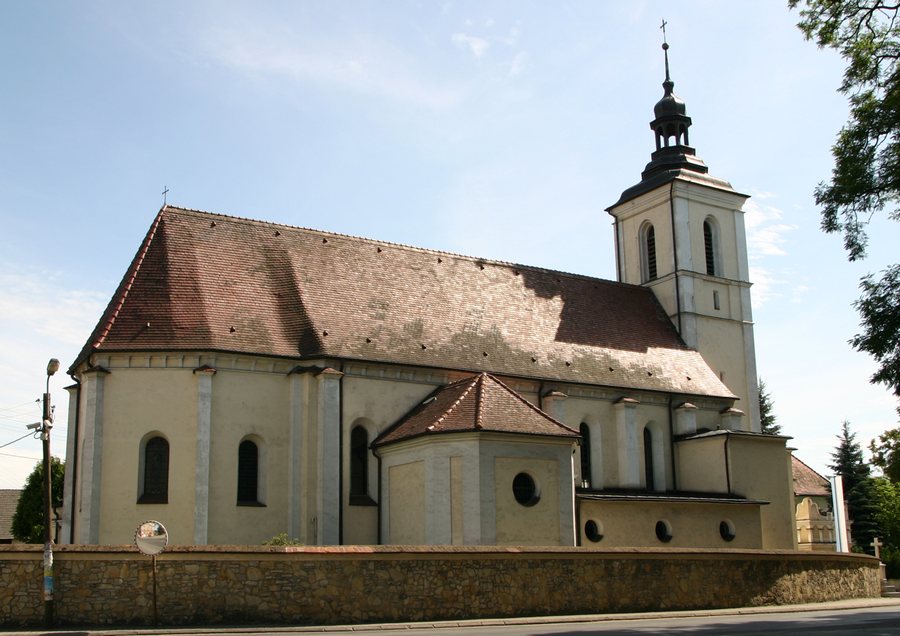
Trinity Church and historic buildings
The history of the Trinity Church stretches back further than its present-day masonry structure. The first references to a wooden church in Kujau date from 1447. The present-day masonry church was commissioned in 1583 by Kujau’s Protestant owners, Baltazar Pückler von Groditz and his wife Poliksena. These two dates mark different stages: the early reference to a wooden predecessor and the commissioning of the present-day church.
The church contains late Renaissance polychrome decoration from the 16th century. The motifs depicted include two angels blowing trumpets and bearing the Arma Christi. Those interested in religious art will find a specific reason here to explore the church’s design and imagery. The historical context can be linked to the earlier wooden church and the 1583 commission, without conflating these different dates.
The historic buildings also include the gate-bell tower. The gate-bell tower is protected as a historic monument by the Opole Voivodeship. The palace in Kujau was built after 1900 and later extended in the Neoclassical style. It received its north wing in 1909. Kujau therefore has buildings with different histories of construction and development side by side—a topic for travelers who are especially interested in historic architecture during their stay.
Archaeological traces and memorials
Archaeology is also part of the village’s history. AZP area 94-35 contains archaeological settlement site 10/3, dating from the earlier phase of the Early Middle Ages. Another site, 13/21 in AZP area 94-36, includes settlement traces from the Early Middle Ages (9th to 10th centuries) and the Middle Ages (14th century).
Four wayside chapels or roadside shrines add smaller religious memorials to these historical themes. Together with the church, gate-bell tower, palace and archaeological sites, they offer a varied selection for anyone interested in traces of past centuries. The park in Kujau is also protected as a historic monument by the Opole Voivodeship.
Exploring Kujau by bike
The signposted cycling route is another point to consider when planning an active trip. It passes through Kujau and forms part of a 45-kilometer cycling route through the municipality of Strzeleczki and neighboring municipalities. The total distance refers to this cycling route. If you enjoy spending your days cycling, you can therefore consider Kujau as part of a longer tour; those primarily interested in church art and architectural history can focus on something else.
These different interests may also influence your choice of a holiday apartment or holiday home: the key question is whether you want to visit Kujau for its historical attractions or as a stop on a cycling trip. This makes it possible to consider which aspects matter to your travel group when choosing your holiday destination.
More pages about nearby towns: Zabierzów, Gogolin, Rogów Opolski, Mallnie, Oleszka, Zdzieszowice, Moschen and Krapkowice.
Go to the main travel overview: Krapkowice.

