
Grodków: Churches, City Walls and Local History
Accommodation in Grodków
Grodków tells its story through a wide variety of buildings: one parish church dates back to the 13th century, another church features Neo-Romanesque architecture, and fragments and gate towers remain from the medieval town fortifications. There is also a town hall with a historic coat-of-arms plaque and a Dutch-style windmill without sails. If historic buildings and local history are your main focus during your stay, Grodków is worth considering when choosing a holiday apartment.
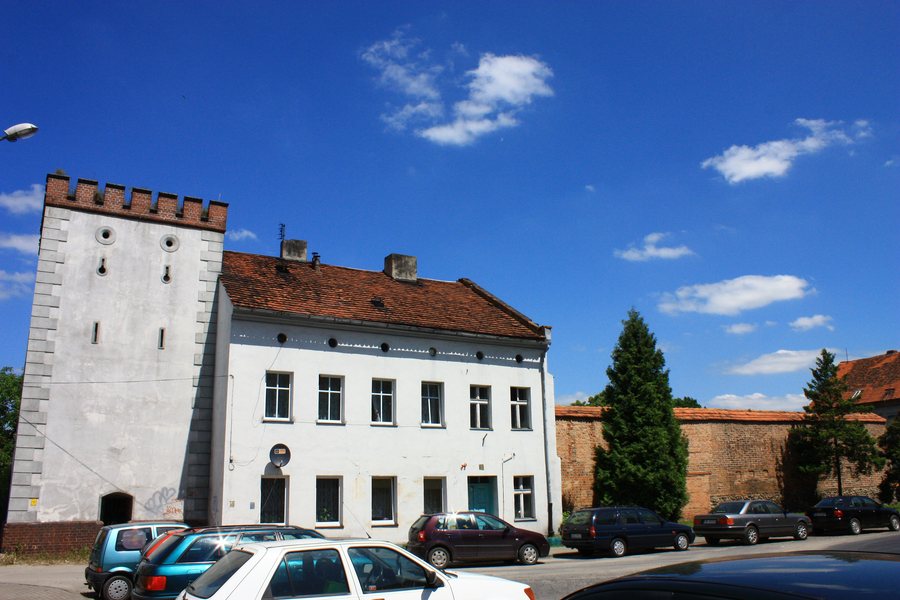 File:Grodków zespół murów obronnych 02.JPG
Photo: Dawid Galus via Wikimedia Commons, CC BY-SA 3.0 pl
File:Grodków zespół murów obronnych 02.JPG
Photo: Dawid Galus via Wikimedia Commons, CC BY-SA 3.0 pl
Churches from Different Periods
The parish church of St Michael the Archangel was built in 1268 or somewhat later. Its long history of construction contrasts with the Evangelical church, a three-aisled Neo-Romanesque basilica built of brick in 1845. Its tower is 39 metres high. The two churches therefore differ both in their recorded dates of construction and in their architecture: the older parish church on the one hand, and the basilica with its three aisles and distinctive tower on the other. If you are travelling with children, the different architectural forms can provide an engaging starting point for exploring Grodków’s past together.
Town Fortifications and Market Square
Construction of the medieval town fortifications began around the turn of the 14th century. They were built from fieldstones under Bolko I. Fragments of the town walls remain, and the surviving fortifications also include the Ziębicka and Lewińska gate towers. These remains make the town’s former defences a distinct topic in its local history, while showing that what survives today is not limited to wall fragments alone.
The town hall stands in the centre of the market square. A plaque bearing the coat of arms of Bishop Promnitz, dated 1551, is preserved in its entrance hall. The town hall and the coat-of-arms plaque thus connect a central public square with a specific historical detail. The market square can be considered a point of reference in exploring Grodków’s architectural history, while the remains of the town walls and the gate towers reveal another aspect of its medieval past.
Windmill and Local History and Culture
An unusual part of the historic building stock is a brick Dutch-style windmill without sails. It dates from around the turn of the 19th century. Its architectural form sets it apart from the churches, town hall and fortifications. Together, these buildings illustrate different aspects of local history: religious architecture, urban defence, civic life and a technical structure from a later period.
The Izba Pamięci Ziemi Grodkowskiej was responsible for researching and disseminating the town’s history. It also supports local artists and regionalists, along with their work and knowledge. Thus, in addition to its visible buildings, Grodków is distinguished by its local historical work and regional cultural activity.
A Break After a Bike Ride
The small parks near the town walls are a good place to rest during a quieter break after a bike ride. This shift from active time on a bicycle to a pause in green surroundings offers another way to shape your stay alongside exploring the historic buildings. The Brzeg–Nysa railway line in Grodków opened in 1847 and is also part of the town’s transport history.
If you would like to include pages about other places as well as Grodków in your planning, you can also find Borkowice, Kopice, Sulisław, Pisarzowice and Brieg here.
For the wider travel overview: Brzeg.

