
Ugoszcz between church art and landscape
Accommodation in Ugoszcz
Ugoszcz brings together a layered ecclesiastical history and its location in the Nadbużański Landscape Park. Two distinct themes therefore take centre stage: the development of the parish and the art associated with the church, as well as a landscape shaped by the Bug Valley. Whether you are more interested in nature or cultural history during your holiday, the town offers points of interest for both.
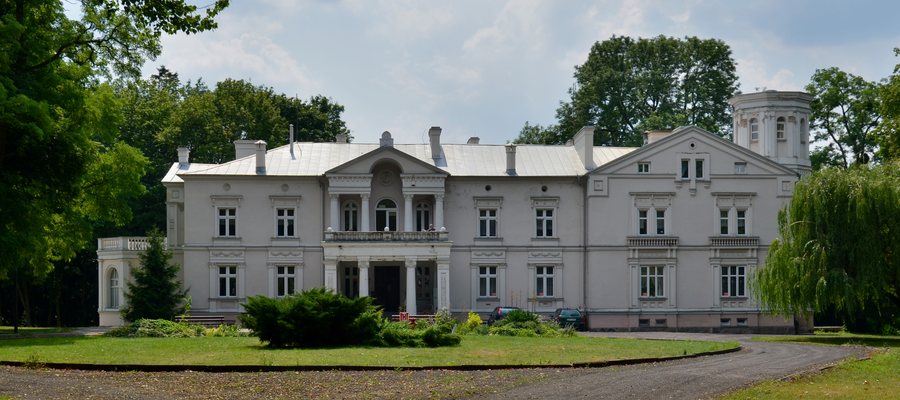
Landscape in the Nadbużański Landscape Park
Ugoszcz lies within the Nadbużański Landscape Park. The park was established to protect the natural Bug Valley, with its meandering riverbed, numerous oxbow lakes and side channels. The surrounding area is characterised by a mosaic of farmland and woodland, forming a landscape that has changed little. The Ugoszcz River is also part of the park; this regional connection should be distinguished from the town’s location within the park.
A distinct natural feature in Ugoszcz is a Scots pine designated as a natural monument. Together with the landscape park, it creates a nature-related theme encompassing both the protected river landscape in the wider area and a single designated natural monument in the town. If you particularly value such landscape features when choosing a holiday destination, you can consider them as a focus in their own right alongside the church attractions.
Church history and art
The first written mention of Ugoszcz dates from 1436. Several precise dates are recorded for its later ecclesiastical development: in 1919, a temporary rectangular wooden chapel made of poplar wood was built. It had a thatched roof and a fieldstone foundation and initially served as a pastoral outstation of the Miedzna parish. The first Mass was celebrated there on 20 April 1919. A decree dated 30 July 1923 established an independent parish in Ugoszcz; it became autonomous on 1 September of the same year. The new church, dedicated to Christ the King, was consecrated on 13 September 1931.
The artistic furnishings include polychrome paintings created by Jan Molga for the church in Ugoszcz in 1977. They depict Saint Maximilian, Our Lady of Fatima and the Assumption of Mary. The imagery gives the church a specific connection to art history and religious history. Another distinctive part of the church complex is the bell tower, consecrated in 2009, with two old bells; one of them is named “Antoni”.
The churchyard contains a memorial cross commemorating the holy missions and a chapel or wayside shrine depicting Christ at Rest. The parish church in Ugoszcz is listed in the register of historic monuments under number A-830. There are also plans to display an altarpiece from the late Renaissance period, currently in the left side chapel of the Church of Saint Anthony of Padua, on the central wall of the chancel once the ongoing conservation work has been completed. This planned location is a distinct aspect of the local art history.
Planning your holiday
An officially listed route passes through Węgrów, Miedzna, Wrotnów, Międzyleś, Ugoszcz and Rostki. It names several places in a set order; no information about route length or mode of transport is provided. When looking for a holiday apartment, you can therefore start by deciding what matters most to you: should the park’s landscape be the deciding factor, or would you rather focus on the church buildings and artworks? The natural and cultural attractions mentioned offer different ways to discover Ugoszcz, and you do not have to choose just one.
You can also browse the pages for Łochów, Węgrów, Grębków, Baczki and Korytnica to continue your search.
For the wider travel overview: Węgrowski.

.jpg)