
Discover Krasnystaw: history, hop culture, and the “kneeling tree”
Accommodation in Krasnystaw
Krasnystaw can be explored through a range of distinct, clearly identifiable themes: the city’s long history at the Muzeum Regionalne w Krasnymstawie, the origins of Chmielaki Krasnostawskie, and an ash-leaved maple with an unusual name in the market square. Together, these themes take you from a broad sweep of history through a festival tradition to a single tree. Several cultural points of interest are therefore available, rather than one single theme having to define your stay.
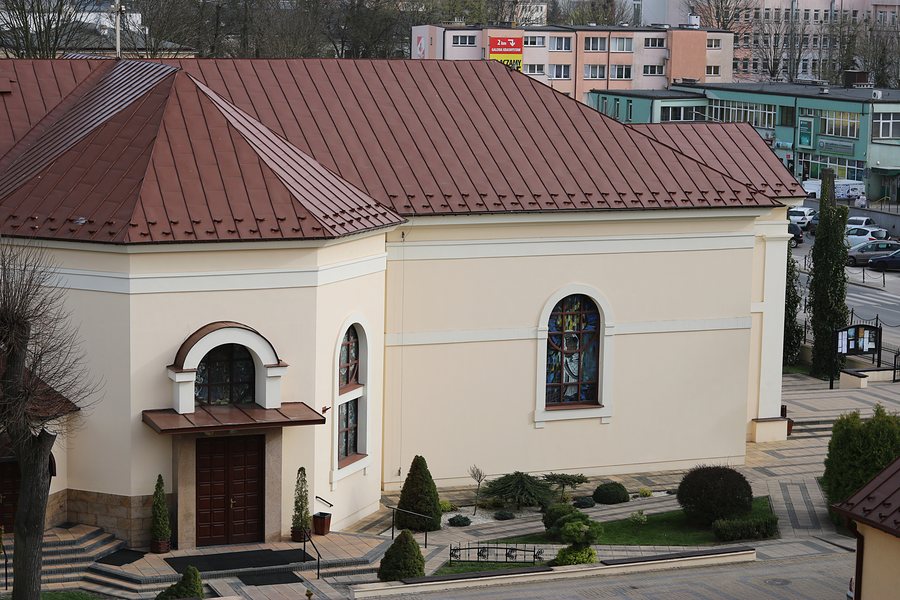 Krasnystaw, Kościół Trójcy Przenajświętszej w Krasnymstawie
Photo: Micewiczmartyna via Source, CC BY-SA 4.0
City history across a long period
The exhibition at the Muzeum Regionalne w Krasnymstawie presents the city’s history from the granting of Magdeburg rights to Szczekarzów in 1394 to 1989. The early chronological marker is thus clearly identified: it concerns the granting of rights to Szczekarzów. The period from 1394 to 1989 spans nearly six centuries. These dates provide a broad historical framework, distinct from a single building or specific date. If you are interested in how a place has developed, the exhibition offers a way to explore a long period of time.
Hop harvest and Chmielaki
Chmielaki Krasnostawskie began in September 1971 as a local hop harvest festival. Its origins are therefore explicitly tied to the hop harvest. The festival name is still used. In the wider destination of Krasnystaw, the hop and brewing festival has been held for several decades; since 1977, its official name has been “Ogólnopolskie Święto Chmielarzy i Piwowarów Chmielaki Krasnostawskie.” The two years mark different aspects: 1971 refers to the first edition and its local harvest connection, while 1977 marks the festival’s official name. Alongside the city’s history, the hop-growing and brewing tradition offers another way to explore the destination’s cultural themes.
A tree with a name of its own
An ash-leaved maple grows in the market square of Krasnystaw and is called “klęczące drzewo.” The Polish name can be translated as “kneeling tree.” The name gives the tree a memorable, vivid character, while its botanical name identifies the specific species. Alongside the dates associated with the city’s history and festival, this is a different kind of local detail: a single tree in a specifically named place. If you like noticing distinctive names like this, it adds a small, tangible point of interest to the broader historical themes.
More themes in the wider destination of Krasnystaw
In the wider destination of Krasnystaw, the Church of St. Francis Xavier in the Jesuit complex served as a cathedral from 1773 to 1826. The Stadnina Koni w Białce stud farm offers a different focus: it is a breeding center for Arabian thoroughbreds and a venue for equestrian sports. Alongside festivals and city history, visitors can therefore explore the historical role of a church, as well as horse breeding and equestrian sports. These topics broaden the picture of the wider destination without repeating the same aspects covered by the exhibition or the tree in the market square.
Choose the right setting for your trip
When choosing a holiday apartment, it helps to start by deciding which themes you would like to explore during your stay. Are you most interested in the city’s history, Chmielaki, or the tree in the market square? Or would you also like to include other themes from the wider destination of Krasnystaw in your plans? For families looking to bring together different interests, this is a way to first consider a mix of history, festival traditions, and equestrian sports.
Discover more destinations
Discover more destinations: Olchowiec, Tarnogóra, Izbica, Ostrzyca, Czysta Dębina, Tarnogóra-Kolonia.
Go to the overview of the wider destination: Krasnystaw.

