
Jawiszowice
Accommodation in Jawiszowice
Jawiszowice offers travellers several distinct points of interest: the history of the Jawischowitz subcamp, the wooden parish church of St Martin, the regional heritage room Piykno Izba and the section of the Vistula Cycling Route that begins here in the Małopolskie Voivodeship when coming from the west. This contrast makes a difference when planning your trip. You can focus on local history and traditional everyday culture, or make cycling the defining theme. When looking for a holiday apartment, it helps to first decide which of these sides of Jawiszowice you want to shape your stay.
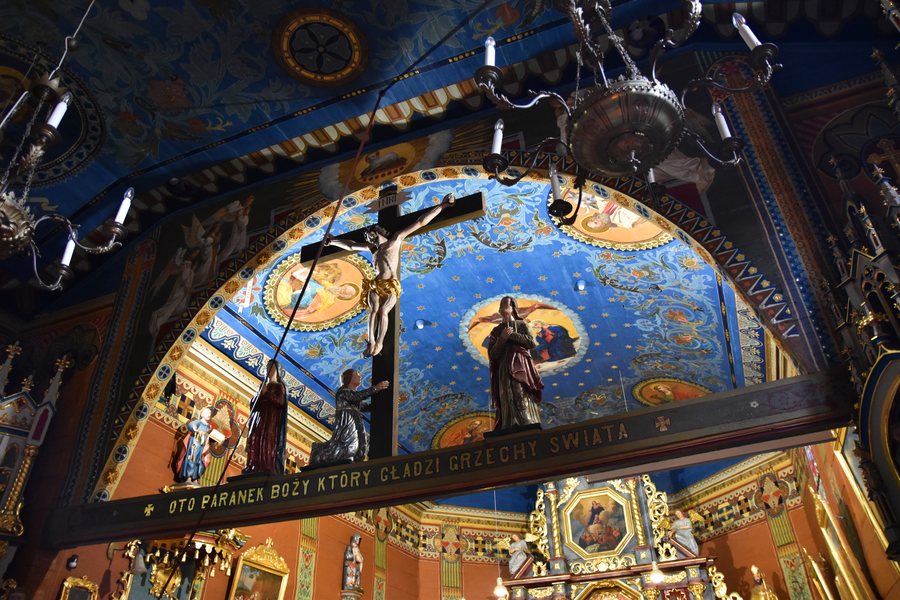 File:Jawiszowice .Kościół św. Marcina w Jawiszowicach 3.jpg
Photo: Jacek Daczyński via Wikimedia Commons, CC BY-SA 4.0
Local history with a European dimension
The Auschwitz-Birkenau State Museum documents that the Jawischowitz subcamp was located in the village of Jawiszowice. According to the Auschwitz-Birkenau State Museum, 2,500 prisoners were housed there in June 1944, most of them Jewish people from Poland, France, Germany, the Netherlands, Italy and Hungary. The place name anchors this history directly in the village; the countries of origin also make its international dimension visible. Jawiszowice is thus connected both with a specific local history and with the European origins of many of the prisoners. This serious historical perspective differs markedly from the architecture of the parish church and the collection of objects from everyday life.
Church and everyday culture
The regional heritage room Piykno Izba draws attention to objects from the lives of Jawiszowice residents. The collection includes dishes, household appliances and furniture, furnishings from homes, agricultural tools, jewellery and toys. Everyday and festive clothing is also included. The objects were used for at least three generations. This variety makes the collection an engaging look at several aspects of life: home, work, clothing and special occasions. The heritage room opened in September 2019, making its collections accessible to a broad public. If you are planning a visit, check current visiting arrangements in advance.
The wooden parish church of St Martin was built in 1692. It offers a different way to explore cultural history than Piykno Izba: a religious building draws attention to historic wooden architecture, while the collection reveals residents’ everyday lives through numerous objects in daily use. This gives you a meaningful choice when planning your trip between architectural history and everyday culture—or the opportunity to explore both perspectives side by side. The dates 1692 and September 2019 mark different chapters: the construction of the church and the opening of the regional heritage room.
Cycling and trip planning
For cyclists, the route connection is especially clear: the section of the Vistula Cycling Route in the Małopolskie Voivodeship begins in Jawiszowice when coming from the west. Check current route conditions for your specific stage. If cycling is central to your stay, this starting point is a reason in its own right to include Jawiszowice in your plans; if you are interested in local culture, the church, heritage room and history of the subcamp take centre stage instead. These provide different anchors for choosing between a cycling trip and a culture-focused visit: the route identifies a specific connection, while the church, heritage room and subcamp history offer different perspectives on Jawiszowice.
Discover more destinations: Bielany, Zator, Grojec, Nowa Wieś, Skidzin, Brzeszcze, Łęki, Kęty
For the overview of the wider area: Auschwitz.
Compare hotels and holiday rentals in Jawiszowice by price and availability for your travel dates.
Advertisement · We may receive a commission if you book.
