
Brzeszcze: Ponds, Nature and History
Accommodation in Brzeszcze
Brzeszcze offers a striking contrast of pond landscapes, nature and local history. In Nazieleńce, fishponds, adjoining mixed woodland and Vistula meadows form a shared landscape. In today’s city park, surviving remains recall the Jawischowitz subcamp; a monument to its victims and St. Urban’s Church add further historical facets. In Brzeszcze, nature and remembrance thus stand alongside 19th-century architecture.
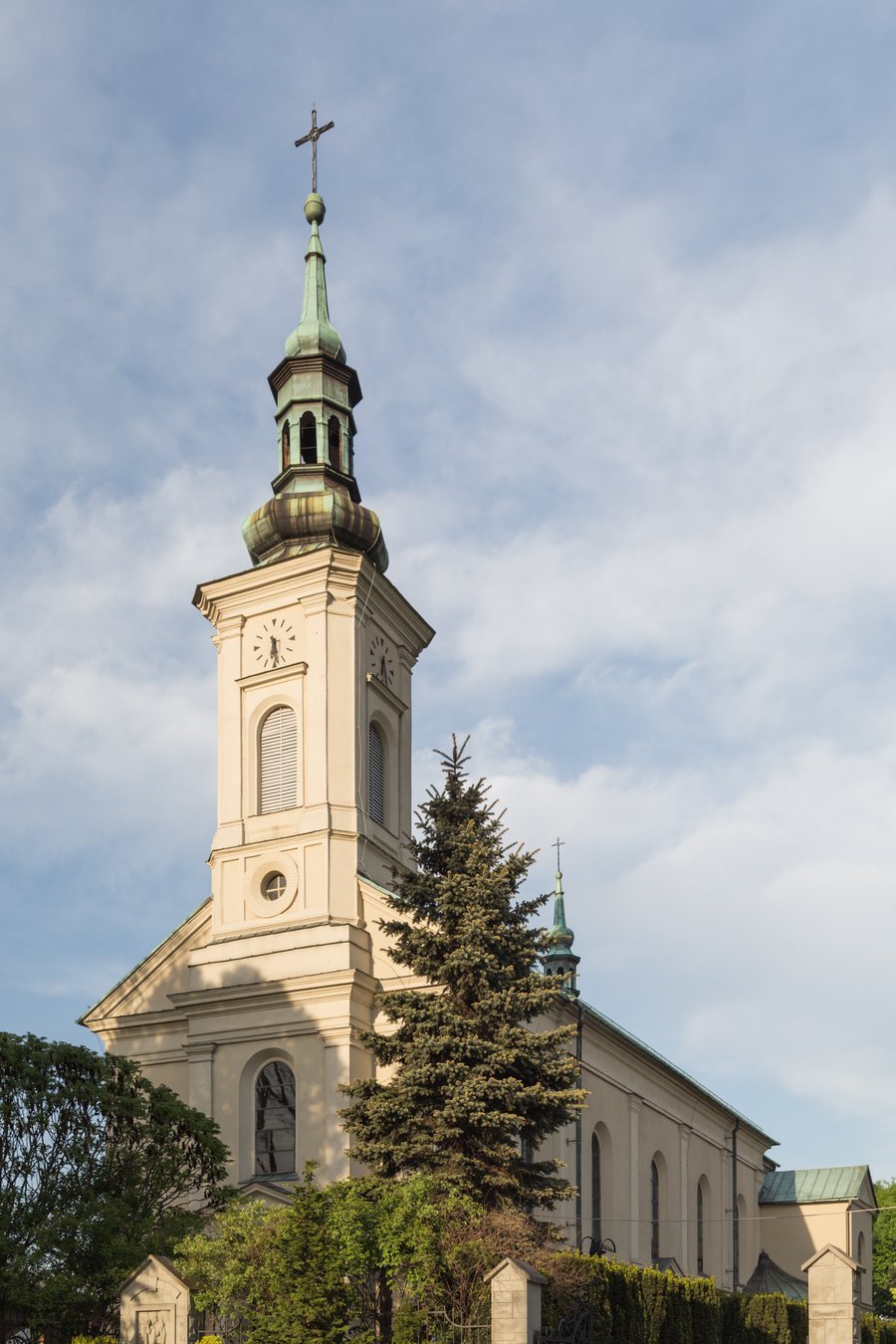 2018 Powiat oświęcimski, Brzeszcze, Kościół św. Urbana 02
Photo: Marcin Konsek via Source, CC BY-SA 4.0
2018 Powiat oświęcimski, Brzeszcze, Kościół św. Urbana 02
Photo: Marcin Konsek via Source, CC BY-SA 4.0
Water Landscapes and Nature in Nazieleńce
Brzeszczańskie Nazieleńce is a woodland and pond complex in the upper Vistula Valley. Several dozen fishponds, adjoining mixed woodland and Vistula meadows shape this landscape. The fishpond complex covers more than 150 hectares in total; this figure gives a sense of the extent of the water landscape. The area figure refers to the ponds, while the mixed woodland and Vistula meadows are additional elements of the landscape. The meandering Młynówka stream feeds the Nazieleńce ponds and connects the Soła and Vistula rivers.
At Przebór Pond, floating plants cover a large area of the water’s surface; the protected yellow water-lily is also part of the local natural environment. The great bittern and little bittern occur in the Nazieleńce area. The municipality describes both as very rare throughout Europe. Their presence may change over time. Nature here ranges from the extent of the pond complex to individual plant and animal species.
Cycling Between Ponds and City Streets
The nearly 14 km “Brzeszcze na rowerze” (“Brzeszcze by Bike”) cycling route runs through the municipality, including the Nazieleńce ponds and Natura 2000 areas in the Vistula and Soła floodplains. The stated length and the named landscape areas give an impression of the route’s character. The “Brzeszcze by Bike” route follows local streets in the city of Brzeszcze. Thus, the route descriptions mention both natural areas and sections along city streets.
Memorial Sites and Local History
The grounds of the former Jawischowitz subcamp largely coincided with the area of today’s city park on Dworcowa Street. The camp bathhouse building and a lamp have survived in the park as remnants of the subcamp. A monument to the victims of the subcamp, designed by Bogdan Rzenno, was unveiled in Brzeszcze on 1 September 1983. The Jawischowitz subcamp was an outpost of KL Auschwitz-Birkenau. The former camp grounds, surviving remains and remembrance of the victims are distinct but interconnected aspects of local history.
St. Urban’s Church: Construction and Style
St. Urban’s Church provides a different architectural point of reference. It is a 19th-century brick church in the Neo-Baroque style; construction began in 1874. The date indicates when work began, while “Neo-Baroque” identifies the architectural style. The church’s architecture and the history of the subcamp thus offer two distinct ways to explore local history.
If you are looking for a holiday apartment in Brzeszcze, you can use your travel interests as a starting point: the pond landscape and its species offer a focus on nature, cycling provides another theme, while the park, monument and church point to various historical facets.
Discover more destinations: Łęki, Kęty, Zator, Skidzin, Jawiszowice, Grojec, Bielany, Nowa Wieś
For the broader travel overview: Auschwitz.

