
Pakość: Calvary, Churches and the Noteć
Accommodation in Pakość
Pakość offers two thematic perspectives: sacred architectural history and activities on land and water. The Pakość Calvary and several churches give the cultural side a distinct character; the “Ku Kaczym Dołom” walking and cycling route and the Noteć represent other ways to shape a trip. This gives you the opportunity to consider whether historic architecture, activity or a mixture of the two should define your days.
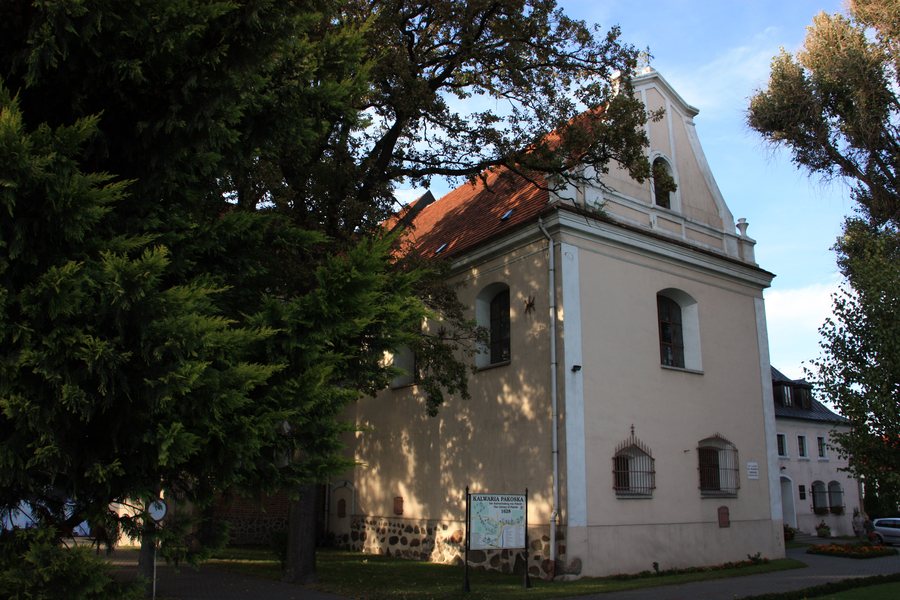 File:Kościół św Bonawentury Pakość 03 AW.jpg
Photo: Wolskaola via Wikimedia Commons, CC BY-SA 3.0 pl
File:Kościół św Bonawentury Pakość 03 AW.jpg
Photo: Wolskaola via Wikimedia Commons, CC BY-SA 3.0 pl
Sacred Architecture on Several Scales
The Church of Jesus Crucified and Our Lady of Sorrows has a distinctive architectural history. It was originally a wooden rotunda. After 1661, it was built of stone with a foundation from Marcin Umiński. A rotunda is a round building; here, the change from wood to stone reveals two clearly distinguishable construction phases. On 14 September 1691, Wojciech Stamowski, Bishop of Włocławek, consecrated the church.
The Pakość Calvary is also known as the Jerusalem of Kujawy. It comprises 24 chapels and the Church of the Crucifixion. The number gives a tangible sense of the scale of the sacred complex: its character comes not from just one sacred building, but from many chapels and a church. This is a different cultural scale from that of a single church and may be an important factor in choosing which historical themes to explore.
The Church of St. Bonaventure and its associated monastery are historically connected to the walls of a former castle, built in 1325–1330: both are located within these walls. The Chapel of Our Lady of Pakość is housed in the former gate tower. This reveals two distinct spatial relationships: a church and monastery within the castle walls, and a chapel in the former gatehouse. For those interested in architecture, these are concrete connections between sacred buildings and their built surroundings.
Walking, Cycling and the Noteć
There is also a named point of reference for more active days. The “Ku Kaczym Dołom” walking and cycling route passes through the municipalities of Dąbrowa, Pakość and Barcin. Its dual role as a walking and cycling route offers two different ways to shape your trip, while the three municipalities give it a cross-municipal character. If you are considering whether you would rather travel on foot or by bike, this is a concrete starting point for your planning.
In Pakość, the Noteć is part of the Pętla Wielkopolska, a tourist water route for sailors, motorboat users and kayakers. This offers a concrete recreational perspective on the river. At the same time, the Noteć no longer has the same importance for freight transport as it once did. Recreational use of the water and freight transport thus offer two different perspectives on the same river.
Choose a Holiday Apartment Based on Your Travel Interests
When searching for a holiday apartment, this range of themes can offer a starting point. Consider whether sacred architectural history should be the focus, or whether you would rather give greater weight to walking, cycling and the tourist water route.
More Destinations
Discover more destinations: Inowrocław, Kruszwica, Tupadły, Gniewkowo
Return to the main travel overview: Inowrocław.

