
Czerlejno: Wooden Church, Windmill and Village History
Accommodation in Czerlejno
Czerlejno’s history is reflected in very different traces: in the wooden Church of the Assumption of Mary, built in 1743; in the Koźlak windmill, with its long milling tradition; and in an obelisk bearing two precisely dated milestones. Architecture, agriculture and local history each have their own distinctive place here. If you enjoy understanding what has shaped a place, Czerlejno offers more than one historical point of interest.
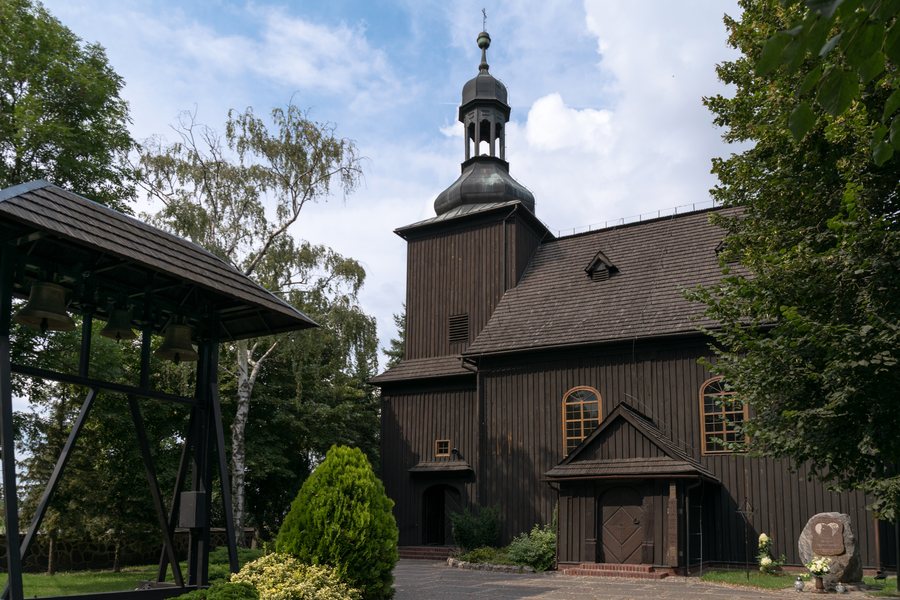
Wooden architecture: church and windmill
The Church of the Assumption of Mary was built in 1743 using log construction. This building method involves stacking logs on top of one another; at the church, you can see both its year of construction and a specific construction technique. If you are interested in traditional building styles, you can consider both aspects together: the age of the building and how it was built.
The Koźlak windmill offers a different perspective on wood and work. It was brought to Czerlejno in 1865 and ground grain for local farmers there for almost a century. The church and the mill thus represent different historical themes: the church draws attention to its construction, while the mill reflects its long connection to local grain processing.
An obelisk with two historical dates
The obelisk in Czerlejno was erected in 1928 and reconstructed in 1984 to mark the 110th anniversary of the local agricultural association. The two dates therefore refer to different events; the reconstruction was specifically linked to the agricultural association’s anniversary. Together with the year the church was built and the mill’s almost century-long period of use, they offer a broader historical perspective on the village. To put these details in context, it helps to consider the building’s history, agricultural work and the dated history of the obelisk as separate themes.
The themed trail to the wooden churches
The themed trail to the wooden churches passes through Gułtowy, Czerlejno and Siekierki Wielkie. All three are villages in the Kostrzyn municipality where wooden churches dating from the 18th century have been preserved. Czerlejno is therefore one of the three places specifically named on this route. This may offer a different focus from the history of each individual village: here, the emphasis is on several villages and their preserved churches. The Church of the Assumption of Mary in Czerlejno, built in 1743, is a specific example of this wooden-church theme.
Visits with different conditions
There is an important current restriction on visiting the hunting palace: it can currently only be viewed from outside the fence, and its future is uncertain. You can arrange a visit to the Koźlak windmill outside the season by booking in advance. Access depends on weather conditions. Keep these conditions in mind when planning a visit to the mill.
Choosing the right focus for your trip
The local history and the themed trail offer different ways to explore Czerlejno: you can focus on building styles, the mill’s use and the obelisk, or on the wooden churches in three villages. When looking for a holiday apartment, it helps to first consider which of these interests matters most to your trip planning. This can help you decide whether you would prefer to explore the village’s historical highlights or include the themed trail in your plans.
Discover more destinations
Discover more destinations: Runowo, Złotoryjsko, Swiatniki N Warta, Mosina, Dąbrówka, Glinka Duchowna, Szczytniki, Wiktorowo
Back to the main travel overview: Poznań.

.jpg)