
Discover Vallà: Church Art, History and Street Art
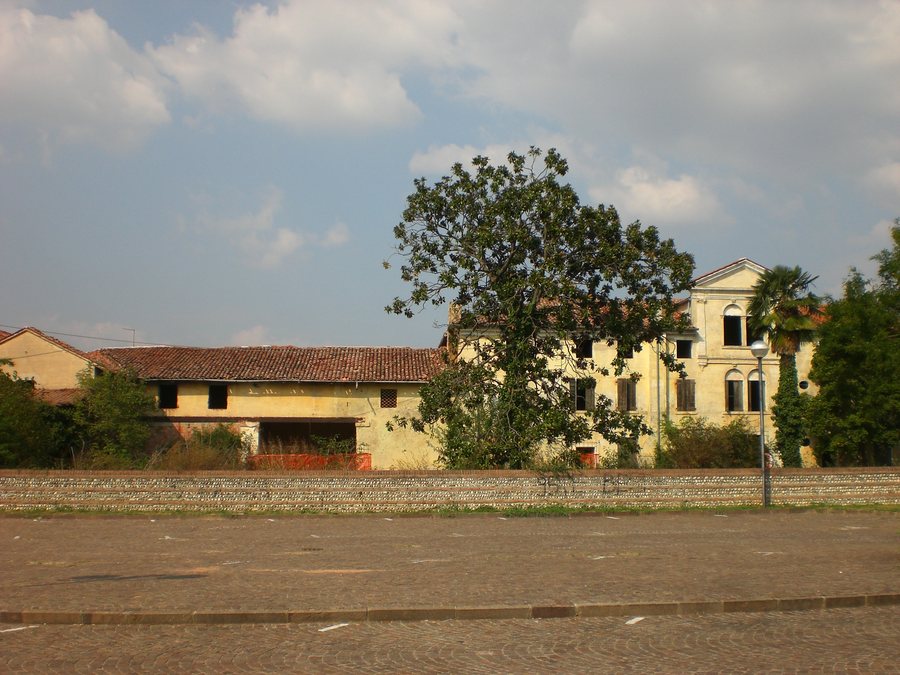 File:Riese Pio X (TV) - frazione Vallà - villa Cecconi.jpg
Photo: Gnomo1984 via Wikimedia Commons, Public domain
File:Riese Pio X (TV) - frazione Vallà - villa Cecconi.jpg
Photo: Gnomo1984 via Wikimedia Commons, Public domain
Vallà between church art and traces of history
In the village and its surroundings, Vallà combines sacred art, a settlement history reaching far back into the past, and special destinations in the wider regional area. The Chiesa di San Giovanni Battista, the Monumento ai Caduti di Vallà and the “Vallà Street Art – The Wallà” walking tour create three distinct cultural focal points in the village. This picture is complemented by museums, historic buildings, as well as mountains and a cave in the wider region.
History from the Copper Age to the Castelliere
Human settlement in the Vallà area can be traced back to the Copper Age. Another historical perspective focuses on the village of Castelliere: historians consider the fortifications once located there to have been Lombard structures that defended a section of the Roman Via Aurelia and Via Postumia. The historical span therefore extends from the settlement of the area, traceable back to the Copper Age, to the former fortifications of Castelliere.
Church and fresco in Vallà
The Chiesa di San Giovanni Battista in Vallà was built in the first half of the 18th century according to a design by Francesco Maria Preti. The church houses the fresco “Gloria di San Giovanni Battista” by Giovanni Battista Canal. Together with the history of Ca’ Emiliani, this creates a clear focus on sacred architecture and art.
Ca’ Emiliani, Villa Caprera and museums
Ca’ Emiliani is located in the countryside west of Vallà and is the private oratory of the former Villa Emiliani. The oratory was probably built in 1735 by Francesco Maria Preti and dedicated to Saint Girolamo Emiliani. Villa Caprera, a palace, is also located in the vicinity of Vallà. Castellano Arte Contemporanea, a museum, is likewise located in the vicinity of Vallà. The surrounding area also includes Galleria D'Arte La Saletta, a museum, and the Museo di Storia Naturale e Archeologia, also a museum. A palace and a museum are located in the vicinity of Vallà; the surrounding area of Vallà also contains two additional museums.
A striking monument in the village
The Monumento ai Caduti di Vallà consists of a tall stele with a column, a capital decorated with plant motifs, and an eagle with outspread wings. The base stands on three marble steps and incorporates a marble bas-relief. The individual design elements make the monument a concrete detail for a walking tour through Vallà and complement the church art with another visible form of local commemoration.
Mountains and a cave in the wider regional area
Colesel Val dell'Acqua, Monte Palla and Monte Pallone are located in the wider regional area around Vallà; all three are mountains. Cave di Rubbio, a cave, is also located in the wider regional area. These destinations broaden the perspective beyond the immediate village. The geographical progression thus extends from church art, the monument and street art in Vallà to mountains and a cave in the wider regional area.
The “Vallà Street Art – The Wallà” walking tour
The “Vallà Street Art – The Wallà” walking tour begins in parking areas near the church of Vallà. Its starting point near the church places it in a direct spatial relationship with the village. Street art thus complements sacred art, the monument and the museums with another cultural accent.
Discover more places
Fontanelle, Crocetta Del Montello, Fregona, Dosson, Biancade, Gorgo Dei Molini, Tarzo, Cimadolmo
Check prices, availability and amenities for your travel dates directly on Booking.com.
View accommodation and offersAdvertisement · Affiliate link to Booking.com
_-_frazione_Vall%C3%A0_-_villa_Cecconi.jpg)