
Benabbio: Holiday Apartment, Churches and Castello Lupari
Accommodation in Benabbio
Benabbio combines striking reminders of its past with a landscape that catches the eye even on the road leading to the village. On a hill northeast of Benabbio, Castello Lupari survives as a ruin with sections of wall still standing. In the 13th century, the complex reached its greatest extent and became an important administrative centre controlling the entire Val di Lima. If you are looking for a holiday apartment in Benabbio with a clear cultural focus, this is where your orientation begins—with the castle and the history of the village.
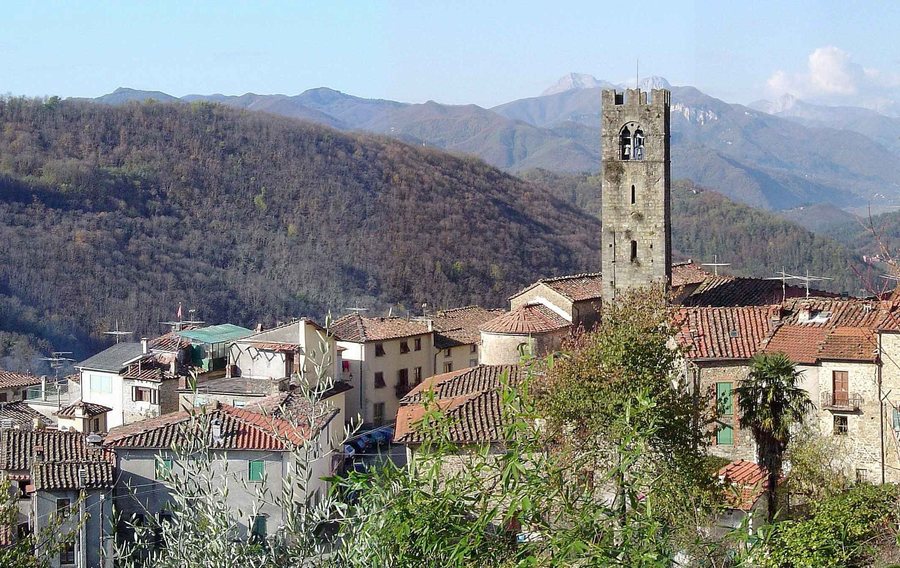 File:Veduta di Benabbio, Bagni di Lucca, Italia.jpg
Photo: benabbio.com via Wikimedia Commons, Public domain
File:Veduta di Benabbio, Bagni di Lucca, Italia.jpg
Photo: benabbio.com via Wikimedia Commons, Public domain
Culture and Local History in Benabbio
The cultural focus of the Museo di Arte Sacra di Benabbio (MABe) is spread across three main locations: the Oratorio della Santissima Trinità as the museum’s headquarters, the Chiesa di Santa Maria Assunta and the Oratorio del Santissimo Sacramento. MABe developed from a collection of art-historical and cultural treasures accumulated over centuries by the parish of Santa Maria Assunta in Benabbio, as well as by other religious institutions connected with this parish in the surrounding area. The three locations give your cultural orientation a clear structure without reducing the collection to a single building.
MABe can currently be visited by telephone appointment in advance at 3468298282. A few steps from the museum, there is a car park at Corte Cesare Viviani; further parking spaces are available around the church and along the main roads through the village. This gives you both a specific museum appointment and several options for parking your vehicle when planning your visit.
Churches and Art to Discover
The Chiesa di S. Michele is located within the walls of the old castle of Benabbio and was built in 1218. The parish church of Santa Maria Assunta in Benabbio was built in 1338.
The Chiesa di Santa Maria in Benabbio houses a wooden Annunciation group from the 14th century by Piero d’Angelo di Guarnerio, the father of Jacopo della Quercia. For visitors who like to orient themselves through specific details, the connection between the work, its creator and the family relationship provides a tangible approach to sacred art. Families with different interests also gain a clear point of connection between buildings, the museum and individual works of art.
Landscape, Route and Getting There
The Via degli Oratori follows a route past ten oratories and churches that mark its stages. The route therefore places a clear emphasis on religious architecture and local history. On the road leading to Benabbio, the landscape passes through acacia woods and by numerous olive groves. Alongside the sacred sites, this brings rural landscapes into view, giving your travel planning a second, more tranquil perspective.
Bus route E44 connects Bagni di Lucca with the village of Benabbio. When choosing a holiday apartment in Benabbio, this connection complements the village’s main points of orientation: you can incorporate the cultural highlights, the landscape along the roads and the connection with Bagni di Lucca separately into your plans. Benabbio thus offers concrete points of reference for a stay in which historic buildings, sacred art and landscape stand side by side on an equal footing.
Further Places for Orientation
To compare further places, you can include Crasciana, Casabasciana, Longoio-Mobbiano, Montefegatesi, Pieve Di Monti Di Villa, Scesta, Granaiola and Lucchio.
For the overview of the wider area: Bagni Di Lucca.

