
Transacqua: Discover Culture, Mining and Trails
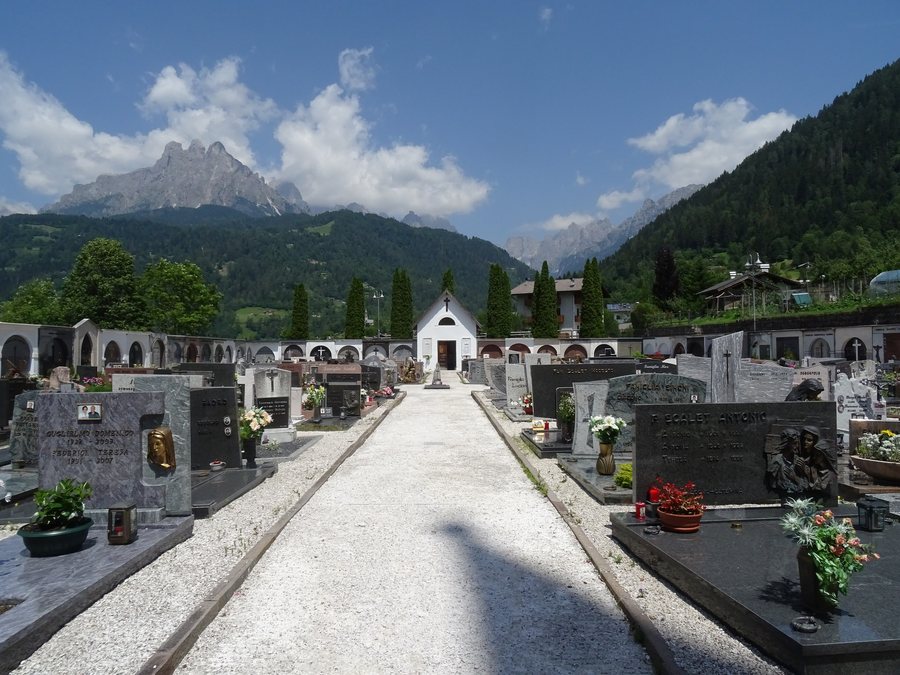
Transacqua combines art, mining history and trails through a multifaceted local landscape. Historic buildings, a restored mill, a monumental work and views of the Dolomite peaks give your stay different points of focus. If you are looking for a holiday apartment in Transacqua, here you will find inspiration for days spent exploring the village, hiking and cycling.
Art and History in Transacqua
The Church of San Marco dates back to an initial structure from around 1500. It was rebuilt in 1780, extended between 1863 and 1878, and restored and extended again in 1970. Its slender Gothic-style bell tower is particularly distinctive. Inside are an altarpiece dedicated to San Marco attributed to Titian and a painting of the Marriage of the Virgin Mary dated 1615. The church is also associated with the song “La Cesota de Transacqua”, which is part of the Alpine tradition repertoire.
Palazzo Someda dates from 1590 and was built at the end of the 16th century by Giovanni Someda, a member of an important local family involved in the timber trade. Today, the palazzo retains a small tower, a garden, Venetian-style windows and wrought-iron balconies. A restored building in Transacqua also preserves a 16th-century structure and a painting of the Crucifixion with Saints by Giovanni Battista Costoia from 1600.
The former economic and mining history is also tangible in the village. In 1880, there were six mills in the Transacqua area, including the small Il Molinet mill on the road to the village of Navoi. The restored Il Molinet preserves a large wooden water wheel and the system used to collect the water diverted further uphill. In the 15th century, Transacqua was one of the valley’s major mining centres, with around 500 tunnels used to extract silver, copper and silver-bearing lead. The Stol mine was the last active mine in Primiero and remained in operation until 1866.
Views and Trails around the Village
Ormanico is considered a particularly scenic village, with views of the Primiero basin and the surrounding Dolomite peaks. Another tranquil green space is Parco Benessere Navoi, with views of the Pale di San Martino.
The circular route through Transacqua begins at the Autostazione delle Corriere and leads through the village to numerous historic and artistic sights. The “Anello Ormanico Transacqua e le Vecchie Miniere” is an easy, well-signposted circular hike around Transacqua. Along the way, there are views of nearby villages such as Fiera di Primiero, Transacqua and Ormanico, as well as the Pale di San Martino and the Vette Feltrine.
This circular route also offers a clear choice between hiking and cycling when planning your day: it can be completed entirely by bicycle. The Sentiero delle Càore, on the other hand, recalls an earlier use of the route. During the summer season, goats were led along this path from the village to fields at higher elevations. The excursion still offers views of the two main entrances to the Stol mine.
The Right Holiday Apartment for Your Plans
The village circuit, the easy hike with a mining theme and the route that can be completed entirely by bicycle each offer a different focus. When choosing your holiday apartment in Transacqua, you can therefore consider whether art and historic buildings, landscape views or active trails should be at the heart of your stay.
Check prices, availability and amenities for your travel dates directly on Booking.com.
View Accommodation and OffersAdvertisement · Affiliate link to Booking.comMore Destinations to Choose From
Tremalzo, Mezzolago, San Sebastiano, Pozza Di Fassa, Smarano, Montesover, Castello Tesino, Neustift
For the higher-level travel overview: Trentino.

