
The UNESCO World Heritage Dolomites comprises nine areas that protect characteristic mountain landscapes of exceptional natural beauty. Their appearance is shaped by rocky peaks, needles, towers, forests, meadows and gorges; some limestone walls rise more than 1,500 metres high. Four of the nine UNESCO World Heritage areas of the Dolomites are located in South Tyrol.
Another distinctive natural area is Stelvio National Park. It lies mainly in South Tyrol around the Ortler-Cevedale group and includes the Martell Valley and the Ultimo Valley. The South Tyrolean part of the national park stretches from 650 metres on the valley floor near Latsch to glaciers at an altitude of 3,900 metres and encompasses all alpine climate zones. This range, together with the changing Dolomite landscapes, makes the regional natural setting visible in its full height and diversity.
Nature
Stelvio National Park includes a network of more than 250 kilometres of marked trails. The national park's visitor centres provide information about the protected area and the hiking trails. Thus, visitor information focuses not only on the landscapes, but also on their protection and the routes through the area.
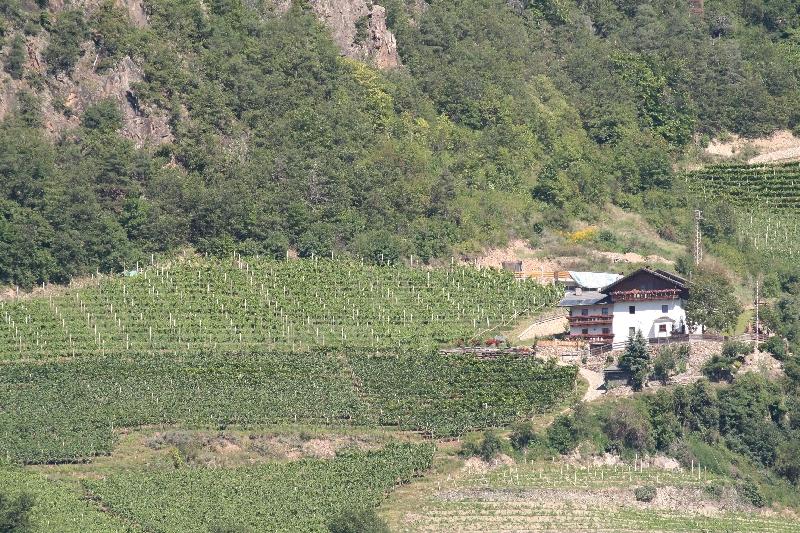
Another geographical line is formed by the South Tyrolean Wine Road. It stretches for 150 kilometres between Nals and Salorno. From Bolzano, the towns along the South Tyrolean Wine Road can be reached by connecting trains, scheduled buses, taxis or the South Tyrol Transfer shuttle.
Culture
The region's museums and educational sites focus on different topics. The Dolomites Museum in Predazzo is a branch of MUSE with more than 11,000 exhibits. Associated with this museum is the Dos Capèl geological educational trail, which is open to visitors in summer. At the House of the Geopark in Carisolo, in Adamello-Brenta Nature Park, geological topics are presented using models, dioramas, interactive experiments and multimedia stations.
In the centre of Bolzano, the South Tyrol Museum of Archaeology displays the Ötzi glacier mummy. The museum also includes a permanent interactive exhibition about Ötzi's life. The original clothing and equipment displayed there provide insights into life in the Copper Age. A mountain tour leads to the Ötzi discovery site on Tisenjoch at an altitude of 3,210 metres. The ArcheoParc displays reconstructions of Stone Age houses.
Trauttmansdorff Castle also combines nature and culture. The Gardens of Trauttmansdorff Castle cover 12 hectares and include 80 garden landscapes divided into four thematic garden worlds. The castle houses the Touriseum, which tells the history of Alpine tourism. The Sissi Trail leads uphill from Merano city centre to the Gardens of Trauttmansdorff Castle.
Thun Castle was built in the mid-13th century and was the residence of the Thun family for centuries.
Regional routes
A cultural trail in Trentino leads through old houses, mills and huts. The same cultural trail also includes visits to fortifications from the First World War, hydroelectric power stations and mountain villages. The sequence thus brings together various examples of rural life, technology, recent history and mountain settlements, without limiting the individual stops to a single theme.
In Garda Trentino, a surf centre offers courses, private lessons and equipment rental for various disciplines.
