
Holiday apartment in Leinì – churches, history and Vauda
Accommodation in Leinì
Leinì brings together architectural history, sacred art, pilgrimage traditions, commemorative culture and Vauda’s regional protected status in tangible places. Those interested in culture encounter architecture, painting and religious traditions here.
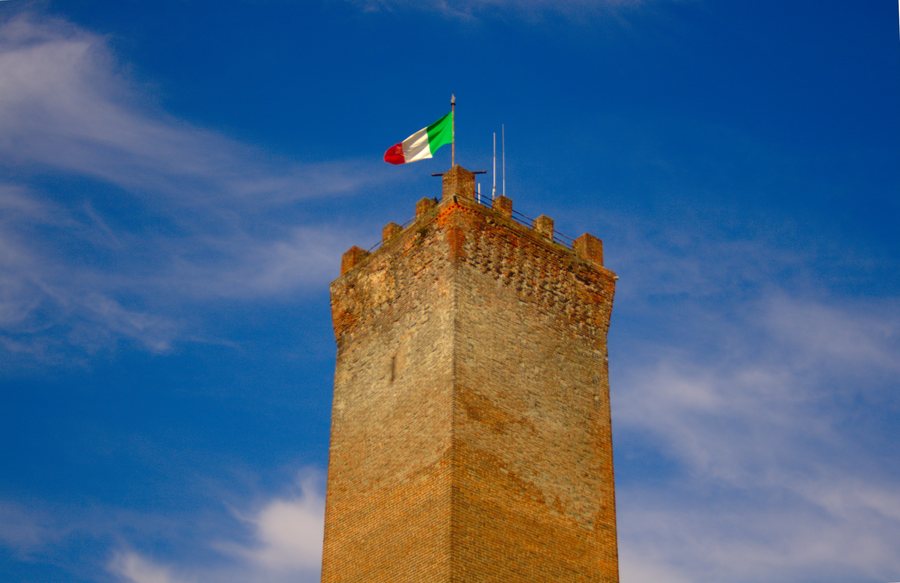
Towers and traces of the castle
The Torre dell'Ammiraglio is a square tower from the 13th century and a surviving testament to the Provana fief. The Teatro Civico Luciano Pavarotti was created through the restoration of the portico of the wing of Castello Provana di Leinì. The two buildings represent different historical forms in Leinì: here, a square tower has been preserved, while there a theatre was created through the restoration of a portico. The transition from the preserved tower to the theatre created through the restoration of a portico broadens the view of Leinì’s architectural history without limiting the connection to the Castello to a single building.
Churches, construction periods and sacred art
Construction work on the Chiesa di San Giovanni began in 1622 and ended in 1647. The church also contains an altarpiece from 1665 depicting the Baptism of Jesus. The two churches provide different chronological reference points: San Giovanni represents construction work from 1622 to 1647, while Santi Apostoli Pietro e Paolo represents its elevation to parish church status in 1339 and its expansion between 1907 and 1913. At San Giovanni, attention is focused on the construction period and on the painting’s subject, the Baptism of Jesus.
The Chiesa parrocchiale Santi Apostoli Pietro e Paolo was elevated to parish church status in 1339 and extensively expanded between 1907 and 1913. It contains paintings by the painter Ruffo from Turin and by the painter Morgari. On the right-hand side of the portal, there is an entrance with a ramp for people with reduced mobility. In the parish church, the paintings by Ruffo from Turin and Morgari are located within the same sacred building as the entrance with a ramp.
Votive chapel and sanctuary
The Cappella di San Rocco was built as a votive chapel after a plague epidemic that affected Leinì between 1690 and 1695. It was built in 1703 and rebuilt in 1727. The Santuario della Madonna delle Grazie e del Carmelo was built in 1630 because of the plague. It was originally established as a hermitage for pilgrims. San Rocco represents a votive chapel created after a plague epidemic, while the sanctuary represents its original function as a hermitage for pilgrims. Masses are held at the Santuario on Wednesdays, Fridays and Sundays at 08:30 each day. In addition to the sanctuary’s origins, this place therefore also has a fixed weekly schedule: the Masses take place on three days of the week and begin at the same time each day. The three weekdays with the uniform time of 08:30 give worship at the Santuario a fixed temporal framework. The connection with the plague thus extends from the votive chapel and the Santuario to the former plague hospital at Parco della Rimembranza.
Memorial site and Vauda protected area
At Parco della Rimembranza, the fallen of both world wars are commemorated at the site of a former plague hospital. Parco della Rimembranza connects remembrance of the fallen with the site of the former plague hospital. The Vauda Natura 2000 site also extends into the municipality of Leinì. Vauda has the status of a regional protected area as Riserva naturale orientata della Vauda. For those interested in nature, Vauda is not only a Natura 2000 site but also a regional protected area.
For the overarching travel overview: Turin.

.jpg)