
Holiday apartment in Castellamonte: Ceramics, Churches and Monti Pelati
Accommodation in Castellamonte
Castellamonte combines a strong ceramics tradition with historic churches, unusual buildings and the stark landscape of the Monti Pelati. If you are looking for a holiday apartment in Castellamonte, you will find a destination here that combines cultural discoveries with distinctive experiences of nature.
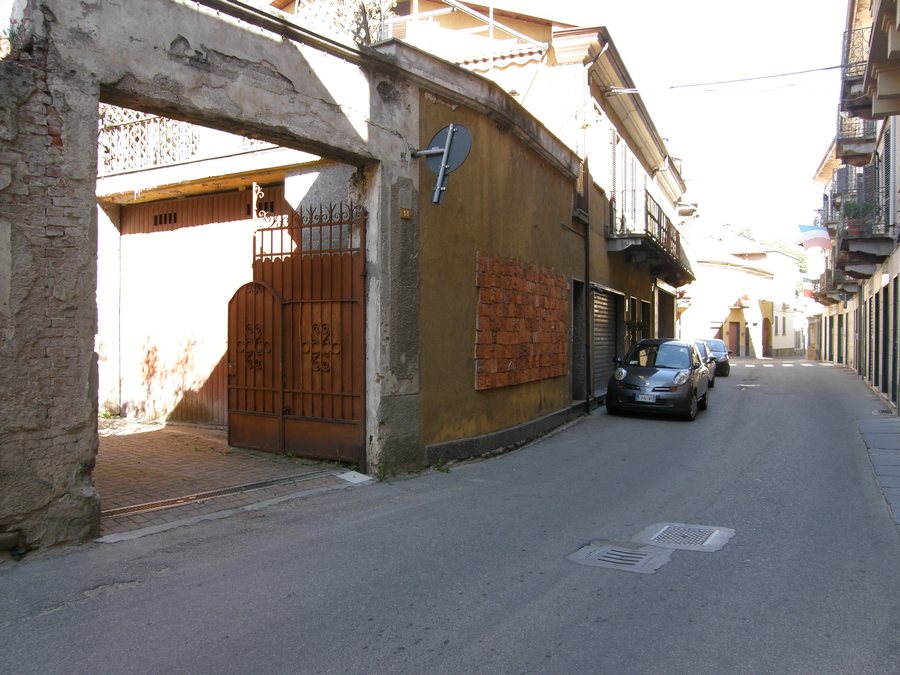 File:10081 Castellamonte TO, Italy - panoramio (10).jpg
Photo: iw1gfv via Wikimedia Commons, CC BY 3.0
File:10081 Castellamonte TO, Italy - panoramio (10).jpg
Photo: iw1gfv via Wikimedia Commons, CC BY 3.0
Ceramics as a defining theme of Castellamonte
This connection is particularly evident at the Museo della Ceramica in Palazzo Botton. The museum grew out of the “Raccolta Civica di Terra Rossa” and opened to the public in 1993. The modern section includes works from all over Italy donated by artists participating in the annual Mostra della Ceramica, as well as works by local craftspeople and creations by students of the Istituto d'Arte.
A striking example is the Arco di Pomodoro, with a radius of six metres. On each side, 31 decorated moulded elements alternate with smooth elements; all are made of textured terracotta. The arch commemorates Arnaldo Pomodoro’s contribution to the XXXV Mostra della Ceramica in 1995. La Stufa di Ugo Nespolo also shows how closely art and craftsmanship are connected: Ugo Nespolo designed the cladding panels, while Sandra Baruzzi and Guglielmo Marthyn produced them with the support of students from the Istituto d'Arte Felice Faccio. They were fired in the kilns of La Castellamonte, which produces ceramic stoves in traditional and design lines while preserving old manufacturing techniques.
Churches, squares and historic traces
The Chiesa parrocchiale Natività di Maria Santissima is documented in records dating from 1329. It acquired its present form in 1870 and features a Baroque façade with three ceramic panels by Alfeo Ciolli. Historically, the church became a destination for public processions and pilgrimages, especially on Ascension Day and 8 September. The Chiesa di San Rocco dates from 1769 and also has a Baroque façade, here with terracotta elements. The parish church of Santi Pietro e Paolo houses a life-size nativity scene made of red Castellamonte earth, a work by the sculptor Angelo Pusterla.
The Rotonda Antonelliana is the surviving part of Alessandro Antonelli’s magnificent unrealised project for the parish church of Santi Pietro e Paolo. In summer, it hosts the Mostra della Ceramica of Castellamonte. For another perspective on the local tradition, there is the Casa Museo Famiglia Allaira: it displays restored stoves and Franklin fireplaces from Castellamonte’s ceramics tradition, as well as works by ceramic artists Angelo Barengo and Renzo Igne. The museum contains thousands of restored and catalogued domestic, architectural and figurative ceramic objects from Castellamonte. The tour includes seven furnished rooms and a restoration workshop and is guided by family members and specialists in the field.
The former Pagliero factory houses three production lines from the 19th century and from the 1930s and 1950s. The exhibition area of the Centro Ceramico Fornace Pagliero is open only during events announced in the calendar. This makes it possible to discover Castellamonte’s ceramics history in different places and in different forms.
Monti Pelati: an unusual natural landscape
The Riserva Naturale dei Monti Pelati nature reserve also includes territory belonging to the municipality of Castellamonte. Hills that are almost devoid of vegetation characterise the protected area; their underlying rock consists mainly of peridotite. Olivine and magnesite also occur on the surface of the Monti Pelati, while the sparse vegetation makes the landscape appear almost lunar. By public transport, the area can be reached via the Torino–Aosta railway line from Torino Porta Susa station to Ivrea, followed by the GTT bus route Ivrea–Castellamonte–Valchiusella.
This allows you to choose different priorities when selecting your base: museums, churches and historic production sites favour a culture-oriented stay, while the Monti Pelati provide a distinctive natural highlight. The Castello can be reached on foot in about 10 to 15 minutes via the paved Via Conti di S. Martino. A holiday apartment in Castellamonte can therefore be chosen according to your preferred daily rhythm and personal mix of ceramics, architecture and landscape.
More destination ideas for planning your trip: Carignano, Dubbione Di Pinasca, Coazze, Usseaux, Roletto, Didiero, Chiesanuova and Villar Perosa.
For the broader travel overview: Turin.

.jpg)