
Morano Sul Po – Churches, Industrial History and Rice Cultivation
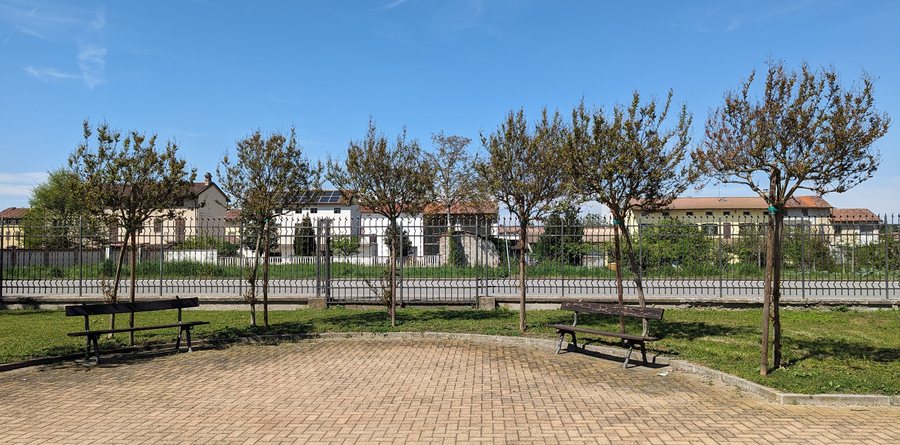 File:Cimitero Morano sul Po 02.jpg
Photo: Photo: Ivan Ruggiero I'd appreciate if you could mail me (ivanrugg+credit@gmail.com) if you want to use this picture out of the Wikimedia project scope. Please attribute as: Ivan Ruggiero (Wikimedia)
File:Cimitero Morano sul Po 02.jpg
Photo: Photo: Ivan Ruggiero I'd appreciate if you could mail me (ivanrugg+credit@gmail.com) if you want to use this picture out of the Wikimedia project scope. Please attribute as: Ivan Ruggiero (Wikimedia)
Holiday apartment in Morano Sul Po: Discover culture and landscapes
Morano Sul Po combines sacred architectural history with industrial heritage and the landscape of rice cultivation. When choosing a holiday apartment in Morano Sul Po, you can therefore first consider whether you would like to focus on churches and works of art, the history of technology, or cycling with a break in the picnic area.
The Chiesa Parrocchiale di San Giovanni Battista was rebuilt on the remains of a small chapel. Together with the town’s castle, it had been destroyed during the conflicts between the Marquises of Monferrato and the people of Vercelli. The church also contains two precious Baroque wooden confessionals from the Santuario di Crea.
The Chiesa di San Pietro Martire was built before 1400 by Dominican friars; it was formerly attached to a monastery. The right aisle contains a triptych dated 1478. The Chiesa della Santa Trinità dates from before 1608. The brotherhood based there formerly provided accommodation for pilgrims and convalescents.
The entrances to the three churches are on clearly identifiable streets: the entrance to the Chiesa Parrocchiale di San Giovanni Battista is on Piazza Aldo Moro and Via M. Bavoso, directly on the street. The entrance to the Chiesa di San Pietro Martire is directly on Via San Pietro Martire at street level, while the entrance to the Chiesa della Santa Trinità is directly on Via Pietro Gallo.
An unusual testament to industrial labour is the Arco di Morano sul Po. The parabolic arch structure, built in 1951 by Unione Cementi Marchino/Unicem di Casale Monferrato according to a design by engineer Guido Sarti, enabled the cableway to safely cross the main road while transporting cement marl from the Palazzina Borino di Coniolo mine to the cement factory in Morano. The structure remained in operation until around 1958.
Near the Arco di Morano sul Po, a centre for communicating the area’s industrial heritage was established, comprising a container called "Heritage in a box" and an interactive web app. The Arco is directly visible from the SP31Bis provincial road in Morano sul Po. Alternatively, you can park in the nearby car park by the "100% moto" shop and view it on foot.
In the Due Sture district, the old distillery was converted into the Monumento al Lavoro "La Vecchia Fornace". The Monumento al Lavoro "La Vecchia Fornace" is visible only from the outside.
The Grangia di Pobietto lies at the centre of an extensive rice-growing area on elevated ground, which is safer than the adjacent areas at greater risk of flooding. As a result, alongside the churches and industrial heritage, the distinctive landscape of rice cultivation also emerges as a travel aspect in its own right.
The Grangia di Pobietto includes a medieval gate tower and part of a wall with a pointed-arch surround. The Grangia is also located on the VEN.TO cycle route between Venice and Turin. There is a picnic area within the Grangia di Pobietto in Morano sul Po. These different focal points can provide practical guidance when choosing your holiday apartment: architectural history, industrial heritage, or a combination of cycle route and picnic.
Other places for orientation
San Giuliano Vecchio, Silvano D'orba, Sala Monferrato, Arquata Scrivia, Cassine, Pecetto, Vignale Monferrato and Sant'Agata Fossili
For the broader travel overview: Alessandria.
Check prices, availability and amenities for your travel dates directly on Booking.com.
View accommodations and offersAdvertisement · Affiliate link to Booking.com