
Holiday apartment in Saltara: Medieval Heritage, Art and the Metauro Landscape
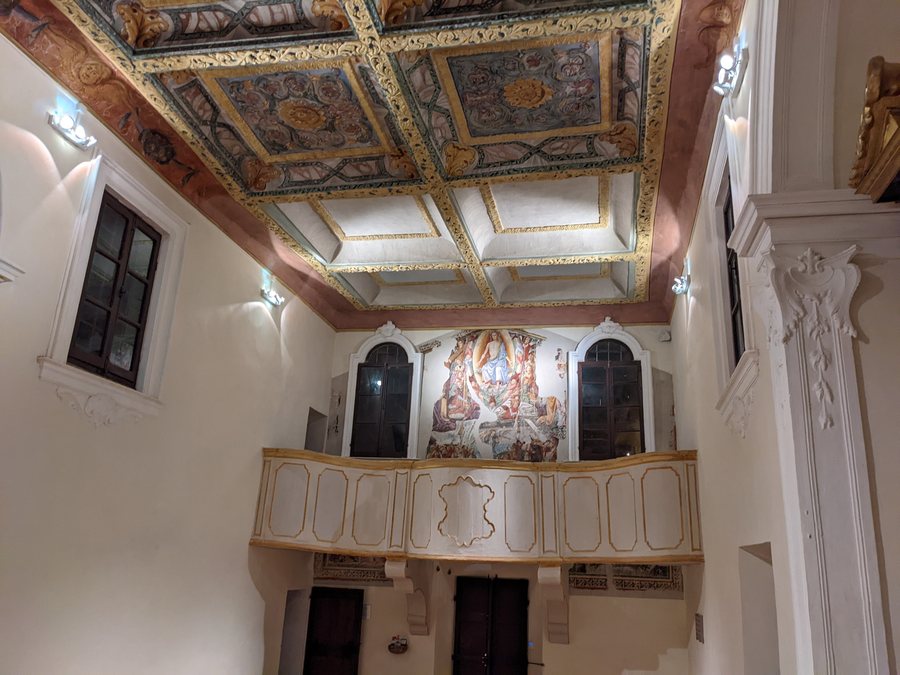
Saltara combines medieval traces, sacred art, events and a hilly landscape along the Metauro. The covered markets, the castle, historic churches and the exhibitions on mosaic art give the town a variety of facets. When choosing a holiday apartment in Saltara, you will therefore find both opportunities for cultural discoveries and practical guidance for planning individual days of your holiday.
Medieval Heritage and Art in Saltara
The covered markets of Saltara were established in 1449 on the basis of a concession granted by Novello Malatesta for the weekly market. With its imposing surrounding walls, Saltara Castle still preserves its original medieval appearance. Fragments of a Malatesta coat of arms are set into the façade of Saltara’s tower: these include a shield decorated with checkerboard bands and a winged dragon.
Mosaic art also dates back a long way. Based on thematic and stylistic similarities, the Saltara mosaic is dated to the 2nd or 3rd century AD. It probably decorated the triclinium, or dining room, of a rural villa. The permanent Sala MOS exhibition displays mosaics with hunting and animal scenes that were brought back to Saltara following a new enhancement project. As a multimedia exhibition in the sacristy of the Chiesa del Gonfalone, Sala MOS also explains the history of the mosaics.
Saltara Castle rises on a hill that forms part of the boundary of the Metauro River valley. Another historic site is the Santuario della Madonna della Villa in Saltara, which dates from 1790. In the Chiesa della Fonte, Saltara preserves two frescoes by Giovanni Antonio di Bellinzoni da Pesaro. The Parco Memoriale Nello Iacchini is dedicated to the partisan Nello Iacchini (1919–1977), who came from Saltara.
Church Art in Rovereto
In Rovereto, the present-day Church of San Francesco was built in 1434 in the late Gothic style. The Convento e Chiesa di San Francesco dates approximately from 1215 and is one of the earliest Franciscan convents in the Marche. The apse contains a fresco cycle attributed to Giovanni Antonio di Bellinzoni da Pesaro. An antique pipe organ is located in Saltara; following restoration work, it was returned to its original location.
Traditions, Music and Regional Specialities
The Processione del Cristo Morto has medieval origins and still takes place in Saltara every Good Friday. In July, Saltarua brings music to the streets and squares of Saltara as a musical event. Among the covered markets, the Galleria degli Artisti displays contemporary art installations, video art and paintings by young local artists.
Olive oil is considered an outstanding regional product in Saltara and carries DOP recognition.
Experiences for Different Holiday Days
Those travelling with children or wishing to combine different interests will find an engaging 46-seat planetarium at the Museo del Balì. It is dedicated to astrophysicist Giuseppe Occhialini and reproduces the starry sky beneath an eight-metre dome. The venue combines a scientific subject with an impressively spacious experience.
There is also a connection for active days: the Giro dei Borghi route reaches Saltara from Calcinelli via the SP26. For orientation on site, it is important to know that Saltara’s historic centre can be reached via a staircase with more than one hundred steps.
Discover More Places
For further discoveries, you can also visit Villagrande, Belforte All'isauro, Casinina, San Costanzo, Montelabbate, Acqualagna, Serra Sant'abbondio and Frontino.
For the broader travel overview: Pesaro - Urbino.
Check prices, availability and amenities for your travel dates directly on Booking.com.
View Accommodation and OffersAdvertisement · Affiliate link to Booking.com
