
Civitanova Marche – History, Art and Local Cuisine
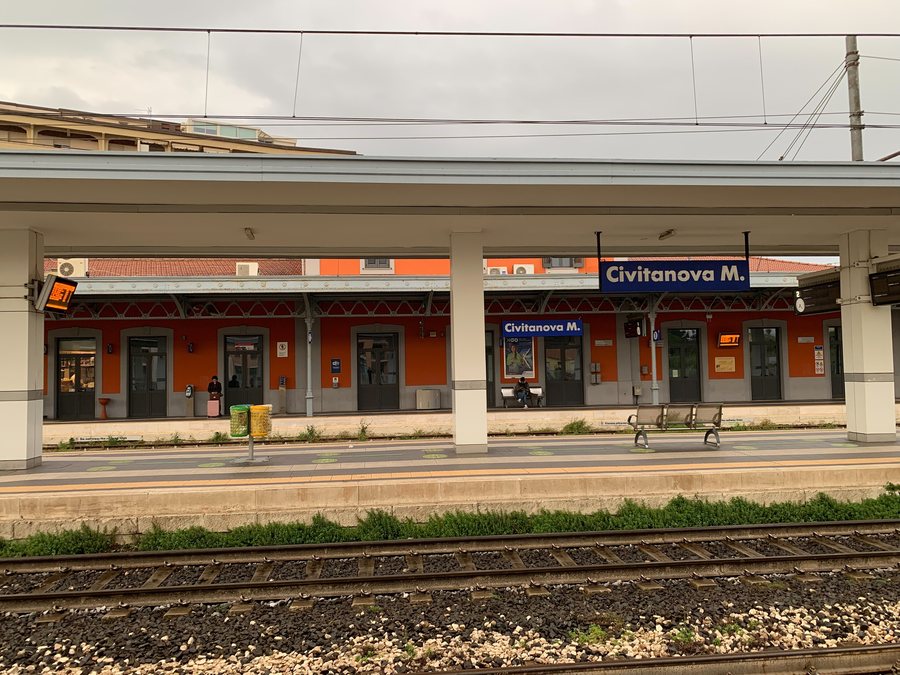 File:Civitanova Marche train station 23 46 04 151000.jpeg
Photo: Robot8A via Wikimedia Commons, CC BY-SA 4.0
File:Civitanova Marche train station 23 46 04 151000.jpeg
Photo: Robot8A via Wikimedia Commons, CC BY-SA 4.0
Civitanova Marche can be discovered through its history, art, traditions and local cuisine. In Civitanova Alta, Piazza della Libertà lies in the historic centre. There, an almost completely preserved medieval urban layout with uphill streets and views over red roofs has been retained. Civitanova Alta is a fortified settlement on a hill overlooking the sea.
Historic Centre and Views towards the Adriatic
Porta Marina is also known as Porta Sant’Angelo. The gate was built in brick in the mid-15th century and has a double pointed arch and a tower structure. On the eastern side of the walls of Civitanova Alta, it offers views of the Adriatic.
Beyond Civitanova Alta, the Chiesetta di San Savino stands on a gentle hill. It offers a rural panorama and a place for quiet reflection.
Art, Craftsmanship and Performing Arts
The Teatro Storico Annibal Caro was built between 1869 and 1872 and has a horseshoe-shaped auditorium. The Pinacoteca Civica “Marco Moretti” is located in the former residence of Annibal Caro’s family in Civitanova Alta.
It displays paintings, drawings and prints by important 20th-century artists, including Morandi, De Pisis, Gentilini, Tamburi, Cantatore, Maccari, Crali, Tulli, Castellani and Bartolini, as well as numerous Italian printmakers from the Urbino school. Via dei Sediari commemorates the historic craft of chairmaking and the “impagliarelle”, who hand-wove the seats of wooden chairs. As a themed street, it is decorated with historical photographs, displayed chairs and information panels.
Churches, Collections and Historic Spaces
The former Church of Sant’Agostino has a Rococo interior with stuccowork attributed to Agostino Varlè and an organ by Callido. The former church has been converted into an auditorium for cultural events, performances, exhibitions and performances.
The Chiesa del Santissimo Sacramento was founded before the 16th century. Its nave includes six side chapels with paintings from the 17th and 18th centuries. The Antiquarium next to the church preserves sacred vestments, liturgical objects, paintings and religious artefacts from the 16th to the 19th century.
Traditions and Cuisine from Civitanova
The festival in honour of San Savino and San Vincenzo has been celebrated in Civitanova on 25 April for more than 70 years. It includes a procession, a Mass, music, entertainment and food stalls. The local cuisine of Civitanova Marche includes “furbi con l’abbiti” (octopus with chard), “sgombri al vino rosso” and “brodetto alla civitanovese”.
Choose a Holiday Apartment Based on Your Travel Interests
When choosing a holiday apartment in Civitanova Marche, you can base your travel focus on the specific attractions. The uphill streets, city walls, Pinacoteca and historic churches are ideal for a stay focused on local history; the Chiesetta di San Savino adds a rural panorama, while the festival and dishes turn the focus towards tradition and cuisine. With children of different ages, this can be combined into a varied mix of architecture, paintings, craftsmanship, music and regional culinary experiences. When choosing a holiday apartment or holiday home, the desired focus of the holiday should therefore determine the direction.
Check prices, availability and amenities for your travel dates directly on Booking.com.
View Accommodation and OffersAdvertisement · Affiliate link to Booking.comMore Destinations
For more travel ideas, you can also consider Appignano, Cingoli, Gagliole, Montecassiano, San Ginesio, Grottaccia, Trebbio and Fiastra.
To the higher-level travel overview: Macerata.

