
Holiday apartment in Caldarola: Castles, art and Lake Pievefavera
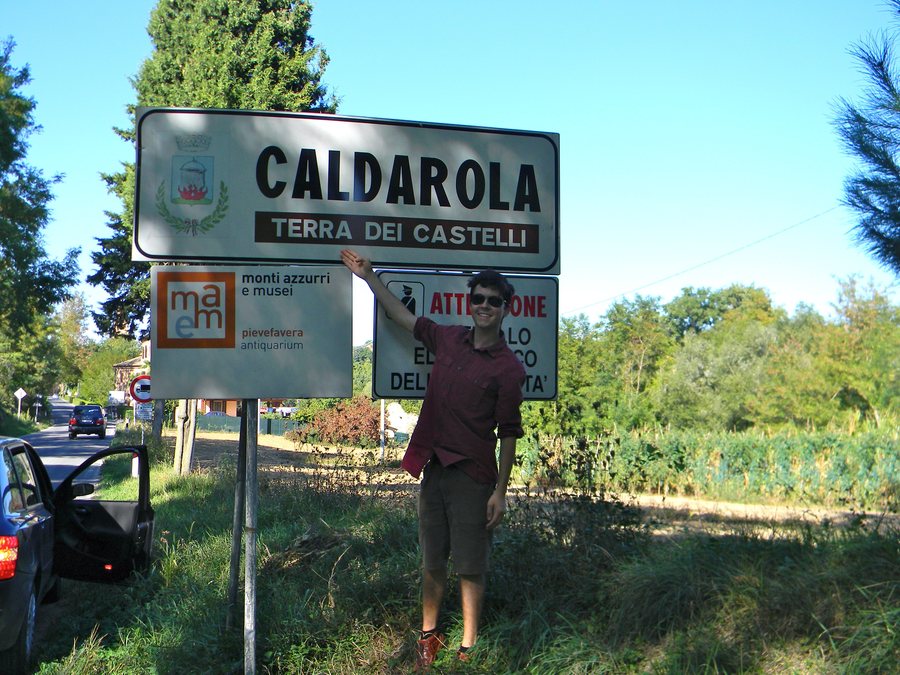 File:62020 Caldarola MC, Italy - panoramio.jpg
Photo: Lucas Migliorelli via Wikimedia Commons, CC BY 3.0
File:62020 Caldarola MC, Italy - panoramio.jpg
Photo: Lucas Migliorelli via Wikimedia Commons, CC BY 3.0
Caldarola brings impressive buildings, art and landscapes together within a compact thematic area. At its centre is Palazzo Pallotta; together with the Collegiata di San Martino, it forms a significant building complex. The Teatro Comunale complements the cultural offering with a horseshoe-shaped layout, two tiers with boxes and a gallery.
Palazzo Pallotta and castles steeped in history
Palazzo Pallotta is regarded as a clear example of a Mannerist expression of Renaissance architecture. Castello Pallotta preserves walls, Guelph merlons, ramparts and a drawbridge. It was built on a hill in the second half of the 9th century and fundamentally altered and converted into a summer residence towards the end of the 16th century by Cardinal Evangelista Pallotta.
Castello Pallotta also contains a carriage room, saddle rooms and weapons. The Stanza del Paradiso displays depictions of exotic flora and fauna as well as hunting scenes with rearing horses, greyhounds and hunters. Castello Pievefavera, built in the 13th century and later restored, is also one of the area's historical landmarks.
Art, churches and archaeology
The Chiesa di Santa Maria Assunta a Pievefavera was built in the 12th century. The Baroque church has a round-arched portal and early medieval decorations; its churchyard contains an open-air antiquarium. The Antiquarium ed Area Archeologica di Pievefavera comprises excavated rooms, some of which have a well-preserved spicatum floor. Structural remains apparently belonged to the agricultural section of a large villa; its earliest phase may date back to the Republican period. Guided tours are available in autumn and winter by reservation, and in spring and summer on Tuesdays and Fridays from 4:30 to 6:30 p.m.
The Cappella di Santa Maria della Croce preserves a valuable fresco cycle depicting the Madonna and Child enthroned, as well as Saints Paul, Joseph, Sebastian and Roch. The 16th-century chapel is located on the provincial road by Lake Caccamo, opposite the entrance to the cemetery of Pievefavera. Castello di Croce contains works by Nobile da Lucca as well as frescoes by Andrea, Simone and Federico De Magistris.
Fortified sites and museums
Castello di Croce is a fortification in the da Varano tradition, with a pointed-arch entrance leading into a small courtyard with a cistern. Castello di Vestignano preserves strong defensive walls, an imposing cylindrical tower, square towers and narrow lanes. It also features an exceptional collection of wall paintings, including works by Simone De Magistris, Andrea De Magistris and Nobile da Lucca. The castle includes surviving remains of a temple dedicated to Saint George and associated with the 8th-century Lombards, including paintings and a 13th-century sculpture of Saint Martin.
The Museo di Arte Povera Contadina “Luigi Fagianella” displays around 1,500 objects relating to everyday life and agricultural work in the Marche during the 20th century. The Museo Civico della Resistenza comprises the Pinacoteca della Resistenza, a section dedicated to Caldarola Sistina and halls for temporary exhibitions. The Sentieri Storici Partigiani pass through the hills, forests and ridges around Caldarola and are connected with the history of the resistance during the Second World War. The Borgo di Bistocco lies on the Chienti River; in its surroundings, the ruins of two medieval watchtowers preserve the connection with the da Varano defence system.
Lake, paths and varied days out
Lake Pievefavera is an artificial reservoir created in 1954 to supply electricity to the surrounding towns. Because of its abundant fish stocks, it is often used for sport fishing and also for rowing; numerous regattas take place there throughout the year. From the olive-covered hills around Castello Pievefavera, the landscape gradually slopes down towards the lake.
The path to the Cascatelle di Valcimarra runs through the forest along the Fosso Cimarra and includes small wooden huts and gnome figures. The route The castle route begins in the centre of Caldarola and leads through Vestignano, Croce, Pievefavera and Valcimarra. This makes it possible to combine cultural discoveries, landscape and activity into different day programmes without separating the historic sites from one another.
Franciscan traces and regional cuisine
The Abbatia Sancti Benedicti De crypta Saxi Latronis lies on the Cammino Francescano della Marca. A junction uphill above the Santuario Madonna del Sasso leads there. The fortified Benedictine complex from the 10th to 11th centuries now preserves partially ruined remains, including a tower, church walls, a round-arched portal and a single-nave window opening. The Santuario Madonna del Sasso – Valcimarra is temporarily closed due to earthquake damage. Madonna del Monte has Franciscan origins; the image was painted by Lorenzo d’Alessandro in 1491.
Il Picciolo di Rame serves traditional dishes from Macerata cuisine based on peasant recipes and, in part, medieval and Renaissance recipes. The Teatro Comunale is currently in operation and can be visited on the occasion of theatrical performances. When choosing a holiday apartment in Caldarola, you can therefore set your priorities according to your interests: the centre stands for Palazzo Pallotta and the theatre, Pievefavera for the lake and archaeology, while the districts along the castle route link further historic sites.
Check prices, availability and amenities for your travel dates directly on Booking.com.
View accommodation and offersAdvertisement · Affiliate link to Booking.comDiscover more destinations
Castelraimondo, Pievebovigliana, Appignano, Corridonia, Bolognola, Ripe San Ginesio, Penna San Giovanni and Fiastra
To the higher-level travel overview: Macerata.

