
Discover Ravenna: UNESCO Culture, Ancient Harbors and Nature
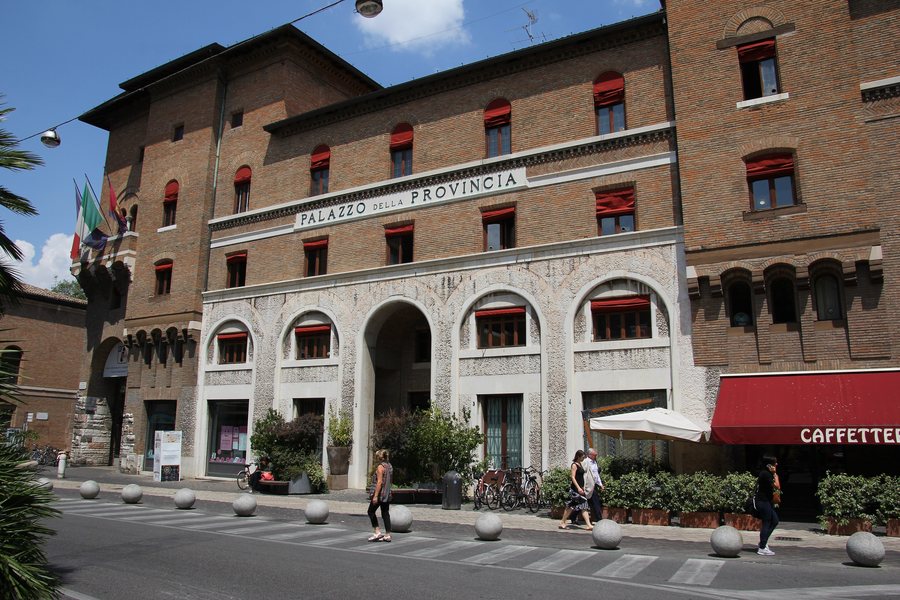 File:Ravenna, palazzo della Provincia (01).jpg
Photo: Gianni Careddu via Wikimedia Commons, CC BY-SA 4.0
File:Ravenna, palazzo della Provincia (01).jpg
Photo: Gianni Careddu via Wikimedia Commons, CC BY-SA 4.0
Ravenna brings early Christian history to life: the UNESCO World Heritage Site Early Christian Monuments of Ravenna comprises eight monuments built between the 5th and 6th centuries AD. They bring together Greco-Roman tradition, Christian iconography, and Eastern and Western styles.
Culture
One of Ravenna’s oldest buildings is the Mausoleum of Galla Placidia, which has been a UNESCO World Heritage Site since 1996. The Basilica of Sant’Apollinare in Classe was built in the first half of the 6th century over an older cemetery area and is one of Ravenna’s eight early Christian monuments on the UNESCO World Heritage List. Its original structure and the magnificent mosaics in the apse have been preserved.
The Mausoleo di Teodorico was commissioned by Theodoric around 520 AD as his own burial place. For more than 1,500 years, it has been regarded as one of Ravenna’s undisputed landmarks and as the only late antique royal tomb. At CLASSIS Ravenna – Museo della Città e del Territorio, the history presented ranges from the Etruscan-Umbrian origins through the Roman, Gothic and Byzantine periods to the early Middle Ages; archaeological materials and modern technical aids accompany this chronological sequence.
Archaeology
The Antico Porto di Classe is an archaeological park of about 10,000 m² that is open to the public. It showcases the ancient port and trading area of the city of Classe from the 5th and 6th centuries AD. You can explore the site independently along the signposted path with information panels or as part of a pre-booked tour with a specialist guide.
Museums
The Museo Classis Ravenna is one of Italy’s most important archaeological museums. It can be reached by bicycle, on foot, by bus and by car. The surrounding area of Ravenna is also home to Palazzo Rasponi dalle Teste, as well as the Museo e Cappella Arcivescovile, the “La Casa delle Marionette” Museum and the TAMO Museum.
A workshop on Byzantine mosaics combines an arts and crafts workshop with an introduction to traditional techniques in Ravenna. You can create your own mosaics and take home a self-made souvenir. Tours, guided visits, museums and workshops thus offer different ways of discovering the city.
Culinary Delights
The Piadina Romagnola PGI is a regional specialty. In the Ravenna area, it is approximately 4 to 8 mm thick and around 20 cm in diameter. Compared with the version made in the southern Romagna area, particularly in Rimini, it is thicker and smaller.
Nature
The Porta Serrata, Porta Sisi and Porta Nuova, classified as natural arches, are located in the surrounding area of Ravenna. Vela Beach is located in the Ravenna area. Access to the Pine Forest of San Vitale is coordinated and regulated by management rules; permitted activities include hiking, cycling and horseback riding.
Other Places
Other location pages: Casalborsetti, Lido Adriano, Lido Di Dante, Marina Di Ravenna, Marina Romea, Punta Marina, Ravenna, Lido Del Savio, Milano Marittima, Cervia, Riolo Terme, Pinarella, Lugo, Faenza, Bagnara Di Romagna, Russi, Castiglione, Malcantone, Lido Di Classe, Brisighella, Sant'agata Sul Santerno, Cotignola, Porto Corsini, Voltana, Santerno, Bagnacavallo, Casola Valsenio, Ghibullo, Fognano, San Pietro In Campiano, Massa Lombarda, Villa Inferno, Conselice, Castel Bolognese, Castel Raniero, Fosso Ghiaia, Il Palazzone, Alfonsine, Cannuzzo, Savio, San Bernardino, San Pietro In Vincoli, Fossolo, San Zaccaria, Area Industriale, San Pietro In Trento and Classe.
To the main travel overview: Emilia-Romagna.
Check prices, availability and amenities for your travel dates directly on Booking.com.
View accommodations and offersAdvertisement · Affiliate link to Booking.com
.jpg)