
Holiday Apartment in Copertino: Fortress, Churches and Culinary Delights
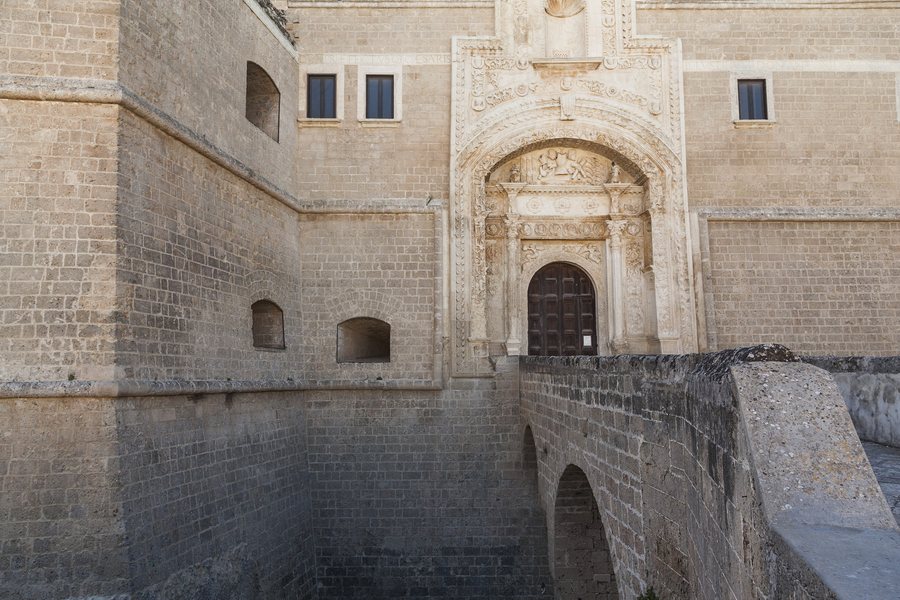 File:Ingresso del Castello di Copertino.jpg
Photo: FedericaPiccinniPhoto via Wikimedia Commons, CC BY-SA 4.0
File:Ingresso del Castello di Copertino.jpg
Photo: FedericaPiccinniPhoto via Wikimedia Commons, CC BY-SA 4.0
Copertino combines Renaissance architecture, sacred art, spiritually significant sites and regional specialities. If you are looking for a holiday apartment in Copertino, you can organise your days around a range of interests: historic buildings, a tourist itinerary, as well as wine and olive oil add several distinctive elements to your stay. This creates a travel plan with room for shared discoveries and more leisurely sightseeing.
Copertino as a base for a holiday apartment: fortress and churches
The Castello di Copertino is a typical Renaissance fortress. It was built around 1540 incorporating older structures, including a freestanding 13th-century tower. It was probably constructed according to a design by the architect Evangelista Menga.
The Chiesa Matrice was built between 1088 and 1235. It has a 35-metre-high tower with a square floor plan, divided into two sections. In the church, you can see the “Deposizione” by Strafella, dating from the 16th century.
Spiritual sites and traces of history
The Church of the Santuario della Grottella has a single-nave interior with eight arcades containing Baroque altars and valuable paintings. The present-day church of the Santuario della Grottella was built in 1577 as a single-nave church with three altars on each side. Construction of the monastery at the Santuario began in 1618. The Santuario della Grottella also contains a 17th-century painting depicting Saint Anthony of Padua, attributed to Antonio Donato D'Orlando.
The rural settlement associated with the Chiesa di Casole was established before the year 1000. At the beginning of the 16th century, the settlement associated with the Chiesa di Casole was repopulated around the monastery of Santa Maria di Casole. Byzantine monks contributed to the development of the village associated with the Chiesa di Casole.
A tourist itinerary dedicated to the town and its saint focuses on spiritually significant sites and architectural monuments. The tourist itineraries are offered with specialised tour guides and/or tourist escorts from the CTG; information and reservations are handled through CTG Albatur. Construction of the Santuario e della Stalletta di San Giuseppe da Copertino began in 1754, one year after the beatification of San Giuseppe da Copertino, based on a design by Adriano Preite, who was from Copertino.
Olive mills, red wine and olive oil
The underground olive mills of Copertino were built outside the city walls in areas of hard sandy limestone. They are designated as freely accessible sites within the municipal area. Copertino is associated with numerous wineries that have made its red wine well known, and is a production area for olive oil.
Getting there and further travel ideas
For arrival by train, Copertino has a railway station on the Novoli–Gagliano del Capo line of the Ferrovie del Sud Est. When choosing your holiday apartment in Copertino, it helps to consider whether you would like to plan your stay primarily around architecture, spiritual sites or regional products. The combination of themes can be adapted to your own travel plan.
Other places to include in your travel plans are Novoli, Marina Di Novaglie, Campi Salentina, Melpignano, Castrignano Del Capo, San Foca, Spongano and Casalabate.
For the higher-level travel overview: Lecce.
Check prices, availability and amenities for your travel dates directly on Booking.com.
View accommodations and offersAdvertisement · Affiliate link to Booking.com
