
Holiday apartment in Castrignano De' Greci – Griko culture & Parco Pozzelle
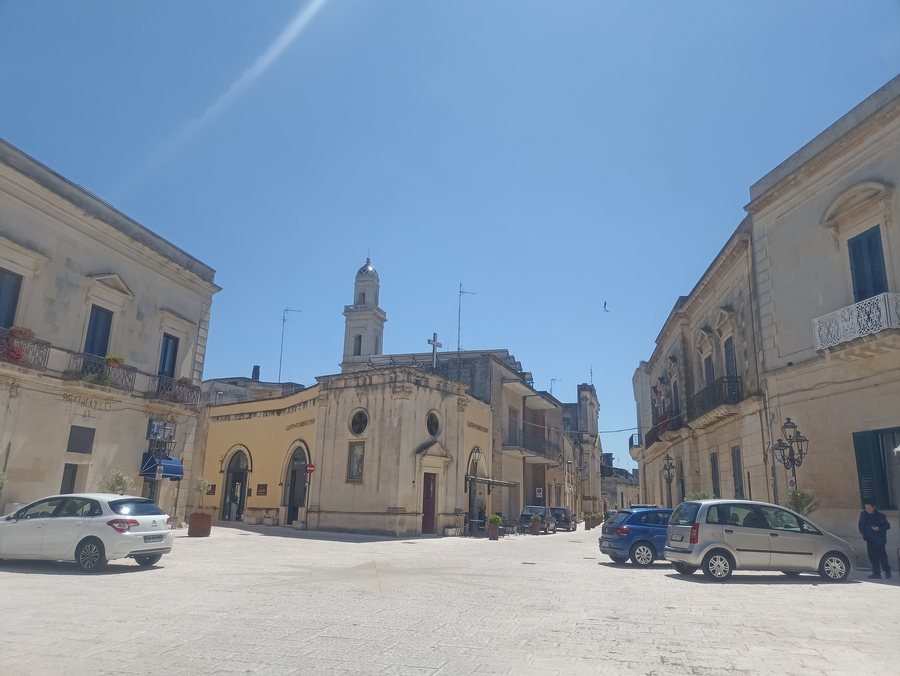 File:Castrignano de' Greci (LE) Piazza Sant'Antonio.jpg
Photo: Freddyballo via Wikimedia Commons, CC BY-SA 4.0
File:Castrignano de' Greci (LE) Piazza Sant'Antonio.jpg
Photo: Freddyballo via Wikimedia Commons, CC BY-SA 4.0
Griko culture and traces of history
Castrignano De' Greci combines a vibrant Griko culture with striking testimonies to the past. The Griko dialect is still spoken in the municipality today. The historic centre includes the Torre dell’Orologio, while the small historic courtyards are called “àvili” in Greek. When exploring the town, you will therefore encounter not only individual buildings, but also linguistic and architectural features that shape its character.
The Palazzo Baronale De Gualtieriis is particularly well known. It is considered “Il Castello” and regarded as a symbol of the history of the local community. Castello De Gualtieris stands on the remains of a medieval manor house. Another notable stop in the area’s cultural history is the Byzantine crypt of Sant’Onofrio, which dates back to the 6th century.
Kora – Centro del Contemporaneo holds exhibitions in Castrignano De' Greci within the historic walls of Palazzo Baronale De Gualtieriis. For visitors interested in culture, this creates a special connection between older architectural traces, the regional language and contemporary art. Every year, a large religious and civic festival is also celebrated on the Thursday after Easter in honour of Maria di Arcona.
Water landscape in Parco Pozzelle
The Parco Pozzelle reveals another side of the town. There are around one hundred water cisterns there, called ta fréata in Griko. The pozzelle were carved out of the rock in a natural depression in the landscape. Those interested in landscapes, traditional water use and peaceful exploration will find a specific feature here that makes Castrignano De' Greci distinctive.
The Ecomuseo dell’Acqua offers guided, environmentally friendly tours of Parco Pozzelle and the surrounding landscape. Its programme includes orienteering, camping, cycling tours, sunbathing and picnics. It also offers educational workshops on water and Griko culture for children and adults. This makes it possible to give different weight to nature observation, exercise and cultural learning.
Surroundings between excursion destinations and the coast
There are also various sources of inspiration for planning your trip outside the town. The nearby area includes Palazzo Baronale castle and the Scavi Archeologici Apigliano archaeological site. The surroundings of Castrignano De' Greci also include Palazzo Granafei castle, the Museo di Storia Naturale del Salento, the natural arch of Porta San Vito and Spiaggia Alimini beach. Further afield in the region are the beaches of San Giorgio and Frassanito.
When choosing a holiday apartment in Castrignano De' Greci, you can organise your days around the topics mentioned: historic traces and the Griko language, the water landscape of Parco Pozzelle, supervised outdoor activities or destinations further afield. A holiday apartment or holiday home can thus serve as accommodation for your personal mix of culture, nature, exercise and relaxation, without every destination dictating the same daily rhythm.
More places for planning your trip
For additional travel ideas, you can also discover Sternatia, Minervino Di Lecce, Salve, Galatone, Otranto, Alessano, Torre Lapillo and Posto Rosso.
For the higher-level travel overview: Lecce.
Check prices, availability and amenities for your travel dates directly on Booking.com.
View accommodation and offersAdvertisement · Partner link to Booking.com
_Piazza_Sant%27Antonio.jpg)