
Discover Biatorbágy: Viaducts, Limestone and History
Accommodation in Biatorbágy
Those interested in historic structures and a landscape shaped by limestone will find both as tangible themes in Biatorbágy. The two viaducts and the church in Torbágy represent different aspects of the town’s history; Kőhegy, Öreghegy and the Csízgey-árok reveal geological features. There is also a short walking trail in the Madár-forrás project area and a small wetland in the immediate vicinity of the spring. Which of these themes you would like to shape your stay is a good starting point for planning your trip.
Viaducts and Architectural History
The Biatorbágy viaducts consist of two bridges: the first was built in 1883–1884, the second in 1898. Both structures are of interest from a historical and technological-historical perspective. Their separate construction dates also make the two bridges an interesting ensemble: they belong together, but were not built at the same time. The focus is on both the structures themselves and the sequence in which they were built.
The Roman Catholic church in Torbágy illustrates another aspect of architectural history. Built in 1800 in the Classical style in honour of Saint Anne, it is protected as a national monument. Its year of construction, style and dedication give the church its own historical profile, alongside the viaducts’ technological-historical significance. Biatorbágy thus offers two different forms of cultural heritage: bridge building and religious architecture.
Limestone, Gorge and Nature Watching
A mighty ridge of Lajta limestone runs along the edge of the southern side of Kőhegy. Kőorr, at 301 metres, is the highest point on this Kőhegy limestone ridge. On the western side of Öreghegy, the Natura 2000 sites Madárszirt and Nyakaskő lie on a limestone ridge. Both names also serve as reference points for the Csízgey-árok, which runs between Nyakaskő and Madárszirt.
In the Csízgey-árok, you can observe rock strata and impressions of shells and crustaceans, remnants of a prehistoric sea. The landscape offers different points of interest: Kőorr marks the elevation within the Kőhegy limestone ridge, while the gorge reveals tangible geological traces. Those interested in nature and the history of the Earth will find not only a striking rock formation here, but also clues to how the past can be read in layers and impressions.
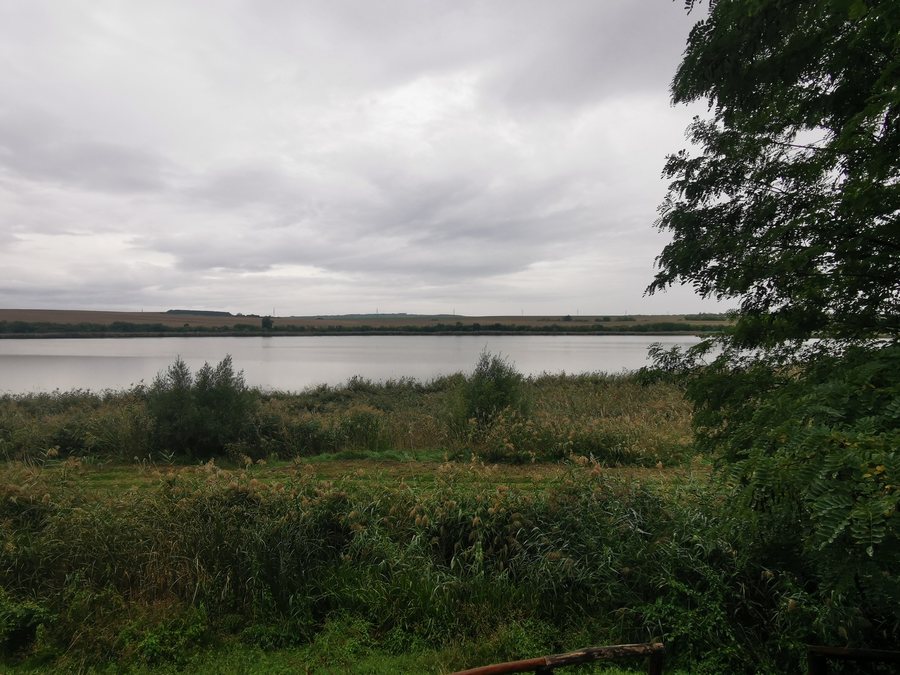
Another natural attraction is the Madár-forrás project area, where a one-kilometre walking trail has been created and a small wetland lies close to the spring. Kölcsey utca also offers a special connection with nature: at the end of the street, formerly called Szél utca, there is a bird-identification sign at street level. A map is on the reverse. The geological observations at the Csízgey-árok and this bird-identification guide offer different perspectives on Biatorbágy’s natural attractions.
An Advent Event with a History
The history of the Angyalfia Vásár dates back to autumn 2002. At the time, the board of trustees of the Biatorbágy Primary School Parents’ Foundation decided to organise an Advent event. This historical starting point connects the event to a specific local initiative. It offers a different perspective on the town’s cultural history than the older structures: its story begins with a decision made in autumn 2002.
Choose the Right Focus for Your Stay
If you are looking for a holiday rental in Biatorbágy, you can start by considering which themes you would like to shape your stay. The viaducts and the church offer different points of interest for architectural and cultural history. Geology and nature lead to Kőhegy, Öreghegy, the Csízgey-árok and Madár-forrás; the Angyalfia Vásár adds a historically dated Advent event to the cultural picture.
Discover More Destinations
Discover more destinations: Budajenő, Törökbálint, Pusztazámor, Telki, Sóskút, Páty, Herceghalom, Budakeszi.
For the main travel overview: Budaörsi.

