
Pusztazámor: Stream Landscape and Baroque Traces
Accommodation in Pusztazámor
Pusztazámor’s character comes from a location that is easy to define: the village lies at the foot of Zámorhegy, on both sides of the Zámori Stream, between the hills of Etyek and the Érd Plateau. The stream, hills and plateau give the landscape a distinctive geographical setting. Visitors can consider two themes side by side: the surrounding landscape and a local history that can be read in its chapels, bell tower and votive cross. If you are looking for a holiday apartment, this is a useful starting point: the key question is whether you would rather discover Pusztazámor through its landscape or its historic buildings.
A Hermitage with Traces of Earlier Buildings
In 1758, Mihály Mentler, chief magistrate of Nagyszombat, had the chapel of the Zámorhegyi hermitage built. He had resettled the village after Ottoman rule. These details connect the village’s resettlement with a specific building and a particular person. The hermitage is located in the Pusztazámor cemetery. Together with the bell house and monks’ cells built alongside it, it forms an architectural ensemble and a distinctive Baroque monument complex. It is the combination of these individual structures that makes the site a notable feature of local history.
Remains of a 13th-century Romanesque church were also used in the construction of the Zámorhegyi hermitage. The horseshoe-shaped church was 11 metres long and 6.5 metres wide. Different building periods thus come together at this site: the Romanesque remains and the later ensemble of the chapel, bell house and monks’ cells.
Memorials in Pusztazámor
The village bell tower also commemorates a specific historical occasion. It was built in 1930 to mark the 900th anniversary of the death of Prince Imre, a saint. Another local landmark is the votive cross, Barcza Imre réti fogadalmi kereszt. The landowner Imre Barcza had it erected in 1926 to commemorate the birth of his son and the full recovery of his wife, Henriette Széchenyi. The bell tower centres on an anniversary, while the cross commemorates a personal dedication—two different occasions reflected in the village’s history.
The chapel of ease in Pusztazámor houses a white marble statue of Christ, made in Venice in the last century. Its material and place of manufacture add another specific detail to the history of the chapels. Together with the hermitage, bell tower and votive cross, the statue offers several historical perspectives: building history, religious remembrance and personal dedication. If these connections interest you, you can compare the different buildings by the periods and occasions they bring to light.
Barcza Castle and Its Park
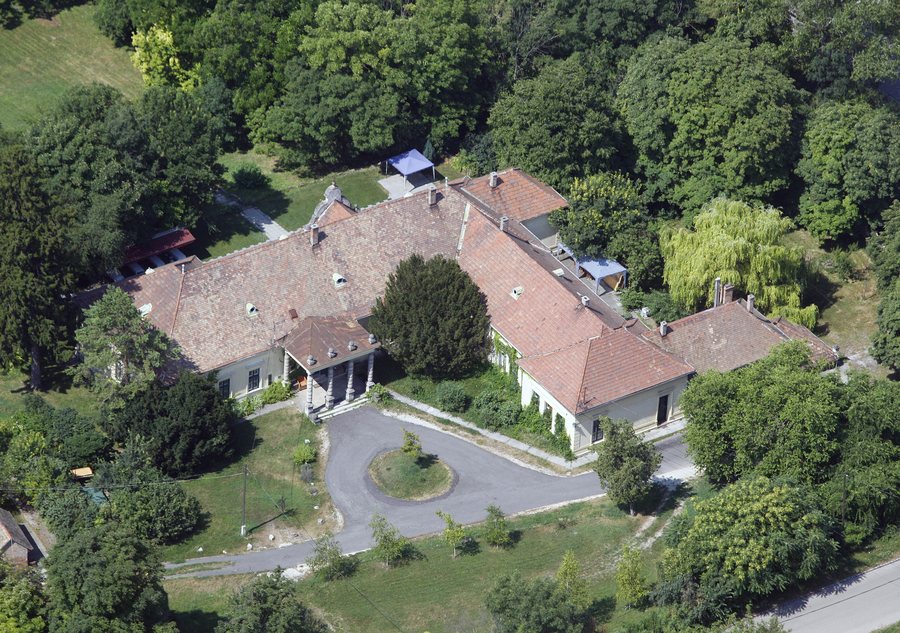
Barcza Castle lies about half a kilometre beyond the boundary of Pusztazámor, on the right bank of the Zámori Stream. The castle has a three-hectare, arboretum-like historic park. A small pond lies at the end of the main clearing; opposite it, on a small peninsula, stands a garden pavilion with a classical appearance. From the terrace, which opens onto the garden, visitors can look out over the pond. The clearing, water and pavilion create a different landscape setting from the group of buildings at the hermitage. If you would like to include the castle or park in your stay, check current access arrangements in advance.
These different points of interest can help guide your choice of holiday apartment. Those especially interested in architectural history will find the hermitage, where a Baroque complex incorporates reused remains of a Romanesque church. Those who would rather focus on landscape design can explore the park, with its main clearing, pond and garden pavilion. The bell tower, votive cross and chapel of ease offer further historical points of interest. You can choose Pusztazámor for your stay based on whether landscape, architecture or local history matters most to you.
Discover More Destinations
Discover more destinations: Páty, Biatorbágy, Törökbálint, Budakeszi, Budajenő, Herceghalom, Telki, Sóskút.
Return to the main travel overview: Budaörsi.

