
Pásztó: Monastery, Mill and Woodworking
Accommodation in Pásztó
Pásztó combines historic buildings, art and crafts with hiking trails in its districts. A former Cistercian monastery, an exceptional burgher’s house and the Szalay Watermill give the town a rich history. In Mátrakeresztes, hiking trails and the craft of making wooden spoons are also part of the picture. This lets you shape your trip around the topics that interest you most.
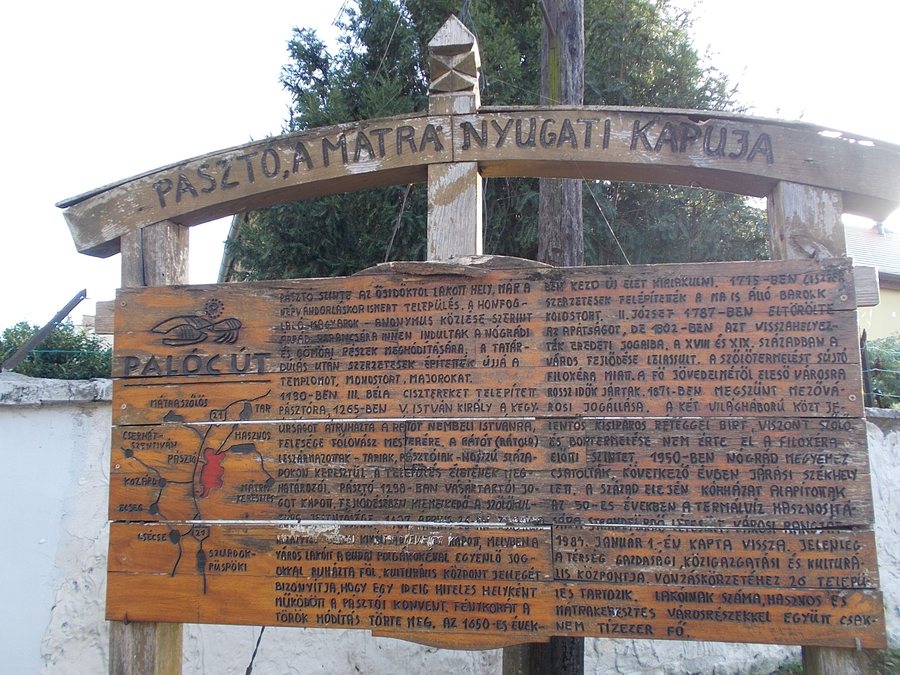 File:Deák Ferenc Straße, 'Pásztó, das Westtor von Mátra' und 'Palóc-Straße' Tafel, 2023 Pásztó.jpg
Photo: Globetrotter19 via Source, CC BY-SA 4.0
Monastery, Burgher’s House and Medieval Traces
The former Cistercian monastery in Pásztó was built between 1715 and 1720 on the foundations of the medieval monastery. It houses the local history museum and a memorial room for Rajeczky Benjámin, the last prior of Pásztó. The musicologist was also well known in Europe. The combination of the monastery building, museum and memorial room offers a way to explore both architectural history and the memory of a significant figure.
Another distinctive name is Scola magister, the Oskolamester háza. This burgher’s house is considered Hungary’s only surviving burgher’s house in a market town; a document mentions it as early as 1428. Nearby, the medieval ruins of the Cistercian church, a glassworks and a forge have become open-air exhibition sites. The forge is considered a unique monument to Hungary’s industrial history. Together, these places offer different ways to connect with the town’s history, from the surviving burgher’s house to traces of crafts and production.
Art and Mill History
The Csohány Kálmán Gallery is devoted to the artist’s life and graphic and ceramic works. Csohány Kálmán was from Pásztó and received the Munkácsy Prize twice. The exhibition is also arranged in a specific way: the first room displays works directly connected to his hometown, while the second showcases his graphic series. Art enthusiasts will find both an overview of his work and a link to the place he came from.
The permanent exhibition at the Szalay Mill explores the mill’s almost thousand-year history and its importance as a key site in medieval Pásztó, a trading centre. The Szalay Watermill, fully restored and operational since 2021, welcomes visitors. Check visiting options before your trip. The mill thus connects a technical subject with the town’s commercial history.
Districts: Church, Hiking Trails and Wooden Spoons
Hasznos is part of Pásztó. Its Catholic church was built in the 15th century, and its apse with buttresses also dates from that period. The district adds a historic building to the town’s historical themes, with the construction period of both the church and the apse documented.
Mátrakeresztes, also a district of Pásztó, is known for its microclimate and beautiful hiking trails. At the same time, the nearby forest has shaped a distinctive craft tradition: wooden spoons are made there both by hand and by machine.
Choose the Right Holiday Apartment for Your Interests
When looking for a holiday apartment in Pásztó, your travel interests can be a good starting point. If you mainly want to explore architectural and local history, the monastery, Oskolamester háza and the exhibition sites offer a range of topics. Art enthusiasts can focus on the Csohány Kálmán Gallery; the Szalay Mill adds mill and trade history to the itinerary. If you would rather explore hiking trails and the wooden spoon-making tradition, Mátrakeresztes is the perfect thematic destination. Before booking, consider which aspects of Pásztó you would most like to discover during your stay.
Discover More Destinations
Tar, Jobbágyi, Palotás, Szurdokpüspöki, Vanyarc, Felsõtold, Garáb, Szirák
For the broader travel overview: Pásztói.

