
Nagycenk between Széchenyi history and the museum railway
Accommodation in Nagycenk
Nagycenk offers several distinct themes for a stay: the Széchenyi István Emlékmúzeum is located in the castle, the sculpture park lies opposite, and the Széchenyi Museum Railway operates seasonally. There is also a church with a 19th-century building history and the Laposréti-tó on the edge of town. When choosing holiday accommodation, you can consider whether exhibitions and architecture, the museum railway’s seasonal operation or the fishing pond should shape your trip more.
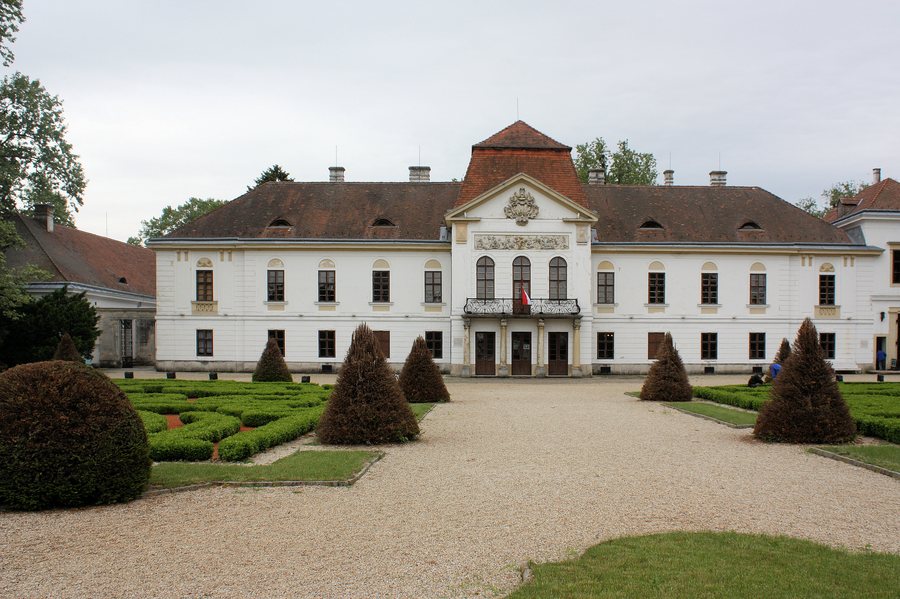
Castle and Sculpture Park
The Széchenyi István Emlékmúzeum is housed in Széchenyi Castle, the family’s 18th-century residence. The interactive exhibition explores the Széchenyi family and István Széchenyi’s life and work. It brings the story of a family and the history of an individual together in a single exhibition theme.
Opposite the castle is Nagycenk’s sculpture park. It features a collected group of restored roadside cross sculptures, as well as a faithful reconstruction of the Remete-kápolna. The original chapel was built by the Széchenyi family at the end of the Hársfasor. Thus, restored roadside crosses and a reconstruction of a specific chapel stand side by side in the park. The park is freely accessible year-round.
Firefighting Collection and Church Architecture
Nagycenk’s Firefighting Museum displays a collection spanning around 150 years, assembled by the local volunteer fire brigade association. It includes historic fire engines, motorcycles, specialist equipment, uniforms and memorabilia. Visits must be arranged in advance, so contact the museum to agree on a time before you go.
Nagycenk’s three-aisled church, with its Romantic design, offers a different perspective on architectural history. At István Széchenyi’s initiative, it was rebuilt to plans by Miklós Ybl between 1860 and 1864; it is an architectural monument. Details of its design, style, architect and reconstruction provide a specific historical context for the church. Visitors interested in architecture will find here a different perspective from the interactive exhibition or the sculptures in the park.
Seasonal Operation and Time at Laposréti-tó
The Széchenyi Museum Railway’s seasonal timetable determines when you can plan a journey. It operates seasonally on weekends, public holidays and announced weekdays. The published 2026 season runs from 4 April to 25 October. Check the operator’s current timetable before travelling, especially if your stay depends on a particular operating day.
The Laposréti-tó, covering around 1.5 hectares, lies on the edge of Nagycenk and is used as a recreational fishing pond. It is also known as Nagycenki Horgásztó and is freely accessible year-round; fishing may be subject to rules. This means there are two different planning priorities: for the museum railway, the season and operating days matter, while the pond is described as a place accessible throughout the year.
Széchényi Mausoleum and Regional Setting
In Nagycenk’s public cemetery, the Széchényi Mausoleum is the focal point of a cross-shaped burial complex that commemorates the ancestors of the Széchényi family. István Széchenyi is buried there. The mausoleum adds the specific location of his burial to the themes of family history and remembrance.
Within the wider Raab-Wieselburg-Ödenburg destination, the Fertő/Neusiedler See cultural landscape includes Eurasia’s westernmost steppe lake, as well as wetlands, saline soils, reed beds and shore areas. The Hungarian part of Lake Neusiedl has been protected since 1977. This regional landscape setting offers a distinct perspective on nature and culture alongside Nagycenk’s museums, buildings and pond.
Discover more destinations
Discover more destinations: Petőháza, Sarród, Röjtökmuzsaj, Sopron, Pereszteg, Agyagosszergény, Fertorakos and Kópháza.
Back to the main travel overview: Sopron–fertődi.

