
Discover Sarstedt: cycling route, lake and history
Accommodation in Sarstedt
Sarstedt: cycling route, lake and local history
Sarstedt offers a range of options for a stay: a cycling route, a lake in a local recreation area and historic buildings, each with its own character. You can shape your trip around whether you want to spend time outdoors, include a lakeside location or explore architecture and local history. The sights do not tell one single story; instead, they offer different ways to discover the town—from the course of a cycling route to surviving traces of its built heritage.
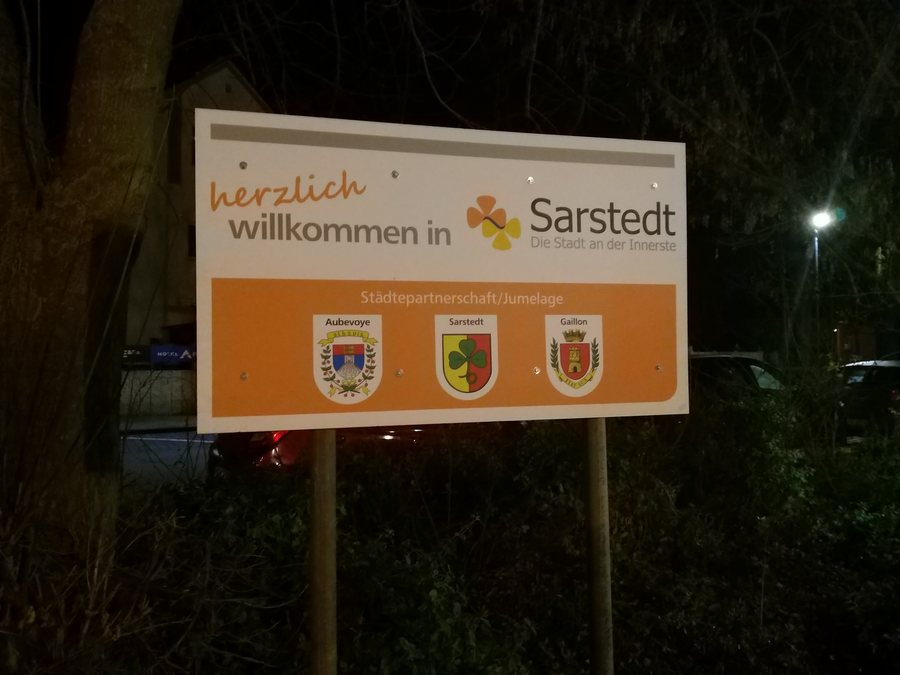
To Sarstedt along the Innerste Cycle Route
For a cycling trip, Sarstedt can be considered as a destination: the 105-kilometre Innerste Cycle Route can be followed downstream from the municipality of Holle to Sarstedt. This stated distance makes the connection a concrete consideration when planning your trip. If you are interested in the cycle route, you can view Sarstedt in relation to its course and plan your own tour around this destination. The route length is an important planning detail; it describes the cycle route, not a walking distance within Sarstedt.
The cycle route offers a different focus from the historic buildings in town. Rather than focusing on individual buildings, this option looks at a route that leads downstream from Holle to Sarstedt. This gives you a clear distinction when choosing a theme for your trip: you can see Sarstedt as the destination at the end of this described cycling connection, or focus your stay more on local cultural and historic sites.
Giftener See in the local recreation area
Giftener See is another point of interest: it lies in Sarstedt’s local recreation area. This adds a lake as a separate focus alongside the cycle route and local history.
This gives you a choice of different themes for your trip without having to combine them into a fixed itinerary: the Innerste Cycle Route is a downstream route to Sarstedt, while Giftener See is a spot in the local recreation area. You can decide which of these perspectives will shape your stay based on what you would like to focus on.
Half-timbering, stained glass and a surviving wall
Sarstedt’s old town hall dates from 1799. Its blue half-timbering and grand exterior staircase give the building distinctive architectural features. This makes a single building a tangible way to discover local history, without requiring a comprehensive overview.
Another historic stop is the Church of the Holy Spirit, built in 1913. Visitors can view its stained-glass windows featuring Christian symbolism. Unlike the town hall, the focus here is not on half-timbering and the exterior staircase, but on the windows and their religious motifs. Those interested in architecture will find two distinct features here that can be viewed independently of one another.
A small section of the old town wall survives at the former Ostertor (East Gate). Its status as a former gate and the remaining section of wall make it another distinct point of reference for Sarstedt’s past. The town hall, church and Ostertor thus represent different kinds of historic traces: a town hall dating from 1799, a church built in 1913 with symbolic stained-glass windows, and a surviving section of the former town wall.
More local pages: Hoyershausen, Giesen, Algermissen, Söhlde, Despetal, Diekholzen, Ahrbergen and Rheden.
For the overarching travel overview: Hildesheim.

