
Eschau: Cultural Trails, Castles and Art in the Elsava Valley
Accommodation in Eschau
Eschau lies at the foot of the Geishöhe in the Elsava Valley and within the Spessart Nature Park. Cultural trails, castles and art shape the ways you can explore the area, alongside places for quiet contemplation and leisure. When planning your trip, it makes a difference whether you want to focus primarily on a hike, historic buildings, outdoor art or time at a recreational facility.
Cultural Trails Through the Landscape
The 7.5-kilometre European Cultural Trail “Burg Wildenstein” explores the cultural landscape between Eschau and the castle. On the return route, it follows the Elsava Valley along the old railway line. The stated length gives you a specific guide for planning your day. At the same time, the trail connects two different focal points: the landscape between Eschau and the castle, and the return route through the valley.
Another European Cultural Trail runs through Hobbach. The approximately 7-kilometre route covers around 100 metres of elevation gain. It leads from St John’s Church past Dillhof and Oberaulenbach Castle, by the Wolfsgrube and a viewpoint in the Elsava Valley, to Hobbach School Camp and back to St John’s Church. So the route’s length is not the only useful guide: the sequence of named stops may also be a deciding factor. The long-distance Spessart Trail 2 also passes through Eschau.
Castles, Architectural History and Information
The medieval Wildenstein Castle stands on a mountain ridge on the Sommerberg, above Wildenstein, a village belonging to Eschau. It is freely accessible and has information panels. If you are interested in castles and their history, it offers a specific outdoor destination. The castle is also the focus of the European Cultural Trail, which explores the cultural landscape between the castle and Eschau.
The Burglandschaft Education and Information Centre is located in Eschau’s Historic Town Hall. It presents a wide range of information about the regional castle network. This broadens the focus beyond individual buildings to a network that extends beyond Eschau.
At Sommerau Moated Castle, a castle wing built in 1650, the remains of an older defensive tower and the surrounding moat have been preserved. The castle is privately owned and cannot be visited by the public. In individual cases, a visit may be possible by prior arrangement with the owner. This restriction is important when planning: the surviving architectural features cannot be visited as part of a regular public tour.
Art, Remembrance and Quiet Contemplation
In the Sommerau Sculpture Garden, artist Karin Günther displays numerous surrealist sculptures among flower beds, shrubs and old trees. In the background stand the former Fechenbach noble residence and the small castle “Malepartus.” Art and historic buildings can be appreciated together here, though they are not about the same subject. Four guided tours take place each year between May and September, usually on a Sunday afternoon. They first cover Karin Günther’s artistic work, followed by the history of the former noble residence and its residents.
The history of Jewish residents is also commemorated. At a memorial ceremony in the Elsava Hall, a memorial suitcase created by Eschau artist Karin Günther was unveiled. The Eschau market town commemorated the deportation of Jette Marx (1858–1943), known as Jendele, Lina Mosbacher (1872–1942), Gustav Wolf (1879–1942) and Flora Wolf, née Reis (1886–1942), who lived in Eschau and Sommerau. This memorial offers a reflective way to engage with local history, distinct from the castles and outdoor art.
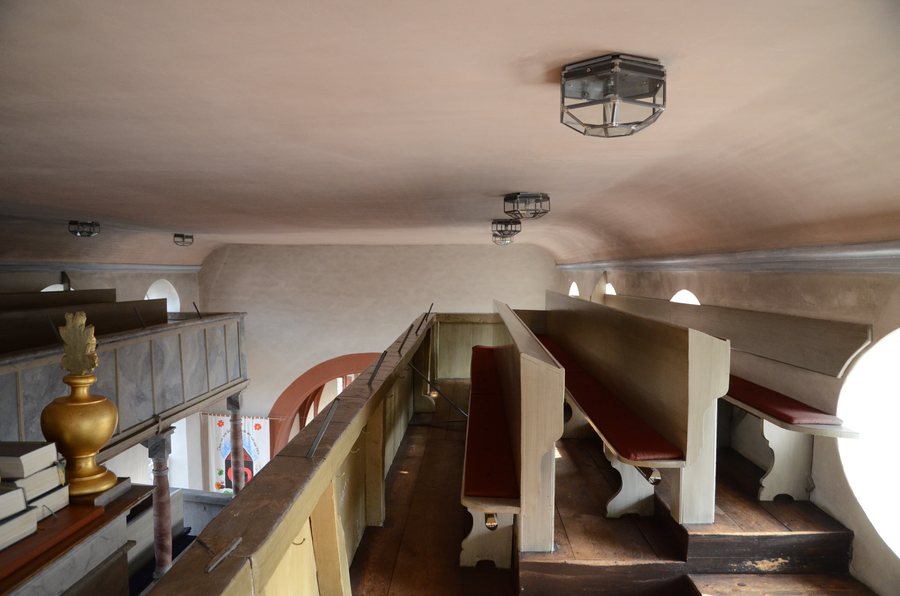
The Epiphany Church in Eschau is open daily from 09:30 to 17:30 for quiet contemplation and prayer. If you would like to include a quiet moment in your trip, alongside trails and cultural sites, you can take a visit here into consideration.
Leisure Activities and Practical Information
The Wildensee recreational area includes a lake, a boardwalk for relaxation, a water-treading facility, a boules court and barbecue huts. The different facilities offer a variety of reasons to spend time outdoors, from the lake and boardwalk to boules and the barbecue huts. In Hobbach, the newly landscaped railway embankment is a small park for local recreation. It has benches, a playground, a mud play area and a basketball hoop.
If you plan to visit the Spessart Experience Centre, bear in mind that it is not directly accessible by car. Visitors park at the kindergarten or on a side street, then walk through the countryside for about 12 minutes to reach the centre.
When choosing your holiday apartment in Eschau, consider which of these different reasons for travelling matters most to you: cultural trails and castles, art and local history, quiet contemplation or outdoor recreation. This way, your search begins with the kind of stay you want rather than a general idea of what accommodation should offer.
For the broader travel overview: Miltenberg.
More Destinations
More places in the same destination:

