
Mömlingen: Geology, Churches and Local History
Accommodation in Mömlingen
Mömlingen combines striking insights into the history of the Earth with local history, visible in its churches and local history museum. There are also opportunities for active exploration: the “Fire and Water” Geopark Trail passes geological and historical sites, and a permanent mountain bike circuit starts in the town. What you would like to experience can therefore help determine your choice of holiday apartment and starting point.
Geology and Traces Along the Geopark Trail
At Station 3 of the “Fire and Water” Geopark Trail, you can see basalt tuff and a basalt dyke. Both were formed during the eruption of the “Mühlhansenloch Maar”. Seeing these rocks up close makes the trail a destination for anyone interested in how the landscape was formed.
The trail also passes the former “Berta” iron ore mine, which dates back to the 19th century, and a reconstructed section of the Electorate of Mainz’s landwehr. This former border fortification dates from the 15th century. Along the trail, you will encounter both evidence of geological processes and built traces of local history.
Museum and Churches: Discover Mömlingen’s History
Since 1997, Mömlingen’s School and Local History Museum has been housed on the second floor and in the attic of the “Alte Schule” community centre. The building was constructed from Mömlingen sandstone. The archaeological exhibition “Longhouses and Mounted Warriors” has been open to the public since September 2017 and covers topics ranging from the first Stone Age settlers to modern-day Mömlingen. Check current access arrangements before your visit.
Another part of the museum’s story is home-based garment sewing: from the late 19th century until the 1960s, it provided many people in Mömlingen with good earning opportunities. Previously, many had been able to live only modestly, mostly as small farmers. The home sewing room recreated in the museum had already been exhibited at the Germanisches Nationalmuseum in Nuremberg. It complements the archaeological exhibits with a glimpse into the town’s more recent history of everyday life and work.
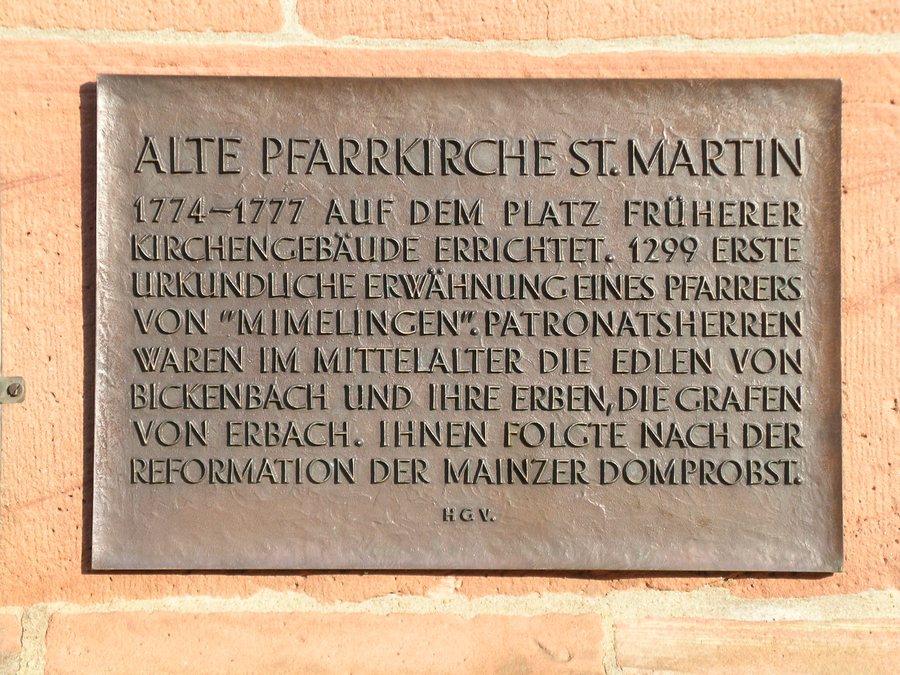
The two churches also showcase different architectural eras. The Baroque St. Martin’s Church dates from 1774 to 1777 and is Mömlingen’s landmark. The Catholic parish church of Corpus Domini was built right next to it between 1961 and 1963. It is considered an example of modern church architecture; two stained-glass windows extend the full height of the building. If you are interested in church architecture, you can see a Baroque building and a modern example side by side here.
Outdoor Activities and Excursions in the Wider Area
The permanent mountain bike circuit in Mömlingen starts at the Löwen car park opposite the town hall. For a cycling trip, you could also explore the regional circular routes: “Through the Mümling Valley to Bad König” passes through Lützel-Wiebelsbach, Breitenbrunn, Bad König, Höchst and Breuberg before returning to Mömlingen. “Circular Tour to Otzberg Fortress” runs via Wald-Amorbach, Wiebelsbach, Otzberg, Höchst and Breuberg. The “From the Mümling Valley to the Main Valley” route passes through Seckmauern, Lützel-Wiebelsbach, Rai-Breitenbach and Hainstadt before returning. Check the route details before setting off.
Whether you would rather explore rocks and historic sites along the trail, spend time at the museum and churches, or plan a cycling trip, consider which of these interests you would like to shape your stay when choosing your holiday apartment. That way, you can choose Mömlingen as a suitable base for your own journey of discovery.
Discover More Destinations
Discover more destinations: Elsenfeld, Schneeberg, Faulbach, Amorbach, Eschau, Großwallstadt, Stadtprozelten, Klingenberg am Main.
Back to the main travel guide: Miltenberg.

