
Hohenaltheim: Karst Spring, Ries Panorama Trail and Mozart History
Accommodation in Hohenaltheim
A constantly flowing karst spring, a grotto and a distinctive Mozart episode give Hohenaltheim a clear identity shaped by both landscape and history. The Ries Panorama Trail is another highlight: Hohenaltheim is listed as one of the places along the trail, which runs around the Nördlinger Ries meteorite crater. If you are looking for a holiday apartment, you can tailor your stay to your interests—nature at the spring, hikes in the Ries or cultural history.
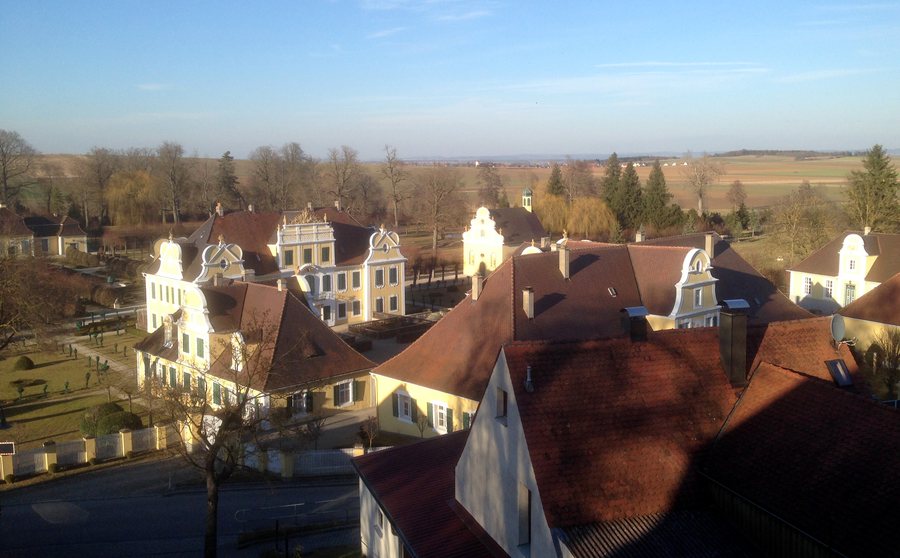
Spring, Grotto and Ursprungweiher Pond
The Ursprung, south of Hohenaltheim, is a landscaped park with a grotto and a constantly flowing karst spring. The spring feeds the Ursprungweiher pond. The spring, pond and grotto together create a distinct landscape highlight. For planning your holiday, this is a different kind of attraction from the distance of a hiking route: here, the focus is on the landscaped park itself, while the Ries Panorama Trail offers a broader perspective.
Hiking Around the Nördlinger Ries
The Ries Panorama Trail is 128 kilometres long and runs around the Nördlinger Ries meteorite crater. Hohenaltheim is listed as one of the places along the trail. Its length gives the route a different scale from that of the individual landscaped park. If you include the trail in your plans, check the official route page for current trail conditions before setting out.
Mozart’s Arrival in Hohenaltheim
On 26 October 1777, Wolfgang Amadé Mozart arrived in Hohenaltheim with his mother and had to stay at a “miserable inn” (“miserablen Würthshaus”). The exact date and the vivid description of the accommodation make this historical connection a concrete scene of arrival. For travellers interested in local history, it complements the landscape and hiking highlights with a clearly dated event.
Geology in the Wider Donau-Ries Travel Region
In the wider Donau-Ries travel region, the district describes the Ries Geopark, with the Ries crater formed by a meteorite impact, as a tourist attraction. The Kühstein Geopark Trail explains the impact processes from 14.5 million years ago at eight information panels. From Buchberg, you can enjoy a panorama of the Ries and its inner and outer crater rims. The landscape views and information panels offer a different focus from the exhibition at the Ries Crater Museum.
The Ries Crater Museum presents the asteroid impact that created the Nördlinger Ries, as well as its cosmic background and its effects to this day. Exhibits include meteorites, fossils and a piece of genuine moon rock; information panels and multimedia offerings complement the displays. The Ries event is presented in a carefully renovated medieval barn dating from 1503. In the wider Donau-Ries travel region, both the geological explanations on the information panels and the exhibits and multimedia interpretation offer different ways to explore the Ries.
The History of Donau-Ries
Nördlingen is also in the wider Donau-Ries travel region. Its medieval town walls are fully preserved and can be walked along in their entirety. The Nördlingen City Museum covers the lives and beliefs of the town’s people, the changes brought about by the Reformation, the Thirty Years’ War and the 1634 Battle of Nördlingen. Its collection, which is more than 150 years old, is displayed across four floors. A model made of around 6,000 tin soldiers illustrates the 1634 battle. These historical themes offer a different focus from Mozart’s arrival in Hohenaltheim and the geological attractions of the wider Donau-Ries travel region.
More Destinations
Discover more destinations: Mönchsdeggingen.
Back to the main travel overview: Ries.

