
Culture and History
The Musée Ziem brings together a range of collections, including archaeology, modern and contemporary art, fine arts, ethnology and photography. The museum also presents temporary exhibitions featuring paintings, drawings and objects. Water and sky dominate the works on display that reference Martigues and its reflections.
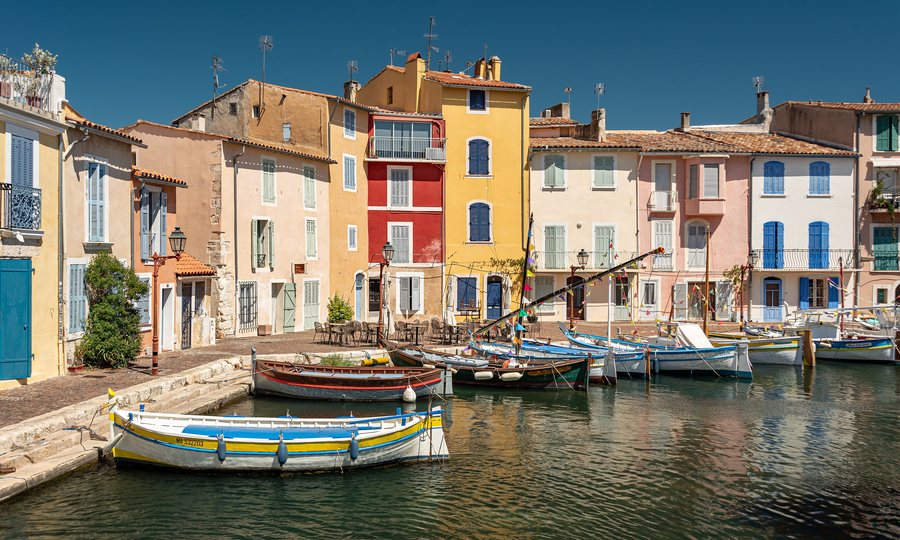
The historic townscape includes the Miroir aux Oiseaux, which, together with the Saint-Sébastien Canal and the Quai Brescon, forms an ensemble protected as a classified site since 1942. The La Madeleine church in Martigues was built between 1670 and 1680.
The Galerie de l'Histoire de Martigues offers an in-depth insight into the city's key stages of development through written documents, photographs, models, museum objects and interactive terminals.
Nature and Trails
The Grand Parc de Figuerolles is a free-to-access natural area in the heart of Martigues. There are five trails there: one is suitable for pushchairs from 3 km onwards, while another runs for 7 km around the park and along the Étang de Berre.
The coast is also part of the municipality. Plage du Verdon is located in La Couronne within the municipality of Martigues and is the largest fine-sand beach on the Côte Bleue. Pedal boats with slides and stand-up paddleboards are rented at Plage du Verdon.
Fort de Bouc
Fort de Bouc can be reached by sea, exclusively by making a reservation with the Office de Tourisme et des Congrès de Martigues. It has been listed as a historic monument since 6 January 1930. Following restoration work, Fort de Bouc was opened to the public for the first time in its thousand-year history in 2007.
Fishing and Wine
Poutargue is produced in Martigues at one of the last remaining Calens in France on the waterfront. The small fishing hut continues to practise traditional fishing with boats and nets. The roe sacs used for poutargue are caught in the Martigues Canal.
A guided tour of the Saint-Julien-les-Martigues cooperative winery explores the grape varieties and the winery and ends with a tasting of two cuvées – white, rosé or red.

