
Those who choose Cantaron as a travel destination may wish to rent a holiday apartment.
On Place de l'École stands the stele dedicated to resistance fighter Thérésius ODDO. It commemorates a resistance fighter from the Paillon Valley who fought against Nazi oppression. The SURCOUF resistance group was formed in his home.
The old village oven also reflects local tradition: it was built from sandstone, a rock from the Paillon Valley known as Pierre de Savel, and is now used only for the patron saint's festival. The Cognas washhouse was supplied by the Boussiola spring, which was also used to irrigate the gardens; the washhouse was in use until 1970. The “Main Sculptée” is an original work of Cantaron's cultural heritage.
Landscape and Trails
The Mire du Mont Macaron was first used in 1891. It is located 6.5 kilometres from the Nice Observatory and faces north. The Mire du Mont Macaron is still housed in a small building on Mont Macaron in the municipality of Cantaron, which is known to hikers.
The GR5 crosses Cantaron and offers views of the Baie des Anges. Another route leads from the summit of Mont Macaron via the Col de Bordinas down to Cantaron along a more technically demanding section of the GR 51.
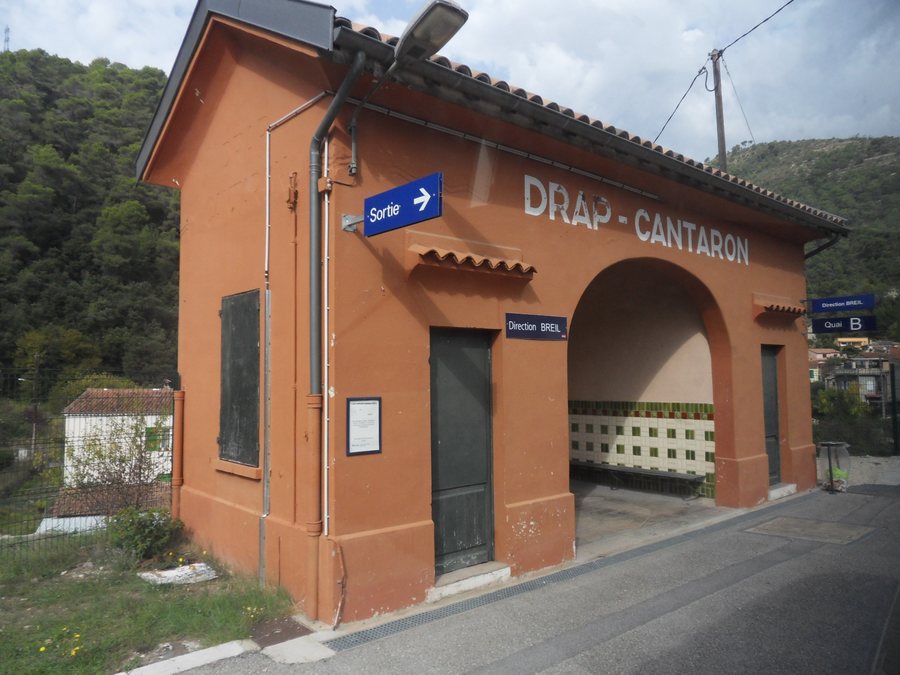
Drap–Cantaron railway station is located at Rue de la Gare, 06340 Cantaron.

