
Culture and History
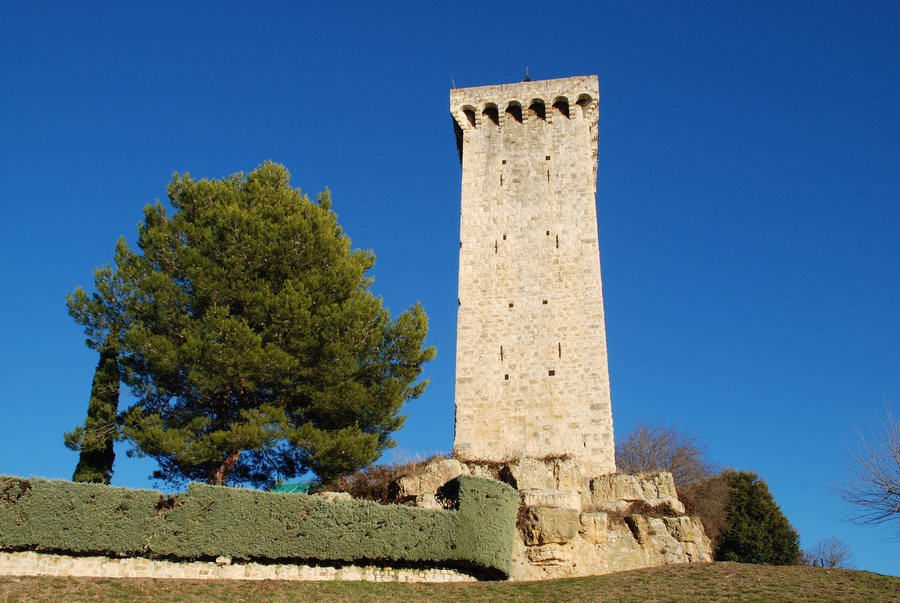
One of the village’s distinctive structures is the Tour de l'Horloge. The 23.50-metre-high tower has a defensive character and machicolations. Boniface de Castellane had it built in the 14th century; it originally served as a watchtower and as a storehouse for the lord’s tax revenue. Since 11 January 1921, the Tour de l'Horloge has been classified as a historic monument.
The nave of the Église Saint-Martin also reflects the history of the village: it is dated to the 12th century and attributed to the Romanesque style of southern France.
The Musée gallo-romain covers approximately 10 m² and is one of the smallest museums in France. It presents an exhibition about the finds from the Buffe Arnaud oppidum. The museum is currently closed due to work on the Tour de l'Horloge.
Nature and Trails
The access road to Saint-Martin-de-Brômes runs along the Gorges du Colostre, which offer beautiful landscapes. The five-day Tour du lac d’Esparron hiking trail, a GR de pays, also passes through the village.
At La Safr'Ânerie, donkey walks can be undertaken independently or with a guide all year round. La Safr'Ânerie offers these donkey walks in the landscapes of the Alpes de Haute-Provence in the Parc Naturel du Verdon.
Activities
The Randoland trail in Saint-Martin-de-Brômes is a fun activity in the form of a treasure hunt to discover the local heritage. Clues are collected from elements of the historical or natural heritage. Age-appropriate worksheets are available for children aged 4 to 12 for the trail.
Getting There and Everyday Life
From Aix-en-Provence, Saint-Martin-de-Brômes can be reached in less than an hour via the A51 and D952. A bus route connects the village with Gréoux-les-Bains.
From June to the end of September, a small market takes place on Friday mornings.

