
Those who choose Céreste as a holiday destination would like to rent a holiday apartment here.
Culture and History
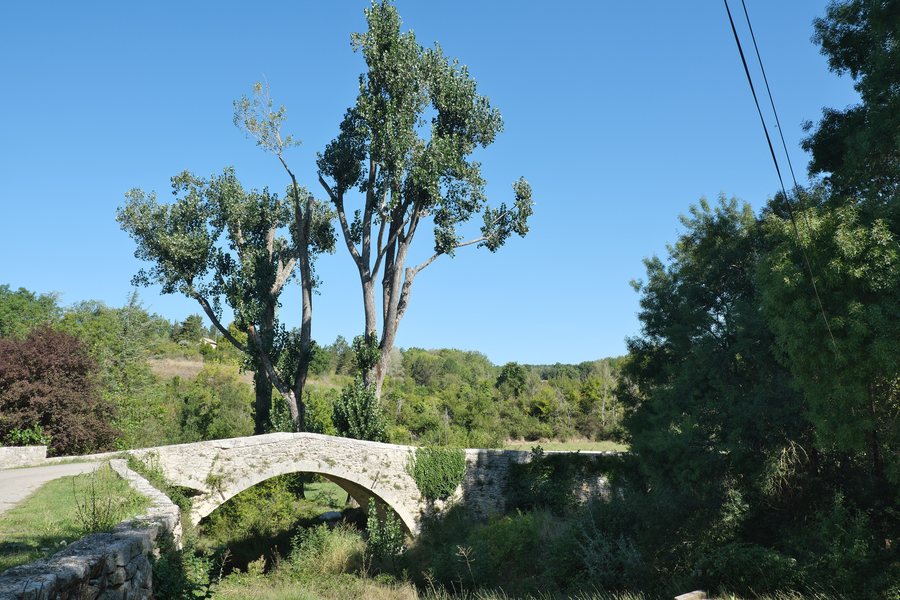
The Pont de la Baou crosses the Encrême towards the Prieuré de Carluc and the village of Reillanne. The bridge was formerly known as the “pont romain”; according to the archives, it was actually built around 1740.
The Prieuré de Carluc comprises a medieval chapel, a necropolis carved into the rock, the ruins of two further churches, partly carved into the rock, and a gallery, also carved into the rock, with rock-cut tombs. In the Middle Ages, the Prieuré de Carluc was a station for pilgrims travelling between Spain and Italy due to its proximity to the former Via Domitia.
Nature and Trails
The “De La Gardette au Nid d'Amour” route begins and ends at the Place du Général de Gaulle in Céreste-en-Luberon. The 538-metre-high Gardette ridge offers panoramic views to the southwest over the Grand Luberon, the highest part of the massif; the summit of Mourre Nègre reaches 1,125 metres. The GR4 offers excellent hiking opportunities in the Luberon.
Local Life
The Céreste-en-Luberon market takes place all year round on Thursday mornings at the Place du Général De Gaulle.

_Pont_Romain_059.jpg)