
Saint-Martin-De-Fraigneau: Holiday Apartments and Holiday Homes
Accommodation in Saint-Martin-De-Fraigneau
Culture and history
The Vase of the Holy Oils is a rare black clay vessel, 11.5 cm high, dating from the beginning of the Merovingian period, that is, from the 5th century. It was discovered in Saint-Martin-de-Fraigneau in 1865. The inscription on the Vase of the Holy Oils is translated as “Balm oil for the blessing of the divine Martin”.
The Château de Puy-Sec was built in 1650. It is a large building in the style of Louis XIII, without fortifications.
Saint-Martin-de-Fraigneau originally consisted of two independent historic settlements: FRAXENELLUS (989) and TASSO, the present-day village centre. The hamlet of Puy-Sec developed during the Gallo-Roman period (900); its name referred to the problems in the area associated with water shortages.
Nature
Saint-Martin-de-Fraigneau lies entirely within a Zone Importante pour la Conservation des Oiseaux (ZICO), an important bird conservation area. Montagu’s harriers were probably observed breeding in the cultivated areas; orchids are probably found along the ditches.
Viticulture
Viticulture was historically a predominant activity in Saint-Martin-de-Fraigneau until the phylloxera epidemic of 1885 destroyed three quarters of the vines.
Cycling
Saint-Martin-de-Fraigneau is marked on an official Vendée cycling map.
Geographical setting
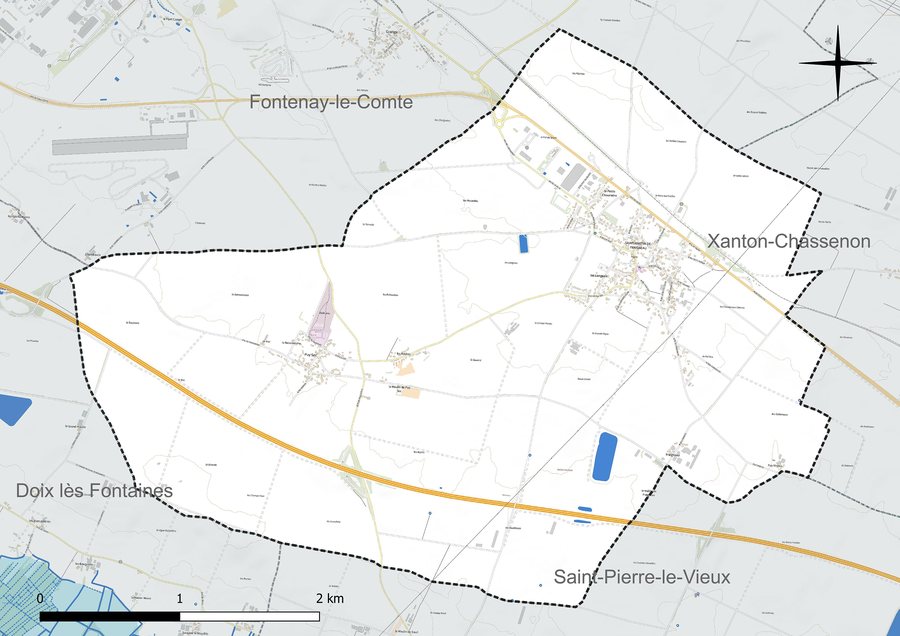
The RN 148 follows the route of Gallo-Roman roads.
Accommodation
Those who choose Saint-Martin-de-Fraigneau as their destination may wish to rent a holiday apartment here.
The Maison Familiale de Puy Sec offers group accommodation for 62 people as well as independent, comfortable accommodation for 12 people.
For the overview of the higher-level destination: Vendée.
More destinations
More places within the same destination:

