
Culture and history
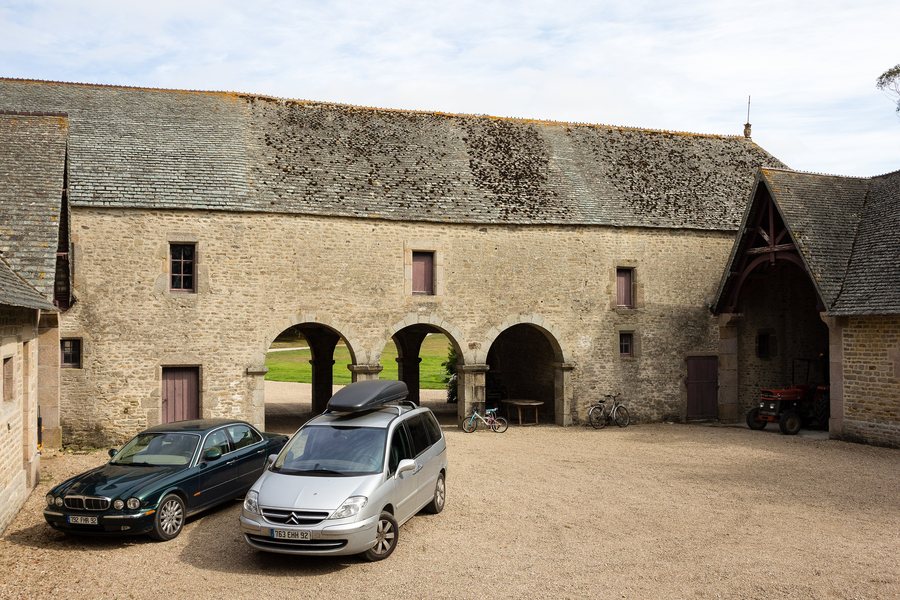
The Château de Tocqueville belonged to Alexis de Tocqueville (1805–1859), the author of “De la démocratie en Amérique”. In the 19th century, Alexis de Tocqueville and his wife Mary Morley planned an English landscape garden. They removed the hedges from the surrounding bocage landscape and created the pond visible from the Château de Tocqueville.
The church in Tocqueville also preserves tangible historical and artistic evidence. The high altar was listed as a Monument historique on 28 June 1985. The church in Tocqueville is open daily for visits. The central painting, “La Résurrection” by Legenvre, dates from 1847.
The Château de Tocqueville is privately owned and is open to visitors during the Journées du patrimoine.
Those who choose Tocqueville as a travel destination may wish to rent a holiday apartment.
Cycling
The 21-kilometre Boucle cyclotouristique de Barfleur includes the centre of Tocqueville. The Château de Tocqueville is located near the Vélomaritime–EuroVelo 4.
Landscape and surroundings
The Plage de la Mondrée, classified as a beach, and the Plage de Bretteville, also classified as a beach, are located in the vicinity of Tocqueville.
In the wider regional surroundings of Tocqueville are the Plage de Collignon, classified as a beach, and the Plage Collignon, also classified as a beach. Three structures classified as fortresses are likewise located in this wider regional area: Fort de la Hougue, Fort de l'Île Pelée, and Fort de l'Est.
The Artothèque de Cherbourg, classified as a museum, is also located in the wider regional surroundings of Tocqueville.
More local pages: Lengronne, Chef-Du-Pont, Le Rozel, Monthuchon, Angey, Brécey, Saint-Vaast-La-Hougue, Les Moitiers-D'allonne.

