
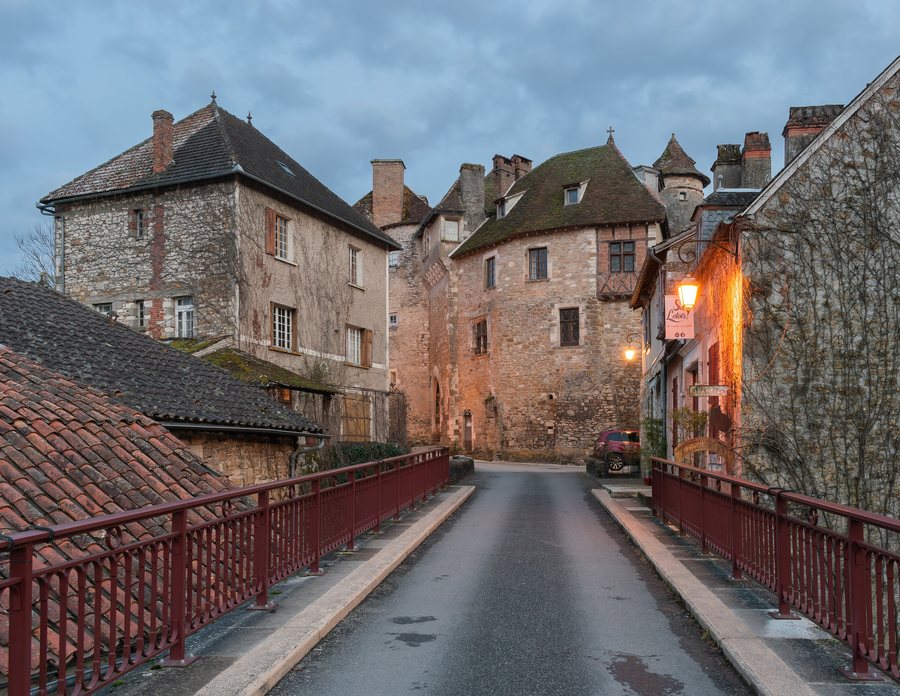
Those who choose Carennac as a travel destination may wish to rent a holiday apartment.
Culture
The cloister of Carennac also preserves different construction phases. One Romanesque gallery is still intact, while the other three galleries were rebuilt towards the end of the 15th century. The chapter house building of the cloister houses a stone Entombment dating from the late 15th century.
The Château des Doyens in the priory of Carennac features Renaissance architecture and a remarkable painted ceiling from the 17th century in its banqueting hall. The Château des Doyens is also home to the Espace Patrimoine, with a permanent exhibition spread over four levels on the heritage of the Pays d’art et d’histoire des Causses et Vallée de la Dordogne, as well as temporary exhibitions. Pauline Audubert’s establishment in Carennac features a craft workshop for functional and decorative ceramics.
Nature and Trails
The Canal de l’Hermitage is a branch of the Dordogne and flows along the foot of Carennac. The circular trail “Autour des ruines de Taillefer” starts from Carennac. The trail is a hiking route and is 13 kilometres long.
Experiences
Guided discovery tours in Carennac pass through the monastic complex with its Romanesque church and remarkable tympanum. The activity “Les apprentis géologues” is an investigation and orienteering game in the village of Carennac, accompanied by a conference guide.
Local Life
The market “Marché de producteurs de pays ‚Bienvenue à la ferme‘ de Carennac” offers products directly from producers to consumers. It is exclusively intended for direct agricultural sellers or craftspeople.
Further destinations: Cavagnac, Montgesty, Grèzes, Nuzéjouls, Baladou, Latronquière, Montet-et-Bouxal, Les Arques

.jpg)