
Culture and history
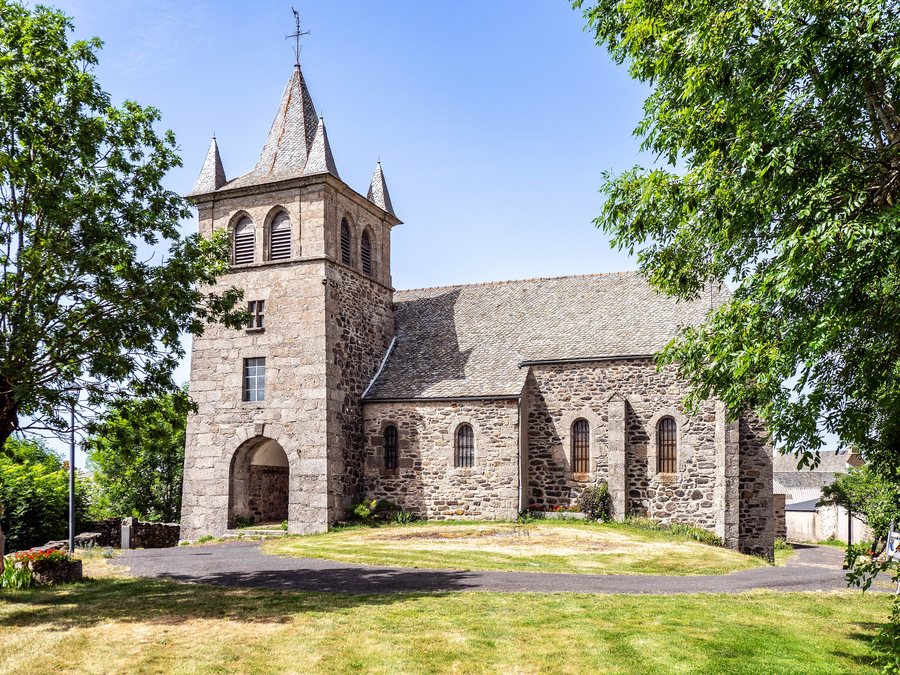
The bell tower of Graissac’s Romanesque church dates from the mid-19th century. In the church square stands a sculpted cross from the 15th century. Graissac’s Romanesque church itself dates from the 15th and 16th centuries. In Brénac, the Gothic church has a portal from the 15th century.
In the municipality of Graissac, on the banks of the Argence Vive, stands the Moulin du Faula, whose construction dates back to the 15th century. The mill has three pairs of millstones driven by horizontal iron wheels, characteristic of mills in the Rouergat region. At the Moulin du Faula, visitors can also hear the sound known as the “babillard”.
In nearby Durbec, a micro-museum in the village bread oven showcases rural life before mechanisation.
Things to do
The “Graissac et le lac des Chèvres – VTT N°15 Bleu” route is an easy 16.4-kilometre circular trail that starts at the Place de l’église in Graissac. The “Graissac et le lac des Chèvres” mountain-biking route leads to Lac des Chèvres and offers views of the Monts d’Aubrac and the Monts du Cantal.
La Croix du Moulin is a moderately difficult PR circular hiking trail covering 11.6 kilometres, with a duration of four hours, that starts in Graissac. The route passes between villages and hamlets through meadows and forests and offers views of the Monts du Cantal. It also leads to a restored washhouse in the centre of Graissac.
The marked Durbec circular trail, taking one to three hours, follows paths located within the municipality of Graissac, including rural paths near Brénac, Englès and Mourmentres.
Local produce
The farm “Des chèvres et des abeilles sur l'Aubrac” sells goat’s milk cheese, yoghurt and goat’s milk ice cream.
Renting a holiday apartment in Graissac is one possible part of planning your trip.

