
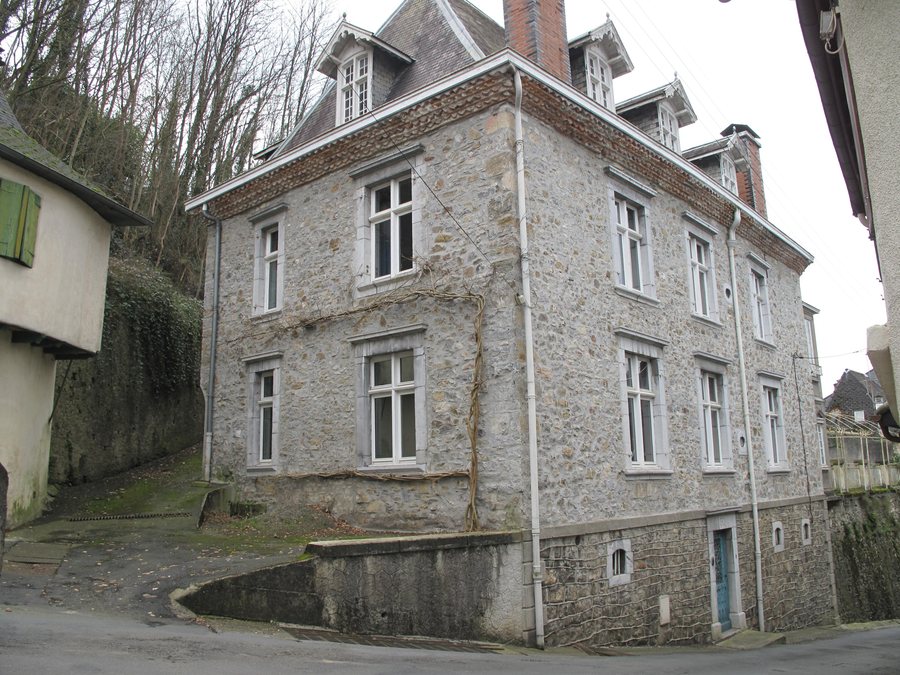
Renting a holiday apartment in Heugas can be part of planning an individual stay.
Culture
The church in Heugas was originally called “Sainte Marie de Moros”. As a former priory, it was dependent on the Abbey of Sorde.
The Lavoir du Chanon has a square structure typical of the washhouses of the Landes. An open side leads to a rectangular, open water basin. The lavoir was restored from 2012 onwards; its springs were captured again and once more supply the basins with water.
The Chapelle du Coudaingt was built in the 19th century by Hector Poymiro as a funerary chapel for his daughter. In 2019, it was renovated and converted into a cultural venue.
Nature
The communal forest of Heugas covers 160 hectares with pedunculate oaks and other valuable tree species. The village’s landscapes also include Les Barthes: flood-prone wet meadows and private plots that naturally help regulate flooding during high water.
The Luy and the Bassecq are the two rivers that form the boundaries of Heugas.
Geographical setting
Since 1936, the centre of Heugas has been located at its present site rather than by the church.
The Heugas Jogging Club welcomes members and non-members every Wednesday at 7 p.m. for a run starting from the car park of the childcare centre.
Yves, the “guardian of Heugas’s history”, offers a tour of the picturesque sites of his village of Heugas, including the church and the Chapelle du Coudaingt, while discussing the village’s origins and distinctive character.
More local pages: Arjuzanx, Saugnacq-Et-Muret, Orx, Sorde-Lʼabbaye, Cauna, Bénesse-Lès-Dax, Losse, Ychoux.

