
When planning a trip, you may wish to rent a holiday apartment in Bergholtz.
Culture and History
The motte-and-bailey castle mound of Bergholtz is the surviving remnant of a castle that served as a lookout post on the borders of the territory of Murbach Abbey. It is located at 32 rue de l'Eglise in Bergholtz and was listed as a Monument historique by decree of 15 November 1985.
The Vauban Canal was built in 1699 and followed the route of an old road to Rouffach.
Trails and Landscape
The network of three discovery trails in Bergholtz comprises 14 information panels and offers walks through the forest, vineyards and village.
The Sentier forêt is a nature walk in the shade of fir trees and passes the quarries of Bergholtz. The Sentier village showcases the rich cultural heritage of Bergholtz, a municipality with more than 1,300 years of history.
The Les carrières de Bergholtz et Bergholtz-Zell circular trail alternates between vineyards and forest and is suitable for children.
The LES VOIES DU PATRIMOINE app, featuring an audio guide in French, German and English, is available for the discovery trails.
Winegrowing
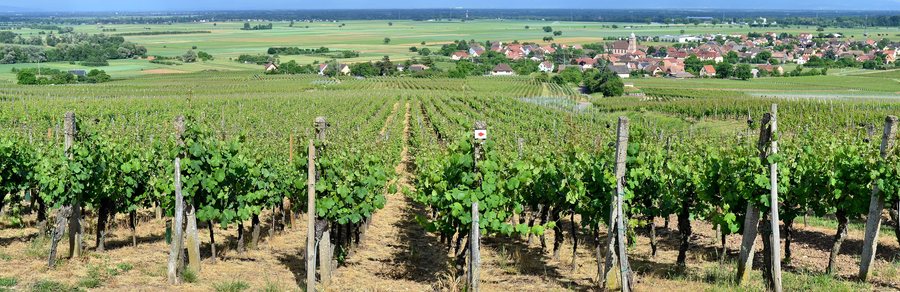
The Sentier vignoble focuses on winegrowing and discovering the terroirs of the Grand Cru Spiegel.
The Grand Cru Spiegel extends across the cadastral areas of Guebwiller and Bergholtz, lies on east-facing slopes and is located at an elevation of 260 to 315 metres. The 18.26-hectare Grand Cru Spiegel terroir favours the cultivation of Gewurztraminer, Pinot Gris, Riesling and Muscat on the southern slope.

