
Culture and History
The Couvent des Sœurs du Très Saint-Sauveur is the seat of the congregation in Oberbronn. The Sisters of the Très Saint-Sauveur acquired the former castle buildings in 1859 and converted them into a convent.
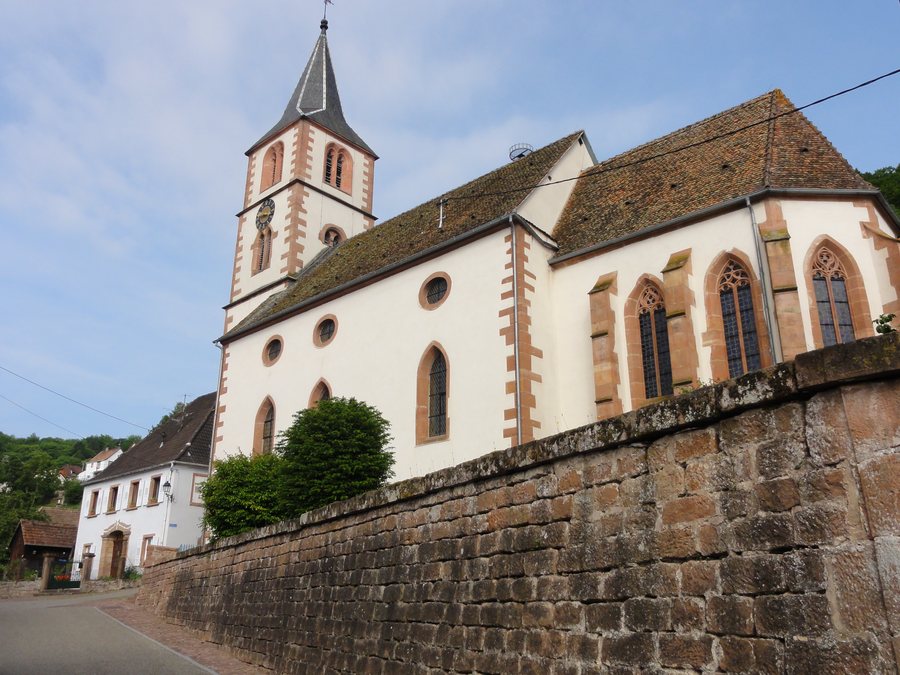
Oberbronn's Protestant church dates from the 15th to the 19th century. Inside, it contains a count's box from the 16th century and a mausoleum of Count Ludwig von Sinclair from the 18th century.
Another historic architectural detail is a house built in 1568, featuring a stone ground floor, a half-timbered upper floor, and a street-level bay window.
Guided Tours and Trails
During the theatrical guided tours of Oberbronn, a performer playing the role of the Swedish baron of Scottish origin Ludwig von Sinclair leads participants through the village's lanes. The theatrical guided tour of Oberbronn lasts 1 hour and 45 minutes.
The Wasenbourg circular trail passes through Oberbronn. Marked hiking, trail-running, and mountain biking routes begin at Couvent Square in Oberbronn. From the car park at the Couvent, various marked paths lead to Wasenbourg in around 45 minutes.
Surroundings
The Château de la Wasenbourg ruins, the Wasenburg ruins, and the Château de Grand Arnsbourg ruins are located in the immediate vicinity of Oberbronn.
Wasenkoepfel Mountain, Immenkopf Mountain, Reisberg Mountain, and Falkenberg Mountain (i) are also located in the immediate vicinity of Oberbronn. Falkenstein Castle is located in the vicinity of Oberbronn.

