
Caska on Pag combines a long history with archaeological traces on land and in the bay. The place is associated with archaeological sites that reflect the long history of the area, as well as with the estate of the Roman Calpurnii Pisones family. The Archaeological Zone of Caska is a protected cultural asset and an archaeological site.
Those who choose Caska as their destination may wish to rent a holiday apartment there.
Culture
The historical traces include the ruins of St. George’s Church in Caska, which are registered as protected cultural property Z-4702. The present-day Church of St. George probably dates back to the 14th century. The Fortress of St. George is visible from the road to Caska; climbing up is possible, but steep.
Tunera is a cylindrical tower with a small viewing platform and a height of around 15 metres. At the same time, Tunera is a monument to Pag’s fishing tradition. The town museum in Novalja houses a wooden anchor and a model of a sewn boat from the underwater area of Caska.
History
The traces extend into the bay: underwater archaeologists discovered an ancient harbour in Caska Bay that belonged to a Roman senator’s villa. The bay has shallow water, little traffic and no strong currents. These conditions are used for training students of underwater archaeology.
Nature
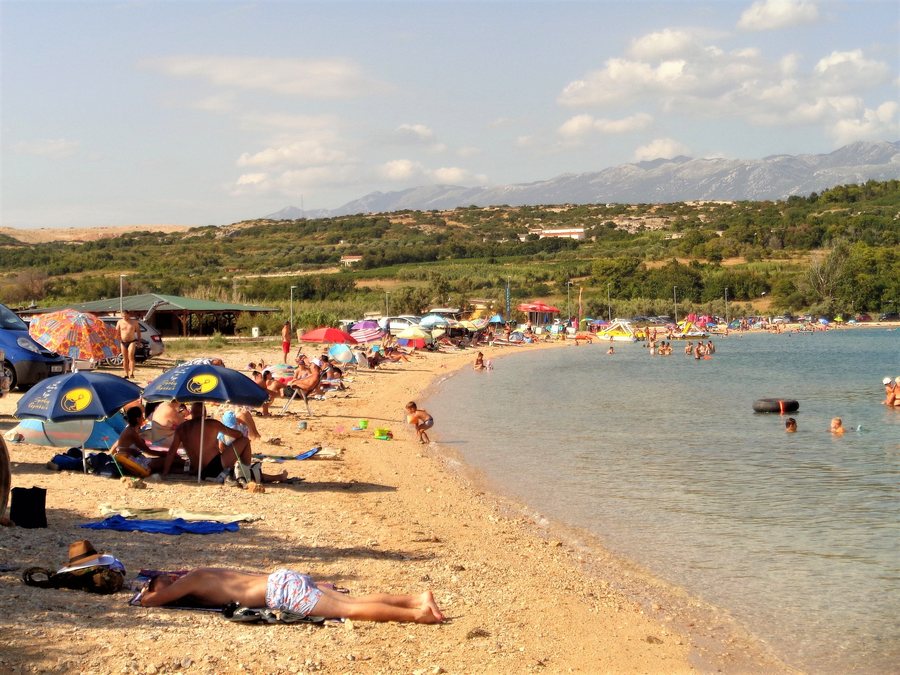
Blato, a small Mediterranean wetland, lies at the inner end of Caska Bay. Caska Beach has a predominantly sandy entry into the sea; the seabed drops very steeply and is deep. There are also food and drink services and some leisure facilities.

