
Accommodation in Croatia
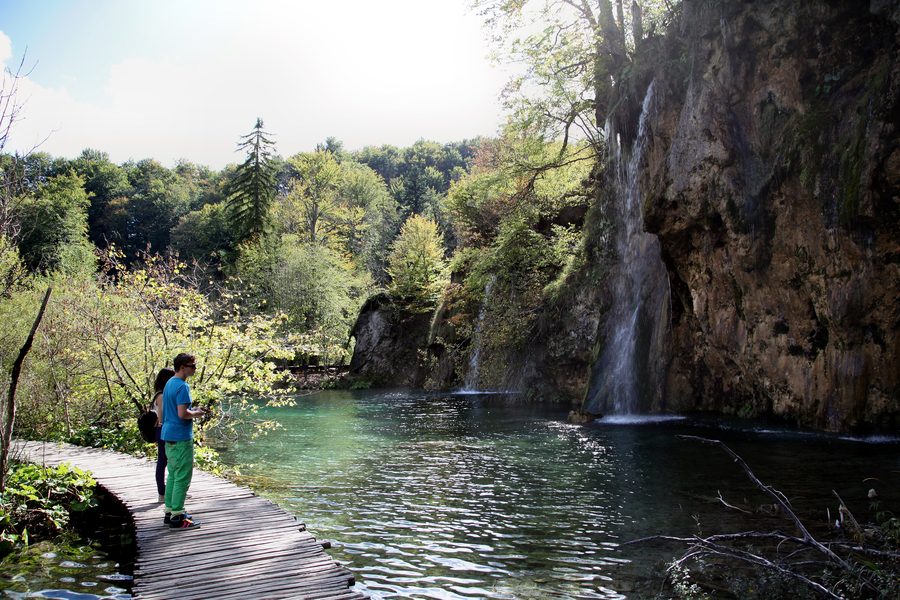 Wasserfall im Nationalpark Plitvicer Seen – ein prägnantes Beispiel für die Karstlandschaften der Region Lika.
Photo: 5snake5 via Wikimedia Commons, CC0
Wasserfall im Nationalpark Plitvicer Seen – ein prägnantes Beispiel für die Karstlandschaften der Region Lika.
Photo: 5snake5 via Wikimedia Commons, CC0
Croatia combines experiences in nature with a rich history. National parks with lakes and waterfalls sit alongside historic sites and medieval tombstones. When choosing your holiday apartment, it is therefore worth deciding first what you want to focus on during your trip: will it be mainly about landscapes and trails, sailing or cultural sites? The different destinations give families plenty of specific ideas for planning a holiday around shared interests.
Lakes, Waterfalls and Trails
The Plitvice Lakes are the oldest and largest national park in the Republic of Croatia. There are seven different routes for exploring the lake system, as well as four hiking trails. This selection offers different ways to experience the national park: when planning, you can choose between routes for visiting the lakes and designated hiking trails. You can tailor the choice to the interests of your travel group. The national park has been on the World Heritage List since 1979 and again since 2000.
The Krka River is also defined by its waterfalls: it has seven waterfalls and a total elevation difference of 224 m. At Skradinski buk, a 1,900 m-long circular trail runs around the waterfalls. It is a one-way route and offers educational activities. This gives a clearer picture of the route than a general walk: its length, direction and educational focus all go together. If you want to combine observing nature with learning something new, you can take these features into account when choosing an excursion destination.
Another way to connect with nature is to visit Cape Ploče on the Zelenikovac Peninsula. Croatia’s first scientifically described dinosaur fossil site is located there. About fifty three-toed footprints were discovered, belonging to small, bipedal carnivores from the group Theropoda. The approximate number and description of the tracks make this a special subject for anyone interested in the history of the Earth as well as today’s landscapes.
Clear Rules in Kornati National Park
Sailing is permitted throughout Kornati National Park, except in the strictly protected zones. Hiking is permitted only on specially marked paths and trails. These rules are important when planning an excursion: sailing and hiking are not governed by the same rules everywhere, and when hiking, the marked routes are the ones to follow. If you are weighing up different activities with your family, it helps to bear these conditions in mind when choosing your day’s itinerary.
Croatia’s History in Different Places
Croatia has ten entries on the World Heritage List. These include the Episcopal Complex of the Euphrasian Basilica in the Historic Centre of Poreč, which has been on Croatia’s World Heritage List since 1997. Another World Heritage site, Venetian Works of Defence between the 16th and 17th Centuries: Stato da Terra – Western Stato da Mar, includes two components in Croatia. Both entries represent different historical themes and can be included as distinct cultural interests when planning your trip.
The Stećci Medieval Tombstone Graveyards comprise 28 sites in several countries, including central and southern Croatia. They include regionally distinctive medieval tombstones. Natural heritage also broadens the picture: Ancient and Primeval Beech Forests of the Carpathians and Other Regions of Europe is one of Croatia’s two natural World Heritage properties. Together with the national parks, these examples show how nature and culture can offer different focuses for a trip to Croatia.
The Franciscan Monastery of Our Lady of Mercy and the Church of Our Lady of Visovac are located on Visovac Island; both have been there since 1445. Another architectural detail is the Boathouse at the entrance to the harbour of Veli Brijun: it was built in 1902 in the Secession style of Austro-Hungarian architecture. Alongside national parks, cultural sites like these may help determine your holiday plans if historic buildings or religious history are among your shared travel interests.
Regions for Your Further Search
Whether you want to focus your search on an island or a county, discover Cres, Dalmatia, Brač, Čiovo, Korčula, Pašman, Ugljan, Istria County, Kvarner Gulf, Krk, Lošinj, Pag, Rab, Dugi Otok, Hvar, Mljet, Murter, Vir, Molat, Pelješac, Dubrovnik-Neretva County, Split-Dalmatia, Šibenik-Knin County, Zadar County, Karlovac County, Zagreb County, Sisak-Moslavina County, Brod-Posavina, Krapina-Zagorje, Međimurje County, Lika-Senj, Osijek-Baranja County, Koprivnica-Križevci County, Varaždin County, Virovitica-Podravina, Vukovar-Srijem, Bjelovar-Bilogora, Požega-Slavonia County and Međimurje.

