
Discover Općina Konavle
Accommodation in Općina Konavle
A fertile valley, mountainous landscape and steep cliffs by the sea define Općina Konavle. The municipality stretches across a valley up to 35 km long and up to 12 km wide. On the mountain side, the slopes of Snježnica and Bjelotina bound the landscape; Snježnica reaches 1,234 m. On the sea side, cliffs extend from the port of Cavtat through Molunat to the Prevlaka peninsula and Cape Oštro. This makes the destination a place where very different landscapes take centre stage.
Between mountains, river and coast
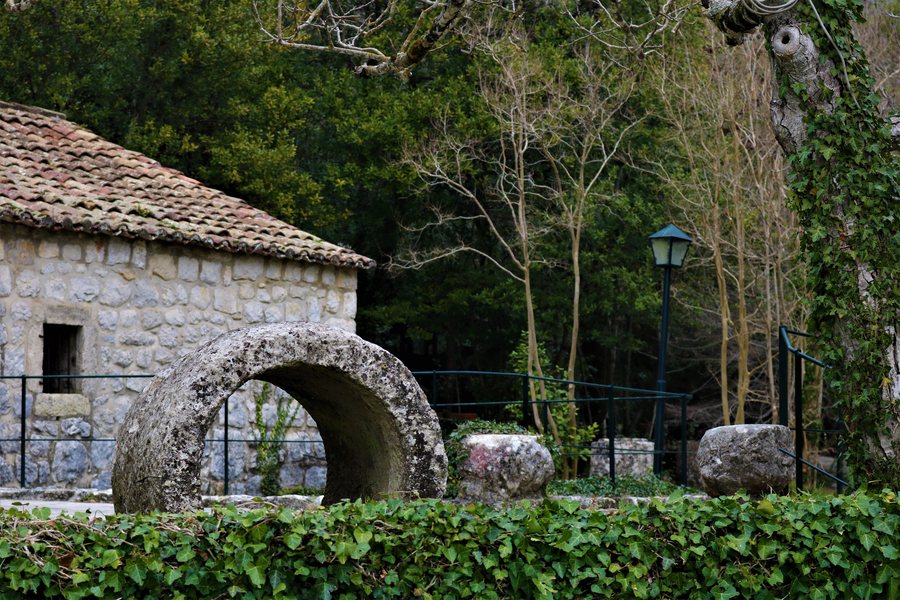
The Ljuta River also connects natural and cultural history. Its source and upper course are protected by the state as a nature park; the watermill is protected as a cultural monument. The mill complex comprises eight watermills for flour, two for oil and three fulling mills. The system of so-called lower mills was built after 1550 and has been preserved to this day. Those interested in historic craft installations can get a close-up look here at how water power was used.
A different view of the landscape opens up from the summit of Stražišće: from this peak on the Ronald Brown Path, the panoramic view stretches across Cavtat, Konavle, Župa and Dubrovnik. Various endemic plant species and protected animal species are found along the path. Fort Sokol and the churchyard of Our Lady of Sokol also offer views across all of Konavle. These viewpoints and the protected nature add their own appeal alongside the coastline.
Traces of history and culture
Fort Sokol is an important fortress dating from the time of the Republic of Ragusa. It was built on the site of an earlier Illyrian and Roman fortification. In Močići, the history goes back even further: the Mithraeum is a sanctuary dedicated to the ancient god Mithras; his cult was widespread in the region from the 2nd to the 4th century.
In Čilipi, the Museum of the Konavle Region houses around 500 ethnographic objects. These include traditional costumes, embroidery and other textile work, jewellery, weapons, musical instruments and everyday items. Visitors interested in clothing, crafts and everyday history can explore these themes through the diverse collection. Folklore performances also take place in Čilipi on Sundays from Easter until the end of October.
The Franciscan monastery and Church of St Blaise in Pridvorje were built between 1423 and 1429 in the style of the early Dubrovnik Renaissance. The monastery was a place of pilgrimage and housed a significant collection of sacred art. Stone necropolises are particularly numerous near the Church of St Barbara in Dunave and in Mihanići, Gabrila, Brotnice and Pridvorje. Glavić House is also part of Konavle’s cultural history: the original house is around 400 years old and is listed as a cultural monument in the national heritage register.
Hiking and further discoveries
For an active stay, there are trails of different lengths and with different destinations. The Cavtat–Močići–Čilipi hiking trail is 8 km long and passes through the coastal landscape of Konavle. Side paths lead from the trail to swimming spots on the cliffs. The Konavoske stijene educational trail starts in Popovići and runs for about 4 km above the cliffs. Another option is the Ronald Brown hiking trail: it starts in Gornji Obod and leads to the summit of Stražišće at an altitude of 791 m. The stated trail lengths and destinations make it easier to choose a hike based on the kind of scenery you would like to see.
In Popovići, Kojan Koral organises half-day horseback rides above the cliffs of Konavle, with views of the Adriatic Sea. Kojan Koral also offers an ATV safari through Konavle. According to the description, visitors can drive small ATVs, and a driving licence is not required. A tourist train ride through the vineyards of Konavle is also described as an excursion. These activities offer a different focus from hiking trails or museum visits, providing further ways to experience the landscape.
The surrounding area also offers special points of interest: underwater archaeological sites near Cavtat include more than 1,800 amphorae and pithoi dating from the 1st century BC and the 1st and 2nd centuries AD. The wreck of the Austro-Hungarian cruiser Kaiser lies near Molunat at a depth of 30 to 42 m. Organised kayak trips along the wider coast of Cavtat and Molunat combine kayaking with fishing and birdwatching on offshore islands. Near the village of Komaji lies Cadmos Village, an adventure park in an oak forest; it includes a medieval stone cross associated with local legends.
Dubrovnik Airport is in Čilipi, 5 km from Cavtat. If you would like to search by place name, the municipality’s settlements offer different starting points for planning the rest of your trip: Cavtat, Gruda, Molunat, Dubravka, Pločice, Komaji, Čilipi, Popovići, Močići, Zvekovica, Drvenik, Mihanići, Lovorno, Vitaljina, Pridvorje, Vodovađa, Radovčići, Uskoplje, Stravča, Palje Brdo, Brotnice, Poljice and Zastolje.
For the broader travel overview: Dubrovnik-Neretva County.

.jpg)